Allegations of Russian Interference Cast Shadow Over Hungary's Pivotal Election
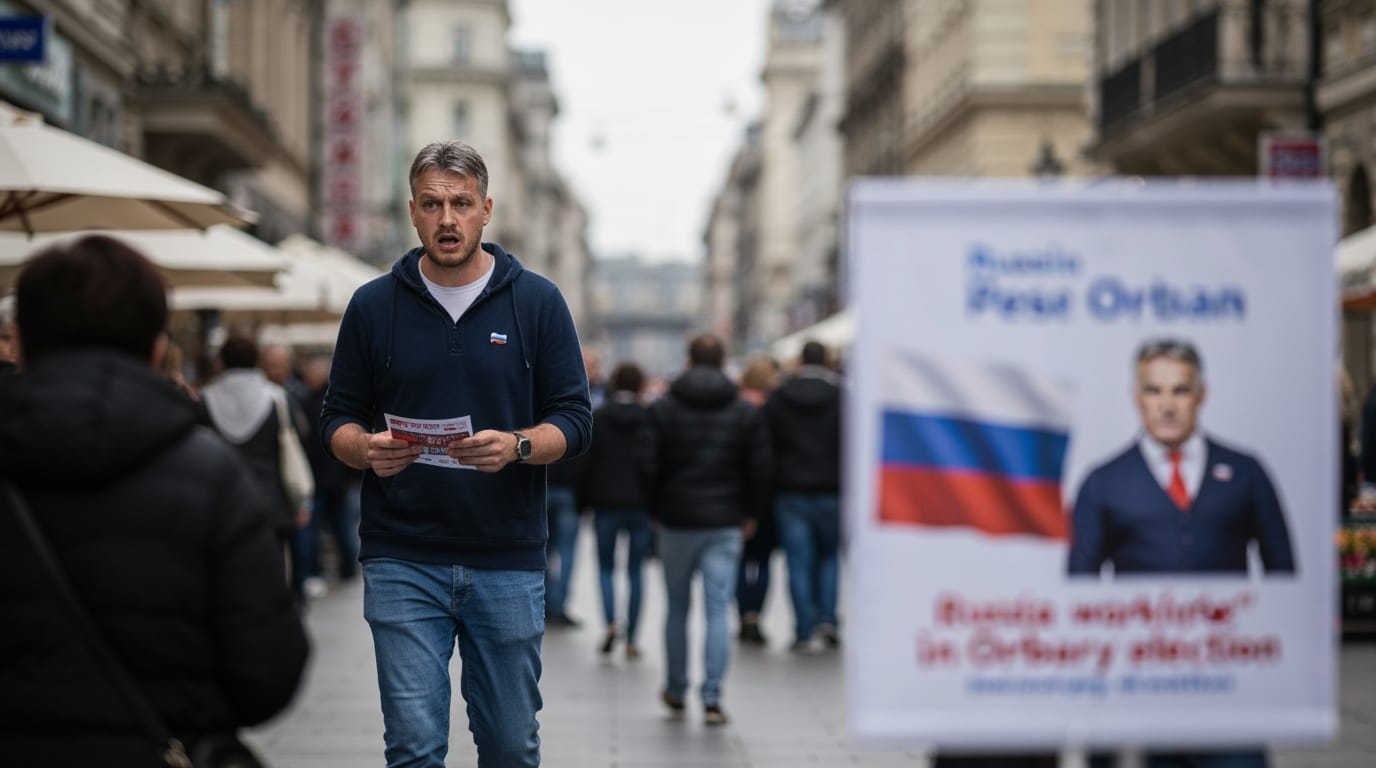
BUDAPEST — With Hungary's parliamentary elections set for April 12, a swirl of serious allegations has emerged, suggesting Russian efforts are underway to influence the outcome in favor of incumbent Prime Minister Viktor Orbán and his Fidesz party. European security sources, investigative journalists, and opposition figures claim that Moscow is employing a sophisticated campaign of disinformation and covert operations to bolster Orbán's position against a resurgent opposition. The revelations come at a critical juncture, as polls indicate a surprisingly tight race, marking what could be Orbán's toughest electoral challenge in 16 years. The alleged interference, if proven, would not only undermine Hungary's democratic integrity but also deepen concerns across the European Union and NATO about Russia's persistent attempts to destabilize the region.
Kremlin's Alleged Covert Campaign Unveiled
Reports from several European security agencies and investigative outlets, including VSquare and the Financial Times, detail a multi-pronged Russian influence operation targeting the upcoming Hungarian election. At the heart of these allegations is the purported deployment of "political technologists" linked to Russian military intelligence (GRU) to Budapest. These operatives are said to be working from within the Russian embassy, shielded by diplomatic immunity, to manage an online influence campaign. The Kremlin-linked Social Design Agency, already sanctioned by the United States for past election interference, is reportedly central to drafting this strategy.
The alleged plan involves inundating Hungarian social media platforms with pro-Orbán content, including memes, infographics, and short videos. This material, designed in Russia, is then intended to be disseminated by influential Hungarians, creating the illusion of organic, homegrown support. Simultaneously, the campaign is said to target Orbán's primary challenger, Péter Magyar, leader of the Tisza Party. Messaging aims to portray Magyar as a "puppet of Brussels" or an "EU puppet with no outside support," while his party is depicted as rife with "incompetence, division, and secret agendas." Concerns have also been raised about rumors of a purported sex tape involving Magyar, which some analysts fear could surface shortly before the vote.
Sergei Kiriyenko, Putin's First Deputy Chief of Staff and a key architect of Russia's foreign influence operations, is reportedly overseeing the Hungarian campaign. Sources suggest the tactics mirror those previously observed in Moldova's 2024 presidential election, where Russia allegedly employed vote-buying networks, troll farms, and local activists to sway public opinion. Both Moscow and the Hungarian government have vehemently denied these accusations, dismissing them as unfounded and politically motivated.
Orbán's Russia Stance Under Scrutiny
Prime Minister Viktor Orbán has long maintained a uniquely warm relationship with Moscow, distinguishing Hungary from many of its European Union and NATO allies. This stance has come under renewed scrutiny amid the allegations of Russian election interference. Orbán has consistently advocated for preserving economic ties with Russia, even as most EU countries have sought to distance themselves. His government is proceeding with the Russian-backed Paks II nuclear energy project, and Hungary remains heavily reliant on Russian oil, for which Orbán secured a U.S. sanctions exemption.
Hungary's foreign policy under Orbán has frequently obstructed Western efforts to impose sanctions on Moscow and provide military or financial aid to Ukraine. Domestically, Orbán has increasingly focused his campaign rhetoric on the ongoing conflict in Ukraine, often demonizing Kyiv. He has claimed that Ukraine poses a threat to Hungary's energy infrastructure and has deployed military forces around key facilities, raising fears among some critics of potential "false flag" operations that could be used to justify postponing the elections or imposing emergency measures. This narrative aligns with the alleged Russian influence strategy, which seeks to amplify anti-Ukraine and anti-EU messaging.
Orbán's political philosophy, which he terms "illiberal democracy," has seen Hungary drift away from traditional Western democratic norms. His government has faced accusations of democratic backsliding, weakening judicial independence, and increasing corruption. These internal developments, coupled with his close ties to Russia and China, have made Hungary a complex and often contentious member within the EU.
The Rise of Péter Magyar and Opposition Challenges
The current electoral landscape in Hungary presents a significant challenge to Orbán's long-standing dominance. Polling data suggests the opposition Tisza Party, led by Péter Magyar, is currently leading Fidesz among decided voters. Magyar, a former insider of the Fidesz government, has emerged as a charismatic leader who appeals to voters by focusing on domestic issues such as healthcare, corruption, and social policy. Crucially, he has openly attacked Orbán's pro-Russian stance and positioned his party as pro-European.
Magyar has been vocal in demanding an end to what he calls foreign interference in Hungarian elections, calling for the immediate expulsion of Russian intelligence officers and urging a meeting of Hungary's National Security Committee to address the intelligence. His emergence has invigorated the opposition, which for years struggled to find a leader capable of effectively challenging Orbán's entrenched power. The accusations of Russian meddling have added a complex geopolitical dimension to an already contentious election.
Broader Implications for European Democracy
The alleged Russian interference in the Hungarian election carries significant implications beyond Hungary's borders. It underscores a broader pattern of Moscow's attempts to undermine democratic processes and sow discord within European nations, particularly those within NATO and the EU. For the European Union, the situation in Hungary represents a test of its commitment to democratic values and the rule of law among its member states.
EU leaders are under pressure to establish clear "red lines" regarding election manipulation. Some analysts argue that the EU must explicitly warn Orbán that interfering with the electoral process or refusing to accept democratic outcomes would trigger severe consequences. The situation highlights the vulnerability of member states to external influence operations, especially when domestic political leaders may be perceived as receptive to such overtures. The outcome of the April 12 election, and the integrity of the process itself, will be closely watched across Europe as a barometer of democratic resilience against foreign interference.


