The Unblinking Eye: Drone Supremacy Defines the High-Stakes Battle for Kupiansk
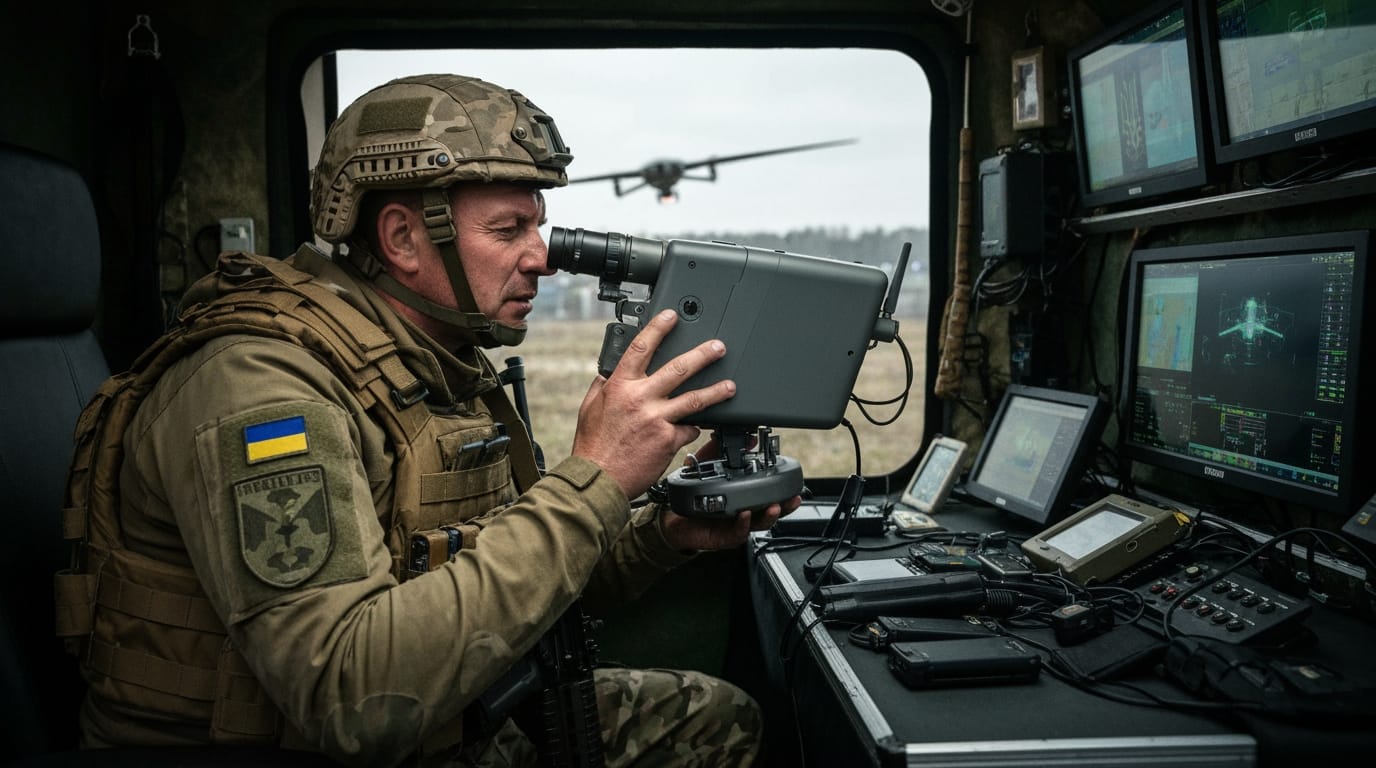
Kupiansk, Ukraine – On the eastern front lines of Ukraine, where the scarred landscape bears witness to relentless conflict, a new form of warfare has seized dominance. The battle for the strategic city of Kupiansk has become a crucible for advanced drone technology, transforming every skirmish into a high-tech dance of surveillance, precision strikes, and counter-measures. What once was a supporting asset has evolved into the central protagonist, shaping battlefield tactics and determining survival in an environment where, as one observation suggests, "Whoever wins the drone war in Ukraine dominates."
The Dawn of Drone Dominance on a Critical Front
The Kupiansk front, a key logistical hub in the Kharkiv region, has emerged as a stark illustration of modern warfare's technological pivot. Here, the skies are perpetually contested, swarming with unmanned aerial vehicles (UAVs) of all types, from nimble first-person view (FPV) drones to sophisticated reconnaissance platforms and heavy transport models. This dense aerial presence has rendered traditional military movements perilous, pushing both Ukrainian and Russian forces to adapt or perish. The sheer volume of drone activity dictates the rhythm of combat, turning daylight operations into high-risk endeavors and forcing logistical resupply to rely on the brief respite of poor visibility or fog.
Ukrainian forces have, in particular, leveraged drone technology to create what has been termed a "drone kill zone" near Kupiansk, a defensive network so effective that it reportedly neutralizes a staggering 88% of Russian units before they can even reach fortified positions. This tactic has restricted Russian infantry movement to within a single kilometer, making them vulnerable targets even outside direct engagement zones. The strategic implications are profound; while Russia retains a numerical advantage in traditional hardware, the technological contest, particularly in drone capabilities, is increasingly central to the conflict's developments.
A Battlefield of Constant Evolution: FPV and Fiber-Optic Systems
The drone war in Kupiansk is characterized by a rapid and continuous technological arms race. FPV drones have become one of the most dangerous threats on the battlefield, used extensively by both sides for direct attacks. Russian forces have intensified their use of FPV and fiber-optic drones, especially during periods of clear weather or following Ukrainian counteroffensives. Fiber-optic controlled drones, capable of operating at distances up to 40 kilometers, offer enhanced resilience against electronic warfare (EW) systems, a crucial advantage in this heavily contested electromagnetic spectrum. Ukrainian developers are actively working to match and surpass this capability, with fiber-optic cable drones reaching lengths of about 20 kilometers.
The evolution isn't limited to offensive capabilities. Russian drones, including Shahed and Geran strike UAVs, are being systematically rebuilt with an increasing reliance on Chinese electronics (up to 60-65%), along with components from the U.S., Switzerland, the UK, Taiwan, Japan, and Germany, often acquired through complex supply chains to circumvent sanctions. These drones feature multi-component navigation antennas for better performance in EW conditions and integrate 3G/GSM modems for telemetry and coordinate transmission via messenger apps, allowing for real-time analysis of air defense and EW system operations. Some even carry delayed-action cluster munitions, posing a significant danger by effectively mining strike areas.
The Unseen War: Electronic Warfare and Countermeasures
Electronic warfare (EW) plays an equally critical role, constantly striving to suppress enemy drones and protect friendly assets. The increasing sophistication of drones, however, often overloads EW systems. Russian forces have been observed adapting, using antennas and repeaters to compensate for the loss of Starlink access earlier this year. Ukraine, for its part, is developing advanced communication systems like "BakhmutTelecom," a network of Wi-Fi relay stations designed to partially replace Starlink terminals, which Russian electronic reconnaissance can easily locate.
The strategic competition extends to the development of interceptor drones, with Ukraine's Unmanned Systems Forces reporting the destruction of 100 enemy drones using these specialized interceptors. This constant cycle of innovation and counter-innovation ensures that the battlefield remains a dynamic testing ground for emerging military technologies.
The Human Toll and the Future of Combat
Amidst the high-tech struggle, the human element remains central, albeit dramatically transformed. Soldiers on the ground face the psychological burden of constant aerial surveillance, where every movement is watched and every position is vulnerable. The ability to operate drones has become a crucial skill, and units like Ukraine's ORION have integrated these systems not only for strikes but also for rescue operations in dangerous zones. There are recorded instances of up to 12 drones simultaneously attacking a single infantryman, highlighting the overwhelming nature of this new threat.
The drone war also profoundly impacts logistics, with both sides struggling to resupply positions under constant aerial observation. Russian forces have begun using heavy transport drones to deliver vital supplies like food, water, and ammunition to isolated locations. The casualties are significant; Russian drone attacks killed a 47-year-old man in Khatnie village and targeted police evacuation missions in Hrushivka, both in the Kupiansk district. Ukraine's military reports that drones have overtaken artillery as the primary cause of Russian fatalities, with monthly Russian losses projected to increase to 50,000-60,000 through the use of unmanned and robotic systems.
This paradigm shift underscores a broader trend: the role of the individual soldier on the battlefield is evolving, becoming more integrated with robotic platforms. Ukraine's Commander-in-Chief, Oleksandr Syrskyi, emphasizes the protection of infantry, stating the goal is for soldiers to "first operate a drone, a robotic platform, and only then goes in himself". The next frontier involves developing ground robotic complexes for humanitarian tasks and as full-fledged combat elements, capable of entering dangerous zones to conduct fire, deliver ammunition, and cover positions, minimizing human risk.
Conclusion: A War Defined by the Sky
The conflict in Kupiansk offers a stark preview of 21st-century warfare, where drone technology is not merely an adjunct but the defining characteristic of the battlefield. The relentless technological competition, marked by rapid innovation in offensive and defensive drone systems, alongside sophisticated electronic warfare, has created an environment of constant surveillance and immediate threat. The side that maintains superiority in this aerial domain gains a decisive advantage, influencing troop movements, logistical capabilities, and ultimately, territorial control. As both Ukraine and Russia continue to pour resources into developing and deploying advanced drone systems, the skies over Kupiansk remain the true battleground, shaping the future trajectory of the conflict and redefining the very nature of modern combat.


