Kosovo's New Foreigners Law Stirs Deep Fears Among Ethnic Serbs, Threatening Daily Life and Regional Stability
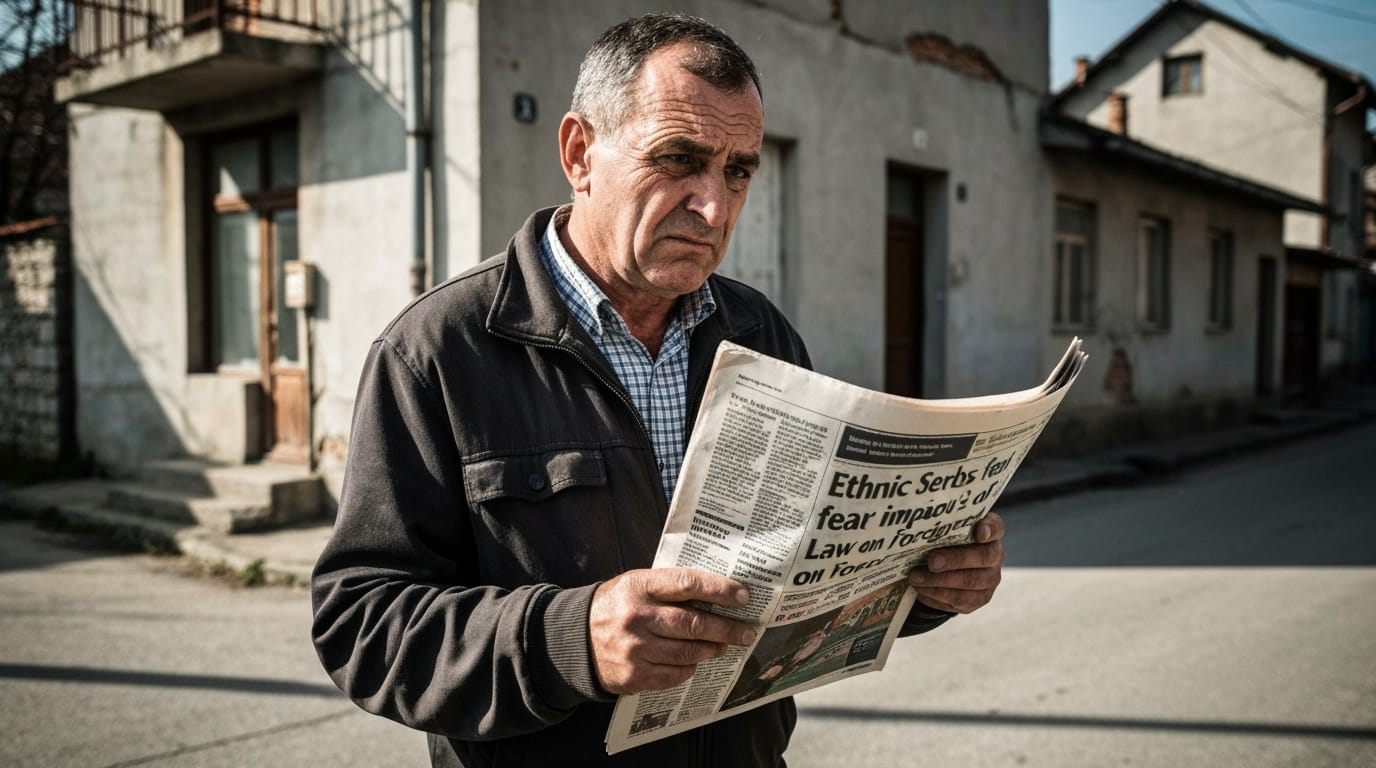
Pristina, Kosovo – As a crucial March 15 deadline looms, a new Law on Foreigners enacted by Kosovo is generating profound anxiety and uncertainty within the ethnic Serb community, raising fears that thousands could effectively become "foreigners in their own land." The legislation, alongside an accompanying Law on Vehicles, mandates strict new requirements for residency, work permits, and vehicle registration for anyone without Kosovo-issued documents, a category that includes a substantial portion of Kosovo's ethnic Serb population. Critics argue that the full implementation of these laws could severely disrupt daily life, jeopardize access to essential services, and deepen ethnic divisions in an already volatile region.
A Legal Framework Redefining Residency
The Law on Foreigners, though adopted in 2013, is now facing strict enforcement, particularly impacting those who lack Kosovo citizenship. Under the new regulations, individuals residing in Kosovo without official Kosovo documents, including many ethnic Serbs who possess only Serbian identification cards, will be classified as foreign nationals. This reclassification necessitates that they register with the local Ministry of Internal Affairs (MUP) within three days of arrival and obtain temporary or permanent residency and work permits. Officials have indicated that over a thousand Serbs, predominantly in the northern regions and Metohija, are expected to be directly affected, with Serbian officials claiming the law threatens more than 10,000 individuals living and working in Kosovo.
The law stipulates various types of residency, including short-term (up to 90 days), temporary, and permanent. Temporary permits, granted for reasons such as family reunification, education, or employment, are typically valid for up to one year and require renewal. The decision on approval for these permits rests with MUP officials. This bureaucratic process, while seemingly standard in other contexts, becomes highly problematic for ethnic Serbs who have faced long-standing administrative obstacles in obtaining Kosovo citizenship or documents.
Compounding the issue is the Law on Vehicles, which also takes full effect on March 15. This law prohibits Kosovo citizens from driving vehicles with foreign license plates without the legal owner present, effectively targeting those using Serbian-registered vehicles with Serbian identification. Many Kosovo Serbs currently operate cars with Serbian plates under authorizations that will no longer be recognized, restricting their movement and impacting their livelihoods.
Healthcare and Education on the Brink
The implications extend far beyond personal documents and vehicle registrations, casting a shadow over critical public services like healthcare and education. A significant concern is the potential collapse of Serbian-run institutions in Kosovo, including the Clinical Hospital Centre in Kosovska Mitrovica and the University of Priština, which has its temporary headquarters in the same city. Many doctors, professors, and students within these institutions operate under the Serbian system and do not possess Kosovo documents.
Professor Aleksandar Božović, an orthopedic specialist and faculty member at the University of Priština in Kosovska Mitrovica, expressed deep concern that medical staff without Kosovo documents may no longer be able to work after the deadline, seriously jeopardizing the functioning of the healthcare system. The problem is exacerbated by ambulance vehicles registered in central Serbia, which may face restrictions, further hampering emergency services. Similarly, the University of Priština in Kosovska Mitrovica, which draws a significant portion of its students and staff from central Serbia and other neighboring regions, faces an uncertain future. Professor Duško Čelić from the Faculty of Law warned that a rigid application of these regulations could make the university's operations impossible, particularly as many students and a substantial percentage of professors lack Pristina-issued documents dueoved. Serbian civil society and academic representatives have highlighted that these Serbian health and educational institutions are not accredited within the Kosovo system, creating a direct conflict with the new legal requirements for work permits. Some Serbian representatives have described these measures as an attempt at "forced integration" or even "ethnic cleansing through administrative means," aimed at marginalizing the Serb community.
A History of Disputed Sovereignty and Unmet Commitments
The current situation is deeply rooted in the complex and often fraught relationship between Kosovo and Serbia. Kosovo unilaterally declared independence from Serbia in 2008, a move that Serbia continues to reject, viewing Kosovo as its Autonomous Province of Kosovo and Metohija. Despite years of EU-facilitated dialogue aimed at normalizing relations, including the 2013 Brussels Agreement, many disputes remain unresolved.
A key sticking point has been the establishment of the Association of Serb Municipalities, intended to provide a degree of autonomy for Serb-majority areas in Kosovo, a commitment from the Brussels Agreement that remains unfulfilled. This historical context contributes to the deep distrust felt by many ethnic Serbs towards Pristina's institutions. Many have maintained Serbian documentation due to a combination of administrative hurdles in obtaining Kosovo documents, a desire to uphold their ties to Serbia, and a lack of belief in the legitimacy of Kosovo's institutions. Although Kosovo authorities previously allowed for the acquisition of "additional" citizenship based on Serbian documents, the current enforcement of the Law on Foreigners introduces new challenges for those who have not navigated this process or who wish to maintain their existing status. Kosovo, for its part, maintains that it is enforcing its sovereign right to ensure all persons residing within its borders are registered according to its laws, citing reasons of security and legal regularity.
Urgent Appeals and International Scrutiny
The impending implementation has sparked urgent appeals from Serbian officials, civil society groups, and academic communities for international intervention. Over 30 representatives of Serbian civil society in Kosovo, along with members of the academic community, have called on the international community, including QUINT countries, the European Union (EU), and the Organization for Security and Cooperation in Europe (OSCE), to take "concrete measures" and press for a temporary suspension of the Law on Foreigners. They argue that the law, in its current form and context, would lead to "widespread discrimination" against Serbs.
Serbian officials have consistently described the laws as "institutional pressure" and "discriminatory legislation" designed to create a new wave of persecution and potential expulsion of Serbs. In response, some Serbian opposition parties have announced protests, including traffic blockades, under the slogan "Serbs are not foreigners within their own country."
The EU Office in Kosovo has acknowledged the situation, stating that it supports Kosovo's efforts to register all persons in accordance with its law and provide them with Kosovo documents, whether as citizens or valid residence permit holders. However, the EU also emphasized that "it is the responsibility of the public authorities to create the conditions for such registration to take place in an orderly manner for all." This nuanced position highlights the delicate balance between upholding sovereign law and protecting minority rights, a challenge that continues to define the relationship between Pristina and Belgrade.
Conclusion
The full implementation of Kosovo's Law on Foreigners and Law on Vehicles on March 15 represents a critical juncture for ethnic Serbs in Kosovo and for the broader stability of the region. While Pristina asserts its right to establish and enforce its legal framework, the concerns raised by the Serb community underscore the potential for significant human impact, ranging from administrative marginalization to severe disruptions in healthcare and education. The international community's calls for dialogue and the creation of orderly conditions for registration reflect an understanding of the fragility of inter-ethnic relations and the necessity of solutions that safeguard the rights and livelihoods of all residents. As the deadline approaches, the coming weeks will reveal whether a pathway can be found to reconcile Kosovo's sovereign aspirations with the urgent human and practical needs of its ethnic Serb population, preventing further escalation of tensions and fostering an environment of inclusivity.


