Amidst Historical Discord, Ukraine and Poland Seek Unity at Gdansk Recovery Forum
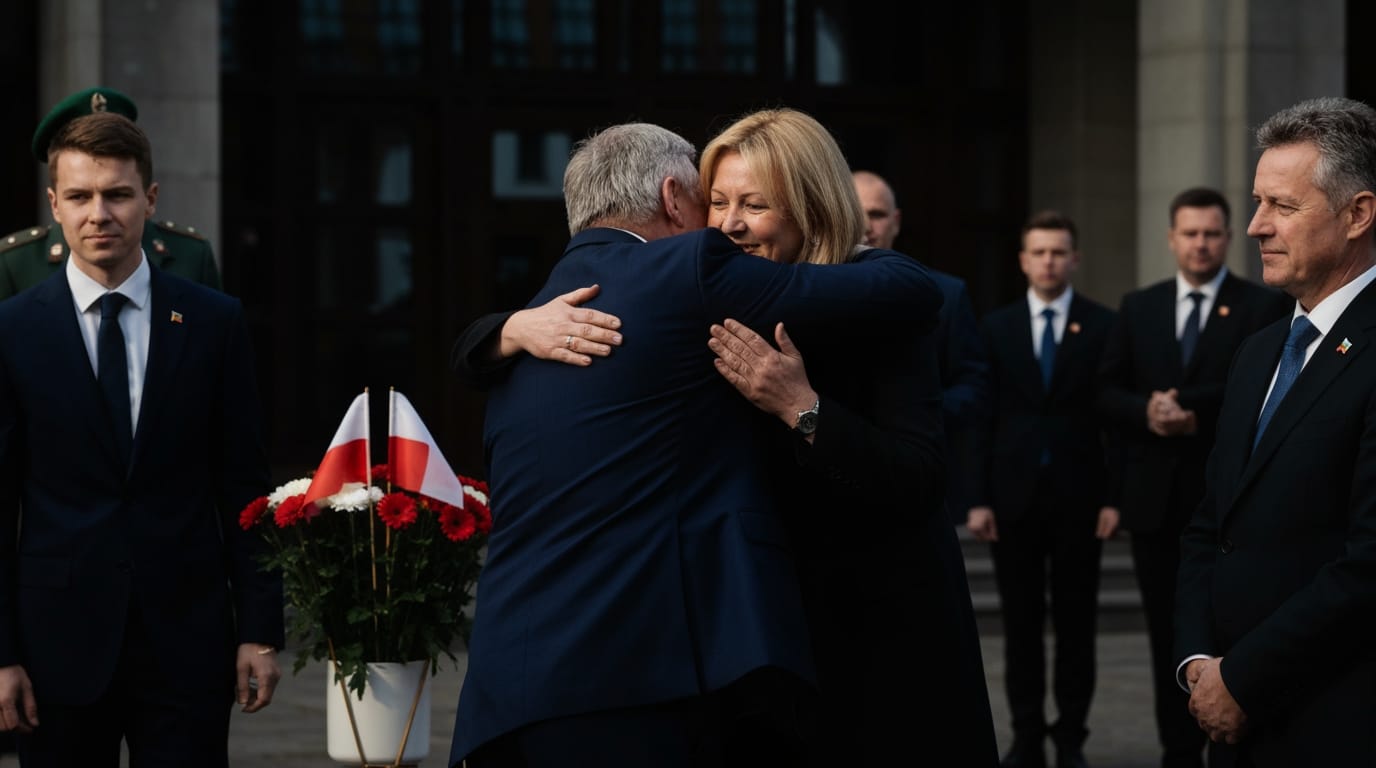
GDANSK, Poland – In a crucial display of pragmatic diplomacy, Ukraine and Poland opened the annual Ukraine Recovery Conference in Gdansk on Thursday, deliberately adopting a conciliatory tone aimed at de-escalating recent historical disputes that had threatened to overshadow the vital international aid event. The conference, a pivotal gathering for securing global support and investment for Ukraine's post-war reconstruction, provided a timely platform for both nations to reaffirm their commitment to a strategic partnership essential for regional stability against ongoing Russian aggression.
The setting for this delicate balancing act is the historic port city of Gdansk, itself a symbol of post-war rebuilding after its near-total destruction during World War II. Ukraine's Prime Minister Yulia Svyrydenko leads the Ukrainian delegation, after President Volodymyr Zelenskyy opted to skip the event following a sharp diplomatic spat. Despite the recent tensions, the overarching goal of the conference remains clear: to forge agreements worth over €10 billion, covering defense, business, and regional development, all critical for Ukraine's estimated $588 billion recovery needs.
The Weight of History: Volyn and the Battle Over Narrative
The underlying friction between Kyiv and Warsaw stems from deeply entrenched historical grievances, primarily centered on the Volyn massacres of 1943-1945. During this brutal period, Ukrainian nationalists, predominantly the Ukrainian Insurgent Army (UPA) with support from elements of the local Ukrainian population, carried out mass killings of up to 100,000 Poles in Volhynia and Eastern Galicia, then part of German-occupied Poland. Poland officially designates these events as an act of genocide, characterized by extreme brutality, with victims largely comprising women, children, and entire families.
Ukraine, while acknowledging the tragic nature of the events, resists the "genocide" label. Ukrainian historical narratives often frame these actions within a broader struggle for national independence against both Nazi German and Soviet forces, leading to the controversial veneration of figures and groups, such as Stepan Bandera and the UPA, who are implicated in the massacres but also seen by some Ukrainians as freedom fighters. This divergence in historical memory has consistently strained bilateral relations, even as both countries share a common border and face a shared threat from Russia. Efforts at reconciliation have been made over the years, including joint commemorations and permission for exhumations of Polish victims in Ukraine, yet the issue frequently re-emerges, threatening to derail cooperation.
Diplomatic Crisis Threatens Crucial Alliance
The lead-up to the Gdansk conference saw an acute escalation of this historical dispute, triggering one of the most severe diplomatic crises between the two nations in years. The immediate catalyst was President Zelenskyy's decision last month to name a Ukrainian military unit after the Ukrainian Insurgent Army (UPA), a move intended to restore national military traditions but deeply offensive to Poland.
In swift response, Polish President Karol Nawrocki, representing a segment of the Polish political spectrum fiercely protective of the Volyn narrative, announced he would strip President Zelenskyy of the Order of the White Eagle, Poland's highest state honor. This unprecedented move triggered a cascade of diplomatic repercussions. President Zelenskyy reportedly returned the medal via post, and several top Ukrainian officials, including former presidents, followed suit, relinquishing their own Polish awards in a show of solidarity. Ukrainian officials suggested that such actions served Russia's agenda, aiming to sow discord between crucial allies. The controversy prompted President Zelenskyy to initially decide against attending the Gdansk conference, with Ukraine's Foreign Ministry spokesman, Georgiy Tykhy, citing a need to prevent "excessive politicization" and "scandals" from derailing the event's primary purpose.
The Imperative of Unity: A Common Threat Forges Cooperation
Despite the acrimony, the imperative of maintaining a united front against Russia proved stronger than the historical divides. Poland has been one of Ukraine's most steadfast allies since the 2022 invasion, serving as a critical logistics hub for Western military aid, accepting millions of Ukrainian refugees, and vocally supporting Ukraine's aspirations for European Union membership. Both nations recognize that ongoing Russian aggression poses an existential threat to their security and sovereignty, making sustained cooperation non-negotiable.
Polish Prime Minister Donald Tusk played a pivotal role in de-escalating tensions ahead of the conference. He underscored the importance of building future-oriented relations with Ukraine and expressed determination that the Gdansk conference would proceed successfully, irrespective of any attempts to "sabotage" their work. He called on the West to maintain faith in Ukraine's ability to rebuild, drawing parallels with Gdansk's own post-war recovery. Ukrainian Prime Minister Svyrydenko mirrored this sentiment at the conference opening, emphasizing Ukraine's commitment to "constructive and mutually beneficial partnership" founded on mutual respect. This shared commitment, driven by current geopolitical realities, allowed for the immediate goal of the conference—Ukraine's recovery—to take precedence over the historical disputes.
A Fragile Path Forward: Balancing Memory and Future
The Ukraine Recovery Conference in Gdansk is not just a platform for economic pledges but has become an unexpected forum for a delicate political balancing act. While the leaders present adopted a conciliatory tone, the deep-seated historical wounds of the Volyn massacres and the differing national interpretations of WWII-era events remain. The decision to proceed with the conference, even with Zelenskyy's downgraded attendance, signals a mutual understanding that the strategic alliance between Poland and Ukraine cannot be imperiled by historical disagreements, especially in the face of an ongoing war.
The Gdansk forum thus represents a critical, albeit fragile, moment for Polish-Ukrainian relations. It underscores that while historical truth and remembrance are vital for both nations, the immediate necessity of collective security and reconstruction against a common foe currently holds sway. The ability of Kyiv and Warsaw to navigate this complex historical terrain while simultaneously deepening their strategic partnership will be crucial not only for their bilateral ties but also for the broader architecture of European security and Ukraine's eventual integration into the European Union. The dialogue initiated, however cautiously, at Gdansk offers a glimmer of hope that the painful past can be acknowledged without sacrificing a vital shared future.


