Supreme Court Delivers Major Victory to Bayer, Blocking Thousands of Roundup Cancer Lawsuits
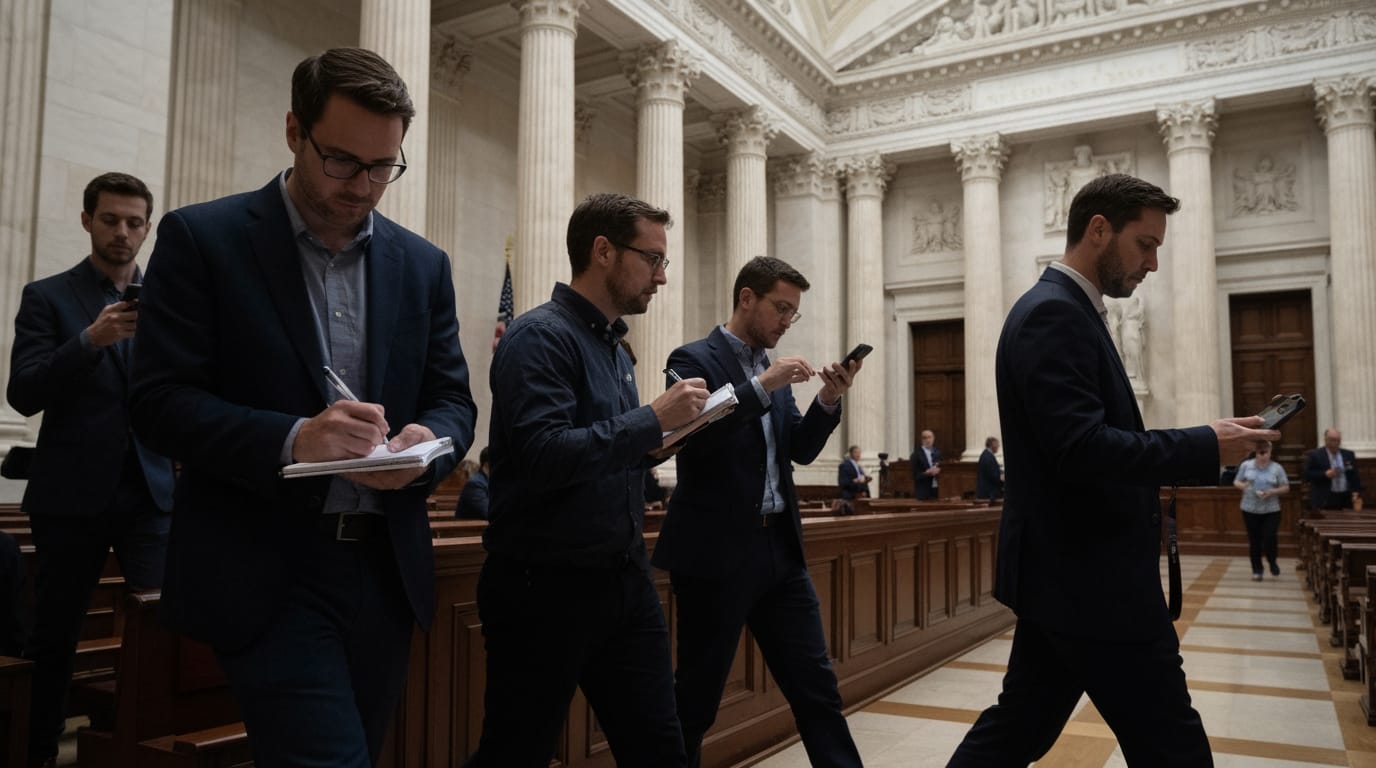
WASHINGTON – In a landmark 7-2 decision, the U.S. Supreme Court on Thursday, June 25, 2026, sided with Bayer AG, ruling that federal pesticide law preempts state-level "failure-to-warn" claims in lawsuits alleging that the company's popular weedkiller Roundup causes cancer. This pivotal judgment is expected to halt thousands of pending lawsuits against the agrochemical giant, providing a significant legal and financial reprieve to the German conglomerate.
The ruling reverses a $1.25 million verdict awarded to John Durnell, a Missouri man who claimed his non-Hodgkin lymphoma was caused by decades of using Roundup without adequate warning of its risks. The High Court’s decision centered on the Federal Insecticide, Fungicide, and Rodenticide Act (FIFRA), concluding that because the Environmental Protection Agency (EPA) approved Roundup's label without a cancer warning, federal law prevents states from imposing additional or different labeling requirements.
Federal Preemption Takes Center Stage
Justice Brett Kavanaugh penned the majority opinion, asserting that Durnell's state-law failure-to-warn claim "would require a cancer warning on Roundup's label — a requirement 'in addition to' and 'different from' the label required by EPA under FIFRA." Consequently, the claim is expressly preempted by federal law. This interpretation underscores the principle that federal regulations, once established, supersede state-level tort actions that might create conflicting requirements for product labeling. The EPA has consistently maintained that glyphosate, Roundup's active ingredient, is "unlikely to be carcinogenic to humans" and has not mandated a cancer warning on its label.
The decision saw an ideologically diverse majority, with Chief Justice John Roberts and Justices Clarence Thomas, Samuel Alito, Sonia Sotomayor, Elena Kagan, and Amy Coney Barrett joining Justice Kavanaugh. However, the ruling was not unanimous. Justice Ketanji Brown Jackson authored a dissenting opinion, joined by Justice Neil Gorsuch. Justice Jackson argued that while FIFRA limits states' authority over pesticide labels, it does not eliminate it, suggesting that Durnell's claim should not be preempted if the alleged violation of state law also constituted a violation of FIFRA. She lamented that the majority's interpretation "unjustifiably closes the courthouse doors to state tort plaintiffs like Durnell," leaving those who have suffered "significant harms" without a remedy.
Bayer, which acquired Monsanto in 2018 for $63 billion, hailed the Supreme Court's decision as a vindication of its long-held stance and a crucial step towards resolving years of costly litigation. Following the announcement, Bayer's shares surged by as much as 19%, marking its largest single-day increase in 23 years. The company stated that the ruling is "good for science, farmers, and industries that depend on regulatory clarity for innovation," and expressed confidence that it would "help significantly contain the Roundup litigation after nearly a decade of legal battles." Bayer further anticipates that the decision will lead to the dismissal of current warning-based claims and effectively bar future failure-to-warn claims.
A Decade of Litigation and Conflicting Science
The legal battle over Roundup began in earnest following the 2015 classification by the World Health Organization's International Agency for Research on Cancer (IARC), which deemed glyphosate "probably carcinogenic to humans." This classification fueled a torrent of lawsuits, with over 100,000 plaintiffs filing claims in U.S. state and federal courts alleging that exposure to Roundup caused their non-Hodgkin lymphoma.
Despite the IARC's findings, the U.S. EPA has maintained a contrasting position, repeatedly concluding that glyphosate is not likely to be carcinogenic to humans and that products containing it, when used according to label directions, do not pose risks of concern to human health. This divergence in scientific opinion has been a central point of contention throughout the litigation. The EPA's stance has been a cornerstone of Bayer's defense, arguing that it could not be held liable for failing to warn about a risk that the federal regulator did not acknowledge or require a warning for.
Before the Durnell ruling, Bayer had faced mixed results in court. While it secured some trial victories in state courts, it also encountered significant setbacks, including substantial jury awards. For instance, in 2019, juries awarded large sums to individuals like Edwin Hardeman ($25 million, later upheld by lower courts) and the Pilliod couple ($87 million after reductions). The Supreme Court had previously declined to review appeals from Bayer in both the Hardeman and Pilliod cases in 2022, which at the time left those verdicts intact and was seen as a blow to the company. The Durnell case, therefore, represents a crucial shift, as it directly addressed the preemption argument and overturned a state court verdict, unlike the earlier denials of certiorari.
The Preemption Argument: A Shield for Manufacturers?
The core legal argument successfully deployed by Bayer rests on the doctrine of federal preemption, specifically under FIFRA. This law grants the EPA authority to regulate pesticide sales and labeling. Bayer contended that because the EPA has extensively reviewed glyphosate and approved its labeling without a cancer warning, any state-mandated warning would be "in addition to or different from" federal requirements, and thus prohibited by FIFRA.
This argument found a receptive ear at the Supreme Court. The majority opinion highlighted that federal law mandates pesticide manufacturers to use EPA-approved labels unless and until the EPA approves or requires a change, with potential civil and criminal penalties for non-compliance. By this logic, a state court's requirement for a cancer warning on Roundup's label would place manufacturers in an untenable position, forcing them to choose between violating federal or state law. The Department of Justice, under the previous administration, had also supported Bayer's position, arguing that the EPA's comprehensive review should dictate labeling on a nationwide basis.
However, critics, including the dissenting justices and consumer advocacy groups, contend that this ruling effectively shields corporations from accountability for product harm when federal agencies do not mandate specific warnings. Patti Goldman, a senior attorney at Earthjustice, expressed concern that the EPA's approval "should not become a shield for companies that fail to warn about cancer risks." Similarly, Ricky LeBlanc, managing attorney at Sokolove Law, called the decision "deeply disappointing" for individuals allegedly suffering from Roundup exposure and for the broader principle of corporate accountability.
Implications for Future Litigation and Settlements
The Supreme Court's ruling is expected to have far-reaching consequences for Bayer and the landscape of product liability litigation. It likely means the dismissal of thousands of existing failure-to-warn claims against Bayer. The company has already resolved over 100,000 Roundup claims, paying approximately $10 to $11 billion in prior verdicts and settlements.
In February 2026, Bayer announced a proposed $7.25 billion class settlement designed to resolve both current and future non-Hodgkin lymphoma claims related to Roundup exposure. This settlement received preliminary court approval in March 2026, and the Supreme Court's decision could significantly impact its final structure and the number of claimants who opt-in, as many "failure-to-warn" arguments are now undermined.
While the ruling addresses "failure-to-warn" claims, it's important to note that other types of claims, such as those alleging negligence or design defect, may not be directly impacted. However, failure-to-warn claims represented a substantial portion of the ongoing litigation. The decision also sets a precedent that could extend beyond Roundup, influencing product liability cases across various industries where federal regulatory approval of labeling exists. This could potentially shift more accountability towards federal regulatory bodies and away from manufacturers in such contexts.
The agricultural industry, represented by groups like CropLife America and the American Soybean Association, lauded the decision, emphasizing the importance of consistent, science-based labeling and regulatory clarity for innovation and agricultural competitiveness. Conversely, environmental and public health advocates view the ruling as a setback for consumer protection and question the adequacy of federal oversight when it comes to potential health risks from widely used chemicals. The battle over glyphosate's safety and corporate accountability, though significantly altered by this Supreme Court decision, appears destined to continue in various forms.


