Pyongyang Escalates Tensions with Ballistic Missile Tests and Assertive 'Offensive Posture'
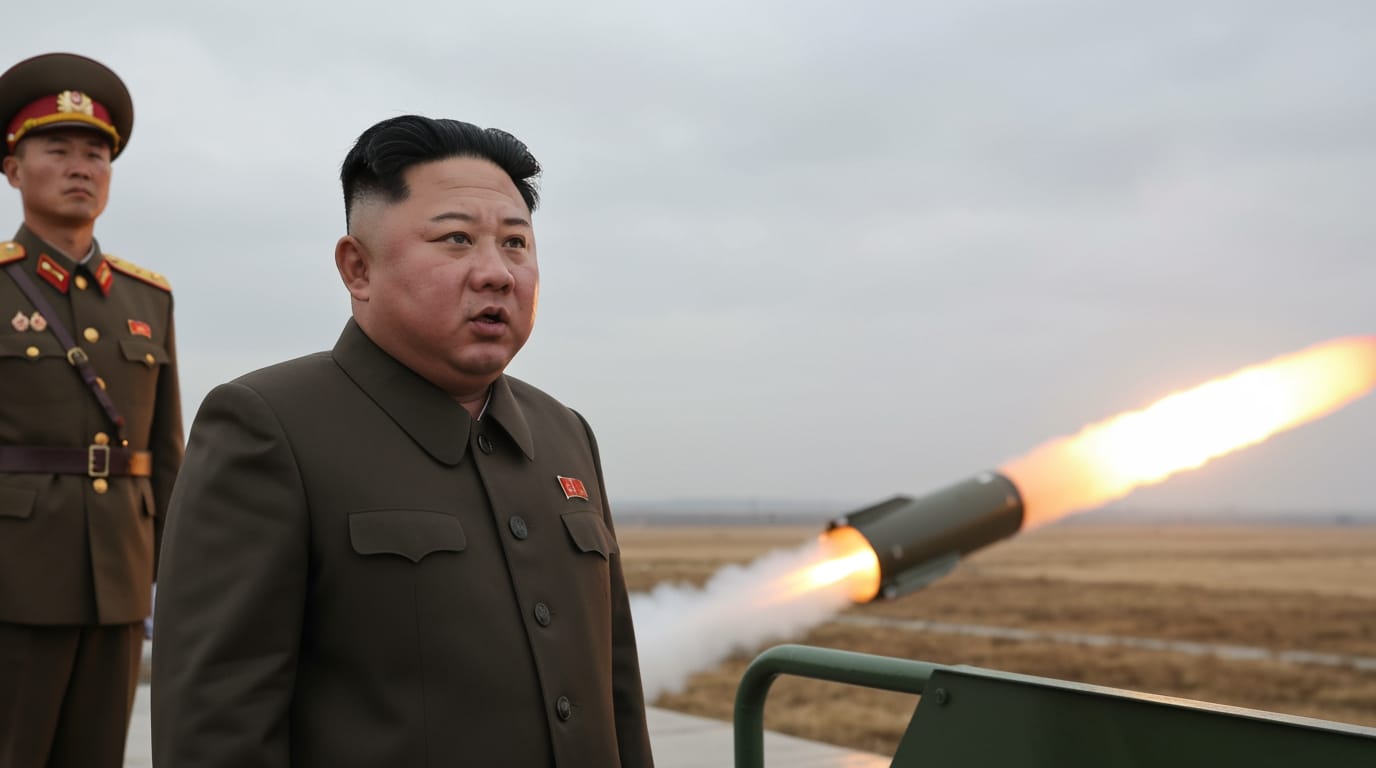
North Korea has dramatically intensified its military posturing in recent weeks, conducting a series of ballistic missile tests and other weapons demonstrations under the direct supervision of leader Kim Jong Un. These actions are accompanied by increasingly aggressive rhetoric from Pyongyang, signaling a fundamental shift towards a more confrontational "offensive posture" aimed at regional adversaries, particularly South Korea and the United States. The latest weapons launches, which included tactical ballistic missiles, upgraded multiple rocket launch systems, and extended-range artillery, underscore North Korea's unwavering commitment to developing its military capabilities in defiance of international condemnation and stalled denuclearization talks.
A Flurry of Advanced Weaponry
The recent wave of weapons tests saw Kim Jong Un overseeing the launches of several advanced systems designed to enhance North Korea's capacity for preemptive strikes and deterrence. State media reports highlighted the successful evaluation of a "special mission" warhead for a tactical ballistic missile, an upgraded multiple rocket launch system, and extended-range shells for a self-propelled howitzer. The tactical ballistic missile's warhead, in particular, was described as capable of inflicting "fatal damage" on critical enemy targets such as airfields, ports, and power facilities.
On at least one occasion, multiple short-range ballistic missiles were fired toward an island target zone, demonstrating the system's ability for concentrated suppression strikes across a significant area. Another test involved new surface-to-sea missiles, with Kim emphasizing their importance for the navy and accusing South Korea of violating what Pyongyang claims as its territorial waters. These developments follow earlier tests in 2024, including a suspected intermediate-range ballistic missile fitted with a hypersonic glide vehicle and a new cruise missile variant. The frequency and nature of these tests illustrate North Korea's accelerated push to modernize its artillery and missile forces, aligning with a stated five-year defense development plan.
Pyongyang's Shifting Doctrine of Aggression
Kim Jong Un's pronouncements accompanying these tests reveal a doctrine increasingly centered on an "offensive posture," moving beyond merely defensive capabilities. North Korea's state media quoted Kim emphasizing the need to strengthen a "deadly and destructive offensive posture" to ensure that no enemy dares to confront the nation. He further asserted that making adversaries feel "constant uneasiness and fear" is a crucial aspect of exercising war deterrence. This rhetoric signifies a stark departure from previous diplomatic overtures and signals a determination to project military power more assertively.
The strategic intent behind these upgraded weapon systems appears unequivocally directed at South Korea and U.S. military assets in the region. North Korean reports indicated that the tested weapons are intended to target key sites in South Korea, including American military bases. Experts suggest that some of the newly tested artillery systems, if deployed effectively, could bring Seoul within striking range. This aggressive stance is further compounded by Pyongyang's recent declaration, in late 2023, that inter-Korean relations are those between "two states hostile to each other," effectively abandoning the long-held goal of peaceful reunification. This redefinition of the inter-Korean relationship underpins the heightened threat perception from Seoul and its allies.
A Decades-Long Trajectory of Military Expansion
North Korea's relentless pursuit of advanced weaponry is not a new phenomenon but represents an accelerated phase in its long-standing military development program. Since Kim Jong Un assumed power in 2011, the country has significantly increased the number of missile tests, tallying 129 as of April 2023. Between 2012 and 2023, North Korea conducted over 214 missile tests, introducing a diverse array of missile types, including short-range ballistic missiles (SRBMs), intermediate-range ballistic missiles (IRBMs), intercontinental ballistic missiles (ICBMs), submarine-launched ballistic missiles (SLBMs), and even claiming to have tested hypersonic weapons.
The developmental tests under Kim Jong Un have increasingly shifted towards operational and training tests, suggesting a focus on preparing for actual wartime deployment rather than mere research and development. This includes advancements in solid-fuel missile technology, which unlike liquid-fueled predecessors, allows for rapid deployment from concealed positions, significantly enhancing their operational utility and survivability. Pyongyang has consistently justified these developments as necessary self-defense measures against perceived external threats, even as its actions draw widespread international condemnation and tighter sanctions.
International Repercussions and Responses
The international community has reacted to North Korea's escalating provocations with deep concern. South Korea, Japan, and the United States have consistently condemned the missile tests as violations of United Nations Security Council resolutions, which prohibit North Korea from engaging in any ballistic missile activity. In response to the recent missile launches, the United States, in conjunction with South Korea and Japan, has conducted joint military drills, including deploying long-range bombers to the Korean Peninsula, to demonstrate their readiness and resolve to counter North Korea's advancing programs.
Diplomatic efforts to de-escalate tensions and resume denuclearization talks have remained stalled since the collapse of a summit between Kim Jong Un and then-U.S. President Donald Trump in 2019. Despite repeated calls for dialogue, North Korea has maintained that negotiations can only resume if the United States drops its demand for denuclearization as a precondition. This diplomatic deadlock, coupled with Pyongyang's accelerated weapons development and increasingly aggressive rhetoric, leaves regional security in a precarious state. While some analysts believe North Korea is not preparing for an imminent all-out war, the heightened hostility and continuous weapons tests undeniably raise the stakes for stability on the Korean Peninsula.
Conclusion: A Volatile Path Ahead
North Korea's recent ballistic missile tests and its leader's call for a stronger "offensive posture" represent a significant hardening of its military and political stance. By showcasing new tactical weaponry designed to target South Korea's critical infrastructure and U.S. bases, and explicitly redefining its relationship with the South as one of hostile states, Pyongyang has ushered in a period of elevated tension. This aggressive trajectory, fueled by a decade of accelerated weapons development and a refusal to re-engage in denuclearization talks without preconditions, presents an ongoing challenge to regional stability and international security. As the cycle of provocations and defensive responses continues, the path forward remains fraught with uncertainty, demanding careful diplomatic navigation amidst the growing military assertiveness from Pyongyang.


