Amsterdam Forges New Path: Capital Bans Fossil Fuel and Meat Advertising in Public Spaces
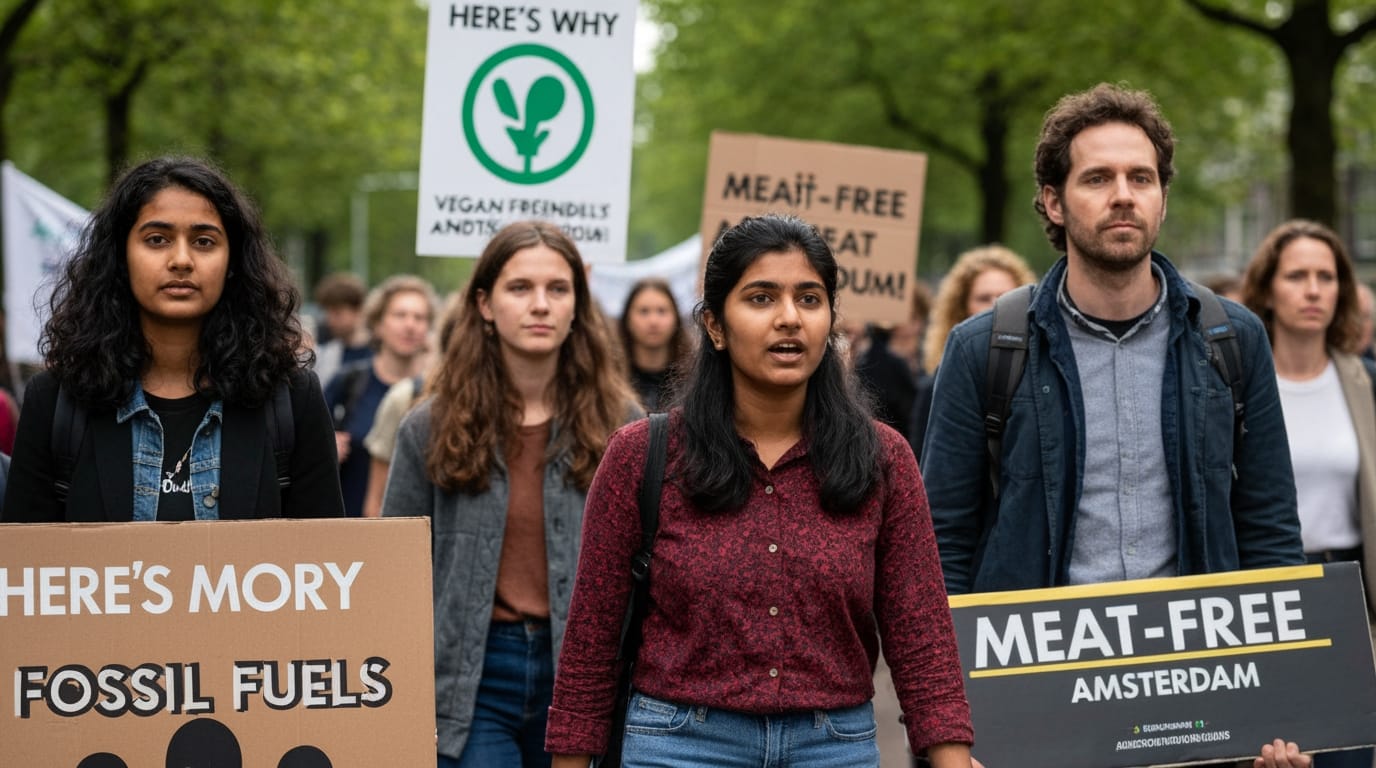
AMSTERDAM, Netherlands – In a landmark move reflecting a growing global imperative for climate action, Amsterdam has become the world's first capital city to prohibit public advertising for fossil fuels and meat products. Effective May 1, 2026, the sweeping ban transforms the urban visual landscape, removing promotional materials for high-carbon industries from billboards, tram shelters, and metro stations across the city. This bold policy underscores Amsterdam's unwavering commitment to its ambitious environmental targets, aiming to align public messaging with its vision of a carbon-neutral future.
The ban, formally approved by the city council with a 27-17 vote in January 2026, represents a significant escalation of Amsterdam's environmental strategy. Under the new ordinance, advertisements for items such as burgers, petrol cars, air travel, cruises, and even specific meat products like beef, chicken, pork, and fish are no longer permitted in public spaces. While ads on private shop premises and in print or digital media remain untouched, the city's public domain will now explicitly discourage consumption patterns deemed detrimental to the climate.
A Decisive Shift Towards Climate Neutrality
Amsterdam's advertising prohibition is not an isolated measure but an integral part of a broader, aggressive climate agenda. The city aims to achieve carbon neutrality by 2050, with interim targets including a 55% reduction in greenhouse gas emissions by 2030 compared to 1990 levels, and a substantial 95% reduction by 2050. To reach these goals, Amsterdam is actively pursuing a structural transformation away from fossil fuels, planning for all local traffic to be emission-free by 2030 and for all buildings to be natural gas-free by 2040.
Beyond energy and transport, the city has also set specific objectives for dietary changes, aiming to cut local meat consumption by 50% and encouraging residents to source 60% of their protein from plant-based foods by 2030. City leaders articulate that promoting products that contradict these climate and health objectives would undermine their efforts. Anneke Veenhoff of the GreenLeft Party succinctly articulated this rationale, stating that a city aspiring to lead in climate policies cannot simultaneously rent out its public spaces to promote activities that run counter to those very policies. The underlying philosophy posits that removing constant marketing pressure from large corporations can reduce impulse buying and reshape societal norms around high-carbon lifestyles.
From Agreement to Ordinance: Expanding the Ban's Reach
The recently enacted ban marks a significant tightening of previous, less comprehensive policies. Amsterdam first initiated steps to curb fossil fuel advertising in 2020, primarily through agreements with advertisers that largely restricted such ads to metro stations. However, these contract-based restrictions proved insufficient as many advertising contracts run for a decade or more, leading to continued visibility of fossil fuel promotions.
Recognizing this limitation, the city council, driven by the GreenLeft and Party for the Animals, moved to enshrine the ban in the municipal ordinance (APV). This legal amendment makes the prohibition city-wide and legally binding, applying to all advertising operators regardless of existing contracts. The measure covers product-specific advertising for high-carbon goods and services, including flights, petrol and diesel vehicles, and gas heating contracts. While corporate branding by fossil fuel and aviation companies may persist until current contracts expire (such as with JCDecaux in 2028), the focus is on dismantling direct promotional cues for environmentally damaging consumption.
Reactions and a Growing International Trend
The ban has elicited a mixed response from various stakeholders. Industry bodies, including the Dutch Meat Association and the Dutch Association of Travel Agents and Tour Operators, have voiced opposition, characterizing the move as an "undesirable way to influence consumer behavior" and a "disproportionate restriction on commercial freedom." The world's largest outdoor advertising company, JCDecaux, also cautioned the city council about potential "far-reaching financial and legal consequences" prior to the vote.
However, the legal groundwork for such prohibitions has been solidified by precedent. In April 2025, a Dutch court upheld a similar ban implemented by The Hague, ruling that a city's legitimate interest in protecting public health and the climate outweighs commercial interests. This judicial endorsement provided a critical foundation for Amsterdam's decision.
Amsterdam's initiative is also part of a burgeoning international movement. While it stands as the first capital city to enact such a comprehensive ban, several other Dutch cities, including Haarlem, Utrecht, Delft, and Nijmegen, have already introduced similar restrictions on fossil fuel advertising, and in some cases, meat advertising. Globally, more than 50 cities, including Stockholm, Edinburgh, and Sydney, have either implemented or are considering bans on advertising for polluting products and services. This growing trend suggests a paradigm shift in how urban centers perceive their role in shaping consumer behavior and fostering sustainable environments.
A Signal to the World
Amsterdam's decision sends a powerful message, positioning the city as a frontrunner in the global effort to combat climate change through novel policy approaches. By directly linking advertising content to environmental impact, the ban redefines public space as a platform not for unfettered commercial promotion, but for aligning with societal well-being and planetary health. As epidemiologist Joreintje Mackenbach noted, removing these visual cues can have a significant impact on social norms, akin to how junk food ad bans have influenced dietary habits.
The capital's pioneering step reflects a conviction that the climate crisis demands bold, systemic changes, including a reevaluation of what is publicly promoted and normalized. While questions remain regarding the long-term economic impacts and the full extent of behavioral change, Amsterdam's ban on fossil fuel and meat advertising stands as a significant experiment in urban climate governance, potentially inspiring other cities worldwide to reconsider their own advertising landscapes in the urgent pursuit of a sustainable future.


