German Chancellor Merz Navigates Turbulent First Year Amidst Economic Slump and Coalition Strife
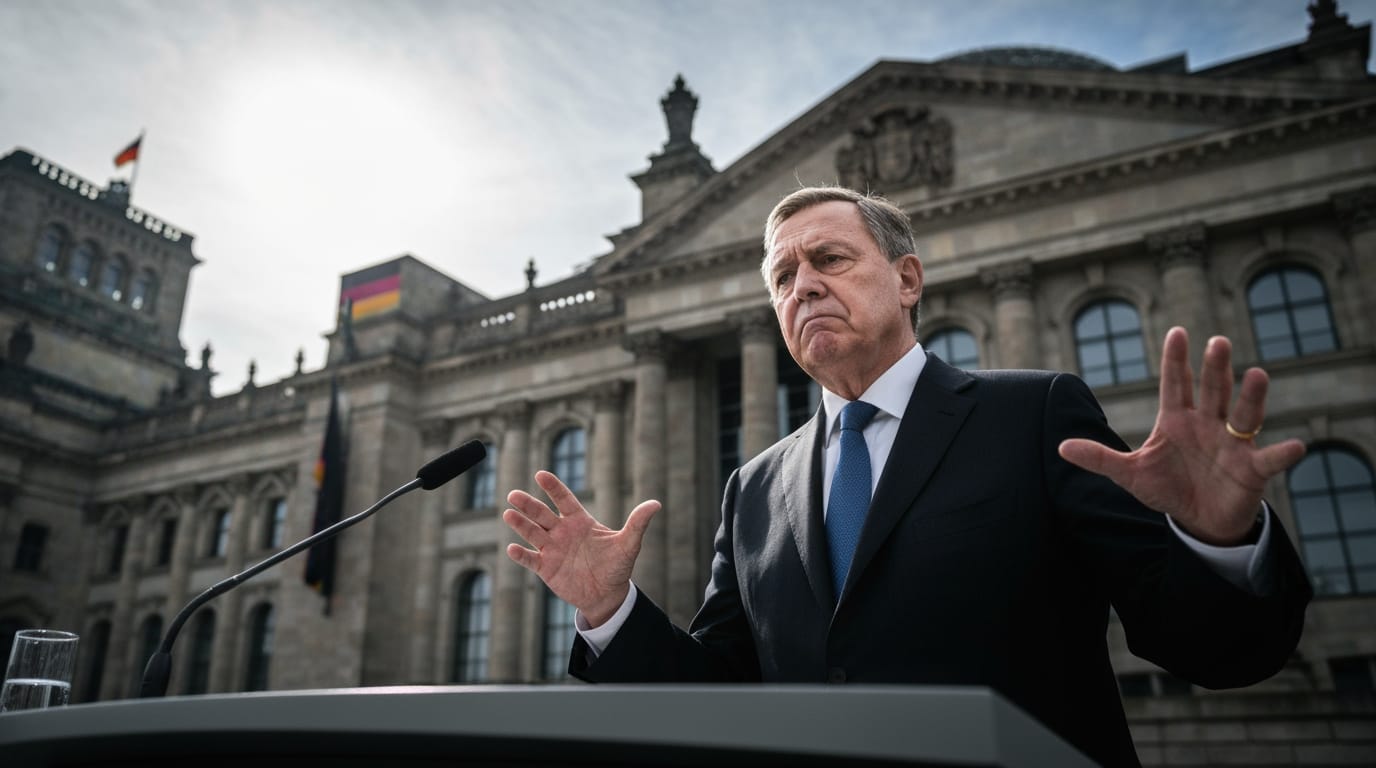
BERLIN – One year after Friedrich Merz ascended to the chancellorship on May 6, 2025, Germany finds itself grappling with a period of significant political and economic uncertainty under his leadership. Promising to reinvigorate the nation's political landscape, boost its international standing, and reignite a stagnant economy, Merz's first year in office has instead been marked by persistent coalition infighting, a struggling industrial sector, and flagging public confidence, raising questions about the stability and future trajectory of his government.
A Rocky Start and Enduring Coalition Fissures
Merz's path to the chancellorship was an early indicator of the challenges ahead. His election by the Bundestag on May 6, 2025, required two rounds of voting—an unprecedented occurrence in post-war Germany. This initial difficulty foreshadowed the persistent tensions that would plague his governing coalition, formed between his Christian Democratic Union (CDU) and the Social Democratic Party (SPD).
From the outset, clashes between the CDU/CSU alliance and the SPD have escalated, evoking comparisons to the fractious three-party coalition led by Merz's predecessor, Olaf Scholz, which collapsed in 2024. Critics point to Merz's sometimes forthright remarks and reportedly hot temper as contributing factors to the internal discord. Recent reports of an alleged shouting incident between Merz and his deputy, SPD's Lars Klingbeil, during intense reform negotiations underscore the volatile nature of the alliance. When questioned about the coalition's longevity until the scheduled 2029 elections, Merz conceded, "Nobody can guarantee anything," reflecting the fragility of his government.
Economic Headwinds and Industrial Decline
A central promise of Merz's campaign was to be "the reformer" who would relaunch the German economy. However, his first year has coincided with a period of severe economic downturn, particularly impacting Germany's robust industrial sector. The nation's growth rate remains weak, and concerns are mounting among business leaders. The President of the Federation of German Industries issued a stark warning, stating, "The German economy is in free fall, and yet the government is not reacting with the necessary determination".
Germany's industry, which accounts for a significant portion of its GDP, has shed an estimated 120,000 jobs over the past twelve months, with 50,000 of those in the automotive sector alone. Major corporations like Thyssen-Krupp and Bosch have been affected by this crisis, signaling a deeper structural challenge for the country's economic powerhouse. This economic instability has directly impacted public perception of the government's effectiveness in delivering on its core pledges.
Public Confidence Wanes Amidst Unfulfilled Promises
Beyond economic reform, Merz campaigned on a platform of curbing the rise of the far-right Alternative for Germany (AfD) party. He advocated for the CDU to adopt more conservative stances on issues such as immigration, believing this would stem the flow of voters to the AfD. However, the initial assessment of his domestic policy, six months into his tenure, did not align with the high expectations of some of his electorate and the broader population.
A recent Forsa poll revealed that only 15 percent of respondents were satisfied with Chancellor Merz's work, a significant blow to a politician who had long harbored ambitions for the top office. The media's reflection of this discontent, with headlines such as "Who comes after Merz?" and "Is Merz on the brink?", highlights the precarious nature of his political standing. Merz's political identity, characterized by transatlanticism, business orientation, and social conservatism, marked a departure from the staunch centrism of his long-time rival, former Chancellor Angela Merkel. Yet, his efforts to differentiate his politics have yet to translate into widespread public approval or a tangible reversal of the nation's challenges.
Navigating Europe and an Ambiguous Transatlantic Stance
On the international stage, Chancellor Merz has demonstrated a more visible and assertive European policy compared to his predecessor. Following the European tradition of the CDU, he has been credited with making a significant contribution to European integration, drawing comparisons to figures like Konrad Adenauer and Helmut Kohl. Merz's emphasis on strengthening Europe to achieve independence from the United States, alongside suggestions for new European and NATO defensive structures without U.S. involvement, signals a potential shift in Germany's foreign policy orientation. This approach has been met with respect in Brussels, yet simultaneously contributes to an increasingly ambiguous transatlantic relationship.
An Uncertain Path Forward
As Friedrich Merz concludes his first year as Germany's Chancellor, the initial optimism surrounding his leadership has given way to a palpable sense of unease. Beset by internal political friction, a struggling economy, and low public satisfaction, his government faces a formidable array of challenges. The coming months will undoubtedly test the resilience of his coalition and his capacity to deliver on the promises that brought him to power. Whether he can effectively navigate these stormy waters and steer Germany toward stability remains an open question.


