An Enduring Presence: The Enduring Role of the U.S. Military in Germany
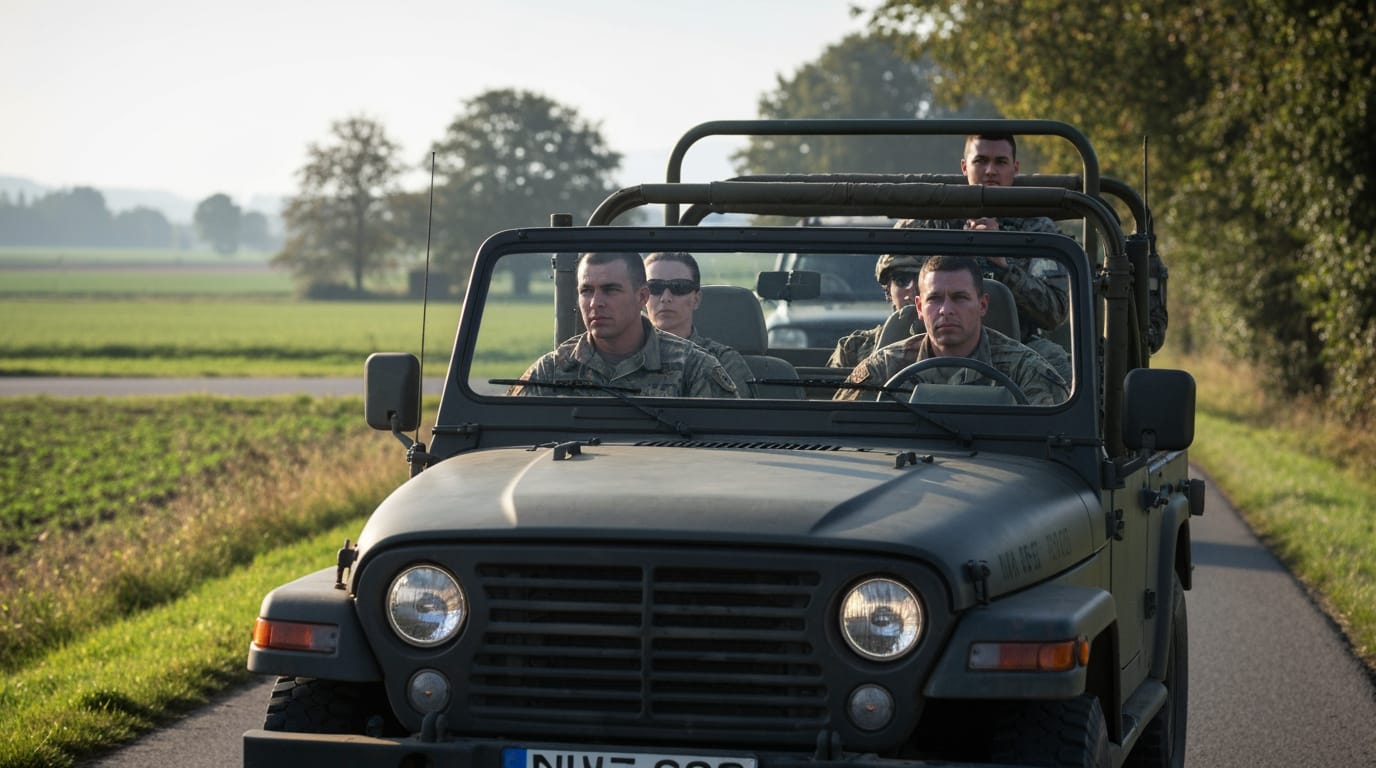
For more than seven decades, the United States has maintained a significant military presence in Germany, a legacy born from the ashes of World War II and forged through the ideological crucible of the Cold War. What began as an occupation force transformed into a vital cornerstone of transatlantic security, adapting its mission and footprint to a dynamic global landscape. Today, Germany hosts the largest contingent of U.S. troops in Europe, serving as a critical strategic hub for operations stretching across the continent, Africa, and the Middle East. This enduring alliance underscores a complex interplay of historical ties, shared security interests, and evolving geopolitical realities that continue to define the bilateral relationship.
From Occupation to Alliance: A Historical Overview
The roots of the U.S. military presence in Germany trace back to the end of World War II, when American forces, alongside Allied counterparts, occupied the defeated nation. Following the establishment of the Federal Republic of Germany in 1949, the legal basis shifted from occupation law to international agreements, solidifying a long-term commitment. The subsequent onset of the Cold War cemented Germany's pivotal role as the frontline against Soviet expansion. By 1985, the U.S. military presence peaked, with approximately 246,875 soldiers stationed across West Germany, representing about 70% of all U.S. troops in Europe. These forces, spread across 47 major military bases and some 800 separate sites, were strategically positioned to deter any potential Soviet aggression, embodying the message that an attack on West Germany would inevitably involve American lives.
The fall of the Berlin Wall in 1989 and the reunification of Germany ushered in a new era, prompting substantial reductions in troop levels. By 1995, the numbers had fallen to 94,000, and the strategic assignment shifted from defending against Soviet aggression to establishing a "forward presence." This meant Germany became a crucial staging ground for military actions in other regions, reflecting a broader recalibration of U.S. security policy towards global contingencies, particularly in the Middle East and Africa.
A Strategic Nexus: Current Footprint and Mission
Despite significant drawdowns in the post-Cold War era, Germany remains indispensable to U.S. defense strategy in Europe. It hosts the largest number of U.S. military personnel on the continent and the second-largest worldwide after Japan. As of 2024, the total number of U.S. military personnel has reportedly risen to over 50,000, a notable increase from under 39,000 in 2019, influenced by contemporary geopolitical challenges, including Russia's full-scale invasion of Ukraine. These forces are distributed across approximately 11 main and numerous smaller locations, primarily concentrated in Rhineland Palatinate, Hessen, and Bavaria.
Key installations underscore Germany's strategic importance. Ramstein Air Base, for instance, operates as the largest hub for U.S. troops and military supplies in Europe, serving as a vital logistics and signal relay station for operations in the Middle East and Africa. Stuttgart is home to the U.S. European Command (EUCOM) and U.S. Africa Command (AFRICOM) headquarters, coordinating U.S. military activities across 51 primarily European countries and all operations in Africa (excluding Egypt), respectively. Additionally, Grafenwoehr is recognized as the largest overseas U.S. Army base globally in terms of population and acreage, while Wiesbaden houses the headquarters of the U.S. Army in Europe. These bases are critical for deterrence against potential Russian aggression, facilitating training exercises with NATO allies, and projecting U.S. power globally, emphasizing their role in maintaining regional stability and bolstering the NATO alliance.
Economic and Social Interdependencies
The sustained presence of U.S. military forces has generated significant economic and social impacts on German communities. Soldiers and their families integrate into local life, renting homes, utilizing leisure facilities, and purchasing consumer goods, thereby contributing positively to regional economies. The military installations also create thousands of jobs for German civilians; for example, in 2014, 6,154 German civilians were employed by the U.S. Army. Studies from around the same time estimated the economic power generated by the U.S. troop presence in Germany at approximately $2.347 billion, including substantial salaries remaining in the region, along with funds for construction, services, materials, and indirectly created jobs.
While the U.S. Department of Defense's spending in Germany is substantial, estimated at $8.125 billion in 2020, Germany also contributes to the costs. The German government covers a considerable portion of expenses, including over $1 billion annually for utilities and base construction. Over a decade leading up to 2020, the federal government spent nearly a billion euros on construction measures for U.S. soldiers. Beyond economics, these communities foster cultural exchange, and for much of the U.S. presence, military personnel and their families have become an integral part of everyday German life, profoundly affecting German-American relations.
Evolving Politics and Future Outlook
The U.S. military presence in Germany has not been without political debate and shifts. Throughout recent years, discussions surrounding troop levels have intensified, particularly under the previous U.S. administration. In 2020, plans were announced to reduce the number of permanently stationed soldiers to a maximum of 25,000, with approximately 12,000 troops slated for withdrawal or redeployment to other European countries like Poland, Belgium, and Italy. These proposed drawdowns, often driven by political considerations and calls for greater burden-sharing within NATO, elicited concern from both German and U.S. officials who emphasized Germany's strategic value.
With a change in U.S. administration, many of these proposed drawdowns were either halted or reversed, underscoring Germany's continued importance to transatlantic security. The subsequent rise in geopolitical tensions, particularly Russia's actions in Ukraine, has further solidified the rationale for a robust U.S. military footprint in Europe, including Germany. The ongoing debate about defense spending within NATO continues, with the U.S. urging allies, including Germany, to meet the 2% of GDP target. Germany has signaled a shift in its policies, agreeing to significant investments in defense and infrastructure, though critics maintain that more is needed. The future of the U.S. military in Germany will likely remain a subject of ongoing strategic review, balancing the need for forward presence with considerations of burden-sharing, evolving threats, and broader global priorities, such as the increasing focus on the Asia-Pacific region.
The U.S. military presence in Germany represents a complex and multifaceted arrangement, deeply rooted in history and continually shaped by evolving international dynamics. From its origins in post-war reconstruction and Cold War deterrence to its modern role as a hub for global power projection and a lynchpin of NATO, the presence reflects an enduring commitment to security and partnership. While troop numbers and political rhetoric may fluctuate, the strategic significance of Germany's geographic location and its role within the transatlantic alliance ensure that the U.S. military's footprint on German soil will continue to be a vital element of international stability for the foreseeable future.


