Ancient Embers Rekindle Neanderthal Ingenuity: Earliest Evidence of Controlled Fire Found in UK Shifts Human History
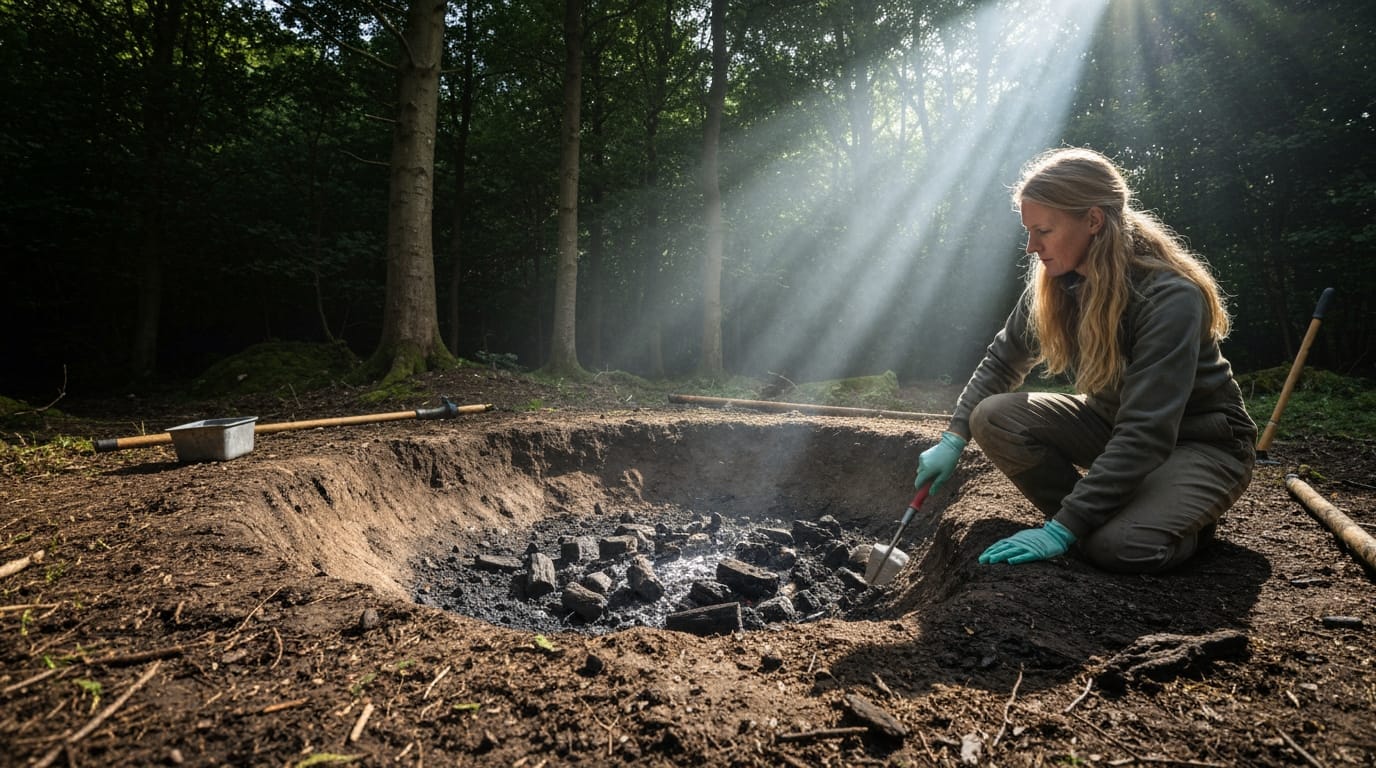
BARNHAM, SUFFOLK, ENGLAND – A groundbreaking archaeological discovery in a quiet field in eastern England has unveiled the earliest unequivocal evidence of controlled fire-making by ancient humans, pushing back the timeline for this pivotal technological leap by an astonishing 350,000 years. Researchers, led by the British Museum, announced findings from the Barnham site in Suffolk, revealing a 400,000-year-old hearth believed to have been deliberately created and maintained by early Neanderthals. This monumental revelation not only redefines our understanding of when and how humanity mastered fire but also casts a new light on the intellectual capabilities and adaptive strategies of our ancient relatives.
The Barnham Revelation: Unearthing Ancient Sparks
The archaeological site near the village of Barnham, in Suffolk, first recognized in the early 1900s for its Paleolithic tools, has yielded a treasure trove of evidence under renewed excavation since 2013. The most compelling finds include a patch of reddened clay, flint handaxes fractured by intense heat, and crucially, two fragments of iron pyrite, also known as "fool's gold." This combination of artifacts, meticulously analyzed over four years, paints a vivid picture of a recurrently used campfire. Geochemical tests on the baked clay indicate temperatures exceeding 700 degrees Celsius, suggesting repeated and localized burning rather than a natural wildfire. The presence of iron pyrite, a mineral not naturally occurring in the Barnham landscape, is particularly significant. Archaeologists hypothesize that these early hominins deliberately collected and brought the pyrite to the site, understanding its property to generate sparks when struck against flint – a clear indication of intentional fire-making. As Rob Davis, a Paleolithic archaeologist at the British Museum and a co-author of the study, remarked, this evidence shows "how they were actually making the fire and the fact they were making it."
Reshaping the Narrative of Fire Mastery
Until this discovery, the oldest widely accepted evidence of deliberate fire-making came from Neanderthal sites in northern France, dating back approximately 50,000 years. While earlier evidence for the use of fire, likely scavenged from natural sources, exists for other hominins over a million years ago in Africa, the ability to create fire at will has long been considered a defining moment in human evolution. The Barnham findings, published in the journal Nature, push back this critical milestone by more than a third of a million years. This new timeframe is crucial because it indicates that controlled fire was mastered long before the emergence of Homo sapiens in Africa around 300,000 years ago. This directly challenges previous theories that Neanderthals might have learned fire-making from our own species. Nick Ashton, curator of Palaeolithic collections at the British Museum and senior author of the study, called it "the most exciting discovery of my 40-year career."
The Neanderthal Innovators
Based on contemporary fossil records and archaeological context, researchers confidently attribute the Barnham campfire to early Neanderthals. The presence of early Neanderthals in Britain around 400,000 years ago is corroborated by discoveries such as the skull bones from Swanscombe, Kent, which date to the same period. These early Neanderthals were not only present but were actively adapting to diverse and often challenging environments. The ability to create fire would have been an invaluable asset for survival in northern latitudes, particularly after the retreat of ice sheets that had previously rendered much of Britain uninhabitable. Simon Parfitt, a senior researcher involved in the excavations, noted that the ice sheets had not long retreated from the UK at this time, highlighting the adaptive advantage fire would have provided. This evidence suggests a level of innovation and environmental mastery in Neanderthals that goes beyond merely utilizing existing natural fires.
Profound Implications for Human Evolution
The mastery of fire is widely regarded as one of the most transformative technological breakthroughs in human history, with profound and far-reaching implications for human evolution. Controlled fire provided essential warmth, allowing hominins to expand into colder regions and survive harsh winters. It offered protection from predators, creating safer encampments. Crucially, fire enabled cooking, which significantly increased the nutritional value and digestibility of food. This enhanced diet is believed to have fueled the development of larger brains, a key characteristic distinguishing humans from other primates. Beyond practical benefits, fire also played a central role in shaping social structures. Campfires would have served as focal points for gathering, fostering communication, teaching, and the development of language and complex social behaviors. Professor Chris Stringer of the Natural History Museum, part of the research team, emphasized that this discovery indicates "key human brain developments began far earlier than previously thought" and could have accelerated "evolutionary trends" such as larger brains and increased language skills. The sophistication implied by deliberate fire-making further challenges the long-held perception of Neanderthals as primitive, instead portraying them as intelligent, resourceful, and capable innovators.
The Barnham discovery represents a monumental shift in our understanding of human prehistory. It solidifies the position of Neanderthals as pioneers of a technology that fundamentally reshaped human existence, providing warmth, sustenance, protection, and a catalyst for social and cognitive development. This 400,000-year-old campfire, preserved within ancient sediments, offers a compelling glimpse into the remarkable ingenuity of our ancient cousins and underscores the enduring quest to unravel the complex tapestry of human evolution.


