Aung San Suu Kyi Transferred to House Arrest Amidst Ongoing Myanmar Crisis
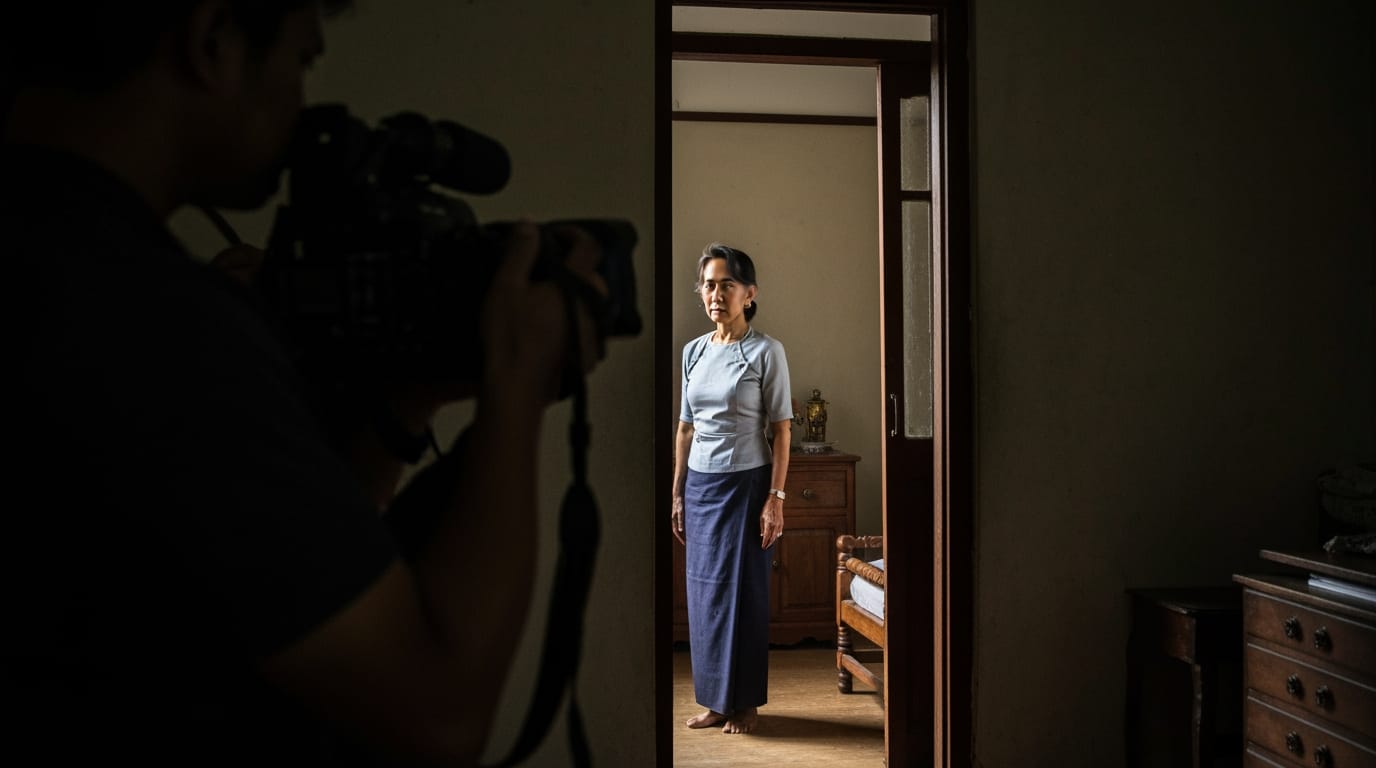
Naypyidaw, Myanmar – Myanmar's former civilian leader, Aung San Suu Kyi, has been moved from prison to house arrest in the capital, Naypyidaw, more than five years after her government was overthrown by a military coup. The 80-year-old Nobel Peace Prize laureate, who has been in detention since February 1, 2021, was relocated as part of a prisoner amnesty marking a Buddhist religious holiday. This development, announced by state media, comes amidst persistent international pressure on the ruling junta and a deepening civil conflict across the Southeast Asian nation.
The decision to transfer Suu Kyi, who had been serving a lengthy prison sentence, was reportedly made to "show humanitarian concern" and "demonstrate the kindness of the state," according to Myanmar's military information office. Her original sentence of 33 years, imposed after a series of trials widely condemned as politically motivated, had recently been commuted to 27 years and then further reduced to 18 years through a series of amnesties. While the move signals a change in her immediate detention conditions, it falls short of the full release demanded by human rights organizations and international bodies.
A Concession or a Calculated Move?
The transfer to house arrest marks a significant shift in Aung San Suu Kyi's confinement. Since the 2021 coup, she had been held in an undisclosed prison location in Naypyidaw, with minimal contact with the outside world. Her legal team has not been granted access to meet her in person since December 2022, and information regarding her well-being has been tightly controlled by the junta. State media released a photo alongside the announcement, depicting Suu Kyi seated on a wooden bench with two uniformed men, marking the first public image of her in years.
This latest development follows a pattern of the military junta granting amnesties to mark significant holidays, often seen as attempts to project an image of legitimacy and reconciliation. Earlier this month, Senior General Min Aung Hlaing, who led the 2021 coup and was recently sworn in as president following military-controlled elections, suggested that "good things" were being considered for Suu Kyi. However, critics argue that such gestures are largely cosmetic, designed to appease international scrutiny without addressing the fundamental issues of human rights abuses and the ongoing suppression of dissent.
Mounting Concerns Over Health and Isolation
The move to house arrest also comes after increasing concerns regarding Aung San Suu Kyi's deteriorating health. Reports circulated in 2024 and 2025 indicated that she was suffering from various ailments, including low blood pressure, dizziness, heart problems, severe toothaches, and an inability to eat properly. Her son, Kim Aris, who resides in London, has repeatedly voiced his alarm about his mother's condition, stating that she has had ongoing heart complications exacerbated by her detention conditions and had requested to see a cardiologist from outside the prison.
Aris, along with Myanmar democracy activists, launched an international "Proof of Life" campaign to demand evidence of her well-being. Despite the junta's claims that her health was "good," independent verification of her medical status has been impossible due to the severe restrictions on access. While house arrest may offer some marginal improvement in her living conditions compared to prison, the continued denial of independent medical access and communication with her legal team and family raises persistent concerns about her long-term health and welfare.
Echoes of the Past: A Resilient Symbol of Democracy
For Aung San Suu Kyi, house arrest is a familiar state of confinement. Before her party, the National League for Democracy (NLD), swept to power in 2015 elections, she spent nearly 15 years under house arrest between 1989 and 2010 under a previous military junta. During those years, she became a global icon of nonviolent resistance and democracy, famously delivering impassioned speeches to crowds gathered outside the gates of her Yangon residence, a defiance that earned her the Nobel Peace Prize in 1991.
Her current detention, however, is set against a backdrop of a far more brutal and widespread conflict. The 2021 coup triggered mass protests and a violent crackdown by the Tatmadaw, Myanmar's armed forces, leading to a burgeoning civil war. The military junta has killed thousands, arbitrarily detained over 22,000 political prisoners, and caused the internal displacement of more than 3.5 million people. Human rights groups have documented widespread violations, including torture, indiscriminate attacks on civilians, and the denial of humanitarian aid, some of which may amount to crimes against humanity and war crimes. The military is reportedly losing significant territory to a coalition of ethnic armed groups and People's Defence Forces, indicating a deepening crisis and a weakening grip on the country.
International Response and Ongoing Skepticism
The international community's reaction to Suu Kyi's transfer has been cautiously optimistic, yet underscored by profound skepticism regarding the junta's intentions. United Nations spokesperson Stephane Dujarric welcomed the move as "a meaningful step towards conditions conducive to a credible political process." However, the UN also reiterated calls for the immediate cessation of violence and the release of all political prisoners, emphasizing that a genuine political solution must be based on inclusive dialogue.
Human rights organizations, while acknowledging the change in her immediate circumstances, have largely dismissed the move as a cynical public relations tactic. Mark Farmaner, director of Burma Campaign UK, stated that "moving Aung San Suu Kyi isn't about change or reform, it's about public relations designed to preserve military rule." These groups argue that the junta is attempting to burnish its image and gain international legitimacy without committing to genuine democratic reforms or ending the violence plaguing the nation. The fact that the transfer occurred as the military continues its oppressive rule, including stepping up airstrikes targeting health facilities and civilians, further fuels this skepticism.
In conclusion, Aung San Suu Kyi's transfer to house arrest represents a symbolic, rather than substantive, shift in her prolonged detention. While it may offer some respite from the harsh conditions of prison, it does not signify her freedom or a fundamental change in Myanmar's dire political landscape. As the country remains embroiled in a brutal civil war and the military maintains its tight grip on power, this development is viewed by many as a calculated maneuver by the junta to ease international pressure, rather than a genuine step towards reconciliation or democracy. The world watches closely, aware that true progress requires not just a change in location for one individual, but freedom and justice for all political prisoners and an end to the pervasive violence that has engulfed Myanmar.


