Andy Burnham Confirmed as Labour Leader, Poised for Premiership Amidst National Challenges
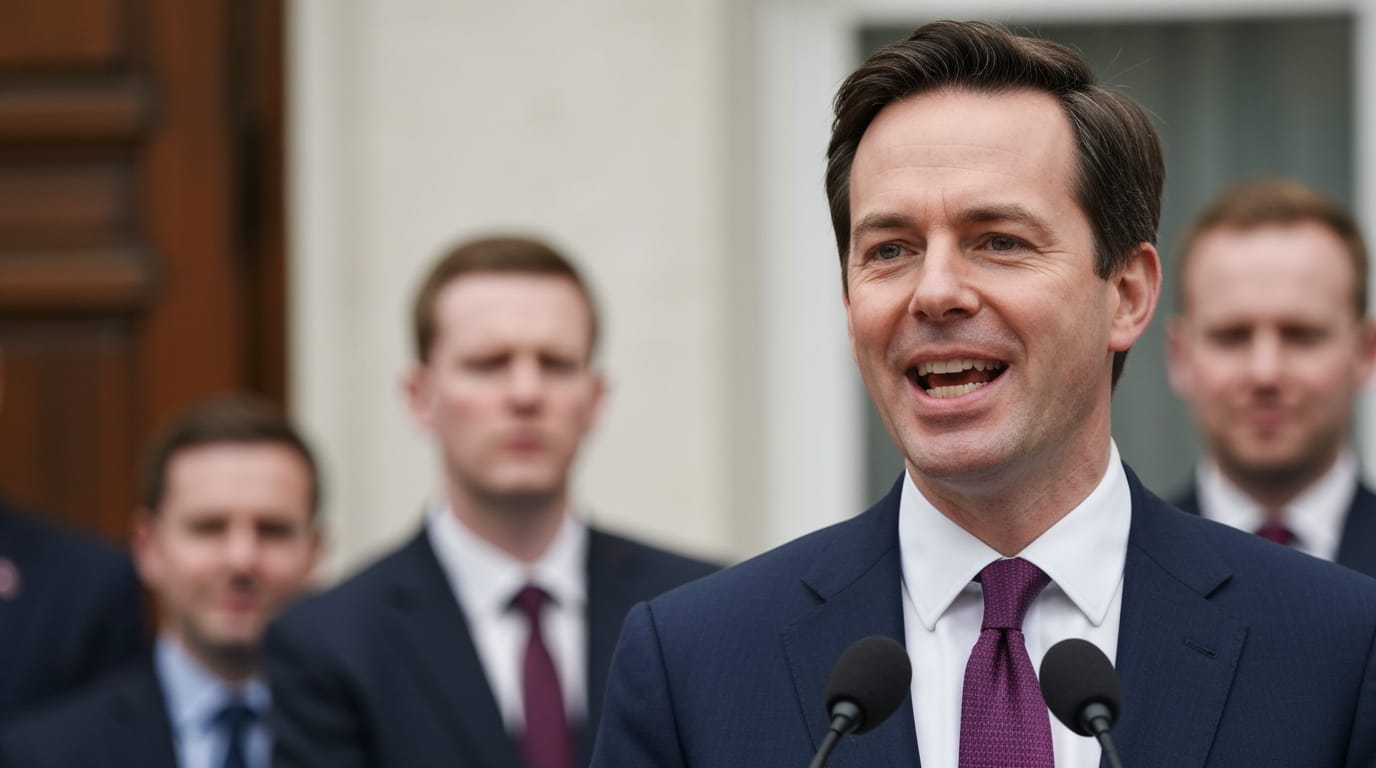
Andy Burnham has officially been confirmed as the new leader of the Labour Party, clearing the final hurdle on his path to becoming the United Kingdom’s next Prime Minister. His ascension, announced Friday, July 17, 2026, follows an uncontested leadership election triggered by the resignation of former Prime Minister Keir Starmer. Burnham is now expected to enter Downing Street on Monday, July 20, 2026, marking a significant shift in British politics and ushering in a new era for the governing party.
The Rapid Ascent to National Leadership
The swift and largely anticipated leadership transition saw Andy Burnham emerge as the sole candidate for the Labour Party's top position. The path was paved by Keir Starmer's decision to resign as leader and Prime Minister on June 22, 2026, amidst growing public and internal party dissatisfaction, compounded by poor results in local elections in May 2026 and concerns over government policy. This created a vacuum that Burnham, a long-standing figure within the Labour Party and former Mayor of Greater Manchester, was uniquely positioned to fill.
A critical step in Burnham's return to national politics was his successful bid for a seat in Parliament. Labour MP Josh Simons resigned from his Makerfield constituency in May 2026, specifically to trigger a by-election that would allow Burnham to stand and thus become eligible for party leadership. Burnham, who had previously been blocked by the party's National Executive Committee from standing in another by-election, decisively won the Makerfield seat in June 2026. His victory was seen as a clear mandate, intensifying calls for a leadership challenge to Starmer. Nominations for the leadership contest opened on July 9 and closed on July 16, with Burnham securing nominations from 379 of the 403 Labour lawmakers, making it mathematically impossible for any other candidate to stand. He became Labour leader on July 17, three days before his expected appointment as Prime Minister.
From 'King of the North' to Potential Prime Minister
Andrew Murray Burnham, born in Liverpool in 1970 and raised in a village between Liverpool and Manchester, embarked on his political career after being the first in his family to attend university, studying at Cambridge. He was first elected as the Member of Parliament for Leigh in 2001, a position he held until 2017. During his time as an MP, he served in several significant cabinet roles under Prime Minister Gordon Brown, including Minister of State for Health, Chief Secretary to the Treasury, Secretary of State for Culture, Media and Sport, and most notably, Secretary of State for Health from 2009 to 2010. Following Labour's loss of power in 2010, Burnham also held prominent shadow cabinet positions, serving as Shadow Education Secretary, Shadow Health Secretary, and Shadow Home Secretary.
Burnham made two previous attempts for the Labour leadership, in 2010 and 2015, placing fourth and second respectively. A pivotal moment in his career came in 2017 when he left Westminster to successfully run for Mayor of Greater Manchester. During his nine-year tenure as Mayor, he earned the moniker "King of the North" for his strong advocacy for regional issues and his willingness to challenge central government policies, particularly during the COVID-19 pandemic. His political philosophy, often described as "Manchesterism," is characterized by a "business-friendly socialism" that champions devolution, local control, and investment in public services. Key initiatives under his mayoral leadership included bringing bus services back into public control, expanding light rail, and focusing on tackling homelessness. He achieved high approval ratings in Greater Manchester, which contrasted with declining national popularity for his predecessor, Keir Starmer.
Policy Landscape and Future Challenges
As Andy Burnham prepares to assume the premiership, significant attention is turning to his policy priorities and the formidable challenges awaiting him. In his initial statements, Burnham has signaled his intention to address "the big things that politics has neglected," emphasizing economic renewal, greater public control over essential sectors, and the creation of new industrial jobs. He views Britain's economic trajectory as having taken "a series of wrong turns in the 1980s," when political power became centralized and economic power privatized.
A central tenet of Burnham's prospective government is a commitment to radical devolution. He has consistently championed transferring power from Whitehall to local communities, envisioning a decade-long plan that grants regions greater control over essential utilities, transport, and housing. His vision of "good growth in every postcode" explicitly includes rural economies, seeking to empower local decision-makers with tools and spending power to address specific regional needs. Furthermore, Burnham has indicated that social care reform will be a high priority, pledging to overhaul England's system "this year" and criticizing past political reluctance to tackle the issue. His housing plans include the "biggest council house building programme since the post-war period," utilizing vacant public land and promoting higher-density developments to revitalize high streets and protect green spaces. On defense, he has affirmed commitment to NATO and the UK's nuclear deterrent, alongside plans to upgrade military equipment to stimulate economic growth and job creation in communities.
Burnham will inherit a complex national landscape marked by a sluggish economy, a persistent cost-of-living squeeze exacerbated by international conflicts, and overstretched public services. His predecessor's government faced widespread unpopularity and significant electoral setbacks, underscoring the scale of the task at hand. He has acknowledged that he faces many of the same problems as his predecessor, but brings a "more relaxed style of leadership" and is regarded as an effective communicator. His ability to navigate the complexities of Brexit, which he does not view as an "untouchable third rail," will also be closely watched.
A New Chapter for Britain
Andy Burnham's confirmation as Labour leader marks a pivotal moment, not just for the party, but for the United Kingdom as a whole. His journey from a prominent regional mayor, dubbed the "King of the North," back to the national stage and now to the cusp of the premiership, demonstrates a unique blend of grassroots connection and extensive governmental experience. He steps into power with a mandate forged by an uncontested leadership election, signaling a desire for unity within a party that has recently experienced significant internal strife. As he prepares to outline his vision and begin the work of government, all eyes will be on how this experienced politician, with his distinctive brand of "Manchesterism," will confront the profound economic and social challenges facing the nation, and whether he can deliver on the high expectations placed upon him by both his party and the electorate.


