Apple Navigates Landmark Leadership Transition as John Ternus Takes Helm from Tim Cook
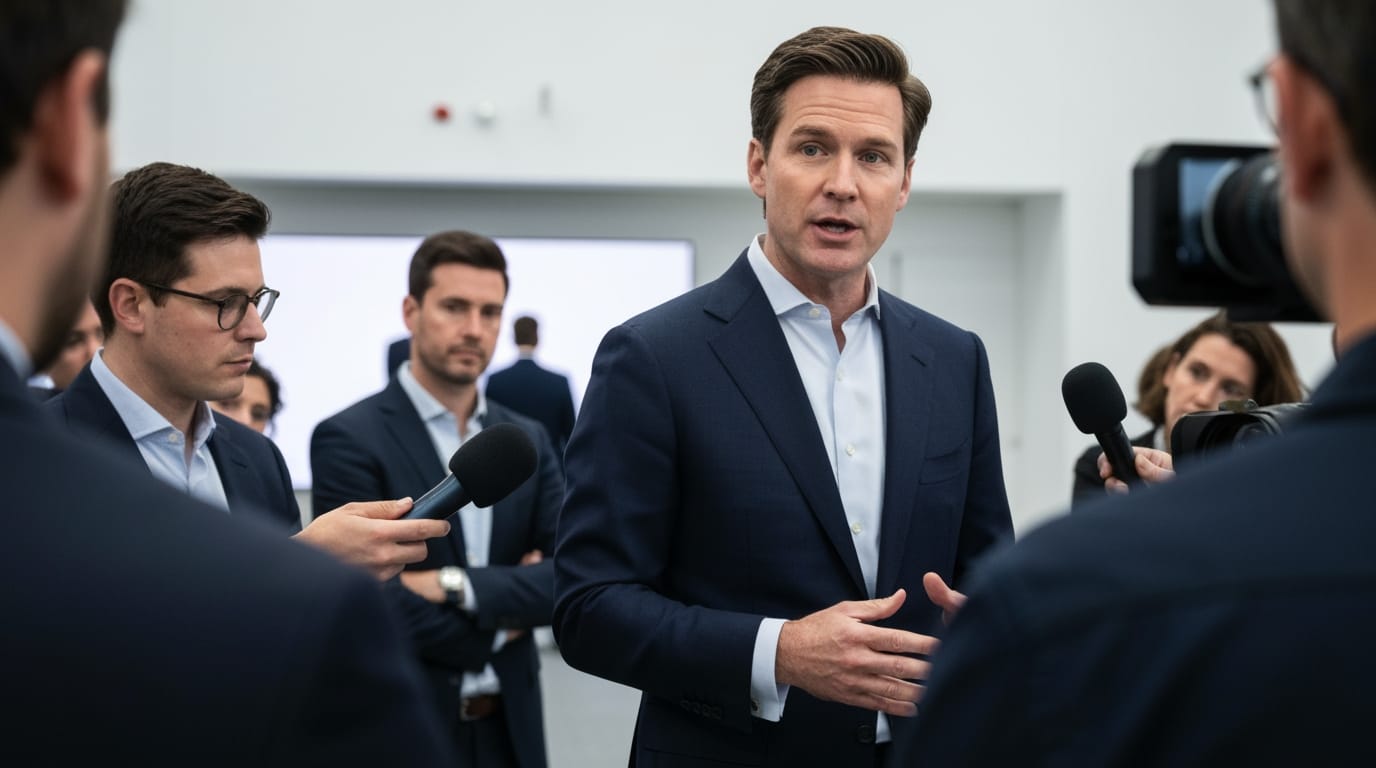
CUPERTINO, Calif. – Apple Inc., the global technology titan, has officially announced a pivotal leadership transition, with Chief Executive Officer Tim Cook set to step down on September 1, 2026, after an impactful 15-year tenure. His successor will be John Ternus, a long-serving Senior Vice President of Hardware Engineering, marking a significant shift as the company prepares for its next era of innovation and faces evolving industry challenges. Cook, 65, will not depart entirely, transitioning to the role of Executive Chairman of Apple’s board of directors, ensuring a degree of continuity during this critical juncture.
The Passing of the Torch: A Planned Succession
The announcement came on April 20, 2026, concluding what sources familiar with Apple's operations described as a long-planned succession process. Ternus, 50, an Apple veteran of 25 years, is poised to lead the company into a future increasingly defined by artificial intelligence and next-generation hardware. The board's decision was unanimous, reflecting confidence in Ternus's deep product knowledge and leadership capabilities. Cook is expected to work closely with Ternus during the transition period, offering his strategic counsel in his new capacity as Executive Chairman, including engagement with global policymakers.
This leadership change is the most significant since Cook himself took the reins from co-founder Steve Jobs in 2011, a period many viewed with skepticism regarding Apple's post-Jobs trajectory. However, Cook's leadership transformed Apple into an unprecedented financial powerhouse, setting a high bar for any successor.
Cook's Enduring Legacy: A Trillion-Dollar Architect
Tim Cook's fifteen years at the helm are characterized by operational mastery and strategic expansion that solidified Apple's position as the world's most valuable company. Under his leadership, Apple's market capitalization surged from approximately $350 billion to an astronomical $4 trillion, with annual revenues nearly quadrupling from $108 billion in fiscal 2011 to over $416 billion in fiscal 2025.
Cook skillfully navigated Apple beyond its reliance on the iPhone, meticulously building out a comprehensive ecosystem of hardware, software, and services. He spearheaded the introduction of new product categories such as the Apple Watch, AirPods, and most recently, the Vision Pro headset. Simultaneously, the services division flourished, encompassing iCloud, Apple Pay, Apple Music, and Apple TV+, becoming a formidable business generating over $100 billion in turnover. His strategic acumen also extended to optimizing global supply chains, fostering exceptional margins, and championing corporate values related to environmental responsibility, user privacy, and accessibility.
While critics occasionally pointed to a perceived lack of revolutionary product introductions compared to the Jobs era, Cook's tenure is lauded for industrializing Apple, making it incredibly resilient and profitable. He proved that "a company can be more than just exciting and visionary; it can also be immensely valuable to all its stakeholders."
A New Era: Ternus's Vision and Challenges
John Ternus, a mechanical engineer by training and a key figure in Apple's hardware development, will inherit a company at a strategic inflection point. His background as Senior Vice President of Hardware Engineering, where he oversaw the development of core products and led the successful transition to Apple Silicon, signals a renewed emphasis on product reinvention and the deep integration of hardware and software. Analysts believe the board's choice of a hardware engineer over an operator or services executive indicates what Apple envisions for its next decade.
Ternus takes the helm at a time of both immense opportunity and significant challenges. One of the most pressing issues is Apple's strategic positioning in the rapidly advancing field of artificial intelligence. While competitors have made aggressive strides, Apple has faced criticism for a perceived lag in generative AI capabilities and delayed upgrades to its virtual assistant, Siri. The expectation is that Ternus will need to craft a more robust AI strategy that leverages Apple's unique capabilities and integrated ecosystem.
Furthermore, the initial reception of the Vision Pro headset, launched with a premium price tag of $3,500, has fallen short of broad public adoption, presenting Ternus with the task of either refining its market strategy or identifying new pathways for spatial computing. Diversifying Apple's supply chain to reduce over-reliance on a single manufacturing region, a long-standing initiative under Cook, will also be a critical strategic imperative for Ternus. The search for "the next blockbuster product" beyond the iPhone era remains a central question for Apple's sustained growth.
Market Response and Industry Outlook
The financial markets reacted with a relatively muted response to the succession announcement. Apple shares saw a modest dip of approximately 1% to 2% in after-hours trading following the news. This subdued reaction suggests that the transition had been largely anticipated and priced in by investors, with reports flagging Ternus as the likely successor as early as January 2026.
Industry observers largely view Ternus's appointment as a strategic signal, indicating Apple's intent to double down on its core hardware innovation and design philosophy. While Cook was recognized for his operational brilliance in scaling and optimizing the existing empire, Ternus's product-focused background hints at a potential shift towards renewed imaginative risk-taking. Analysts, including Wedbush's Dan Ives, highlight that the transition comes at a critical moment for Apple, particularly as it intensifies its push into artificial intelligence.
Conclusion: Continuity and Evolution
Apple's leadership change signifies a pivotal moment for the technology giant. Tim Cook's departure from the CEO role concludes an extraordinary chapter defined by unprecedented financial growth and operational excellence. His transition to Executive Chairman provides valuable continuity and strategic oversight.
John Ternus steps into the chief executive role with a deep understanding of Apple's product DNA and a mandate to navigate the company through a complex technological landscape. His appointment suggests a strategic recalibration towards bold product innovation, particularly in critical areas like artificial intelligence and next-generation hardware. The success of this transition will hinge on Ternus's ability to balance Apple's established strengths with the urgent need for new growth engines and a compelling vision for its future beyond the foundational successes of the past.