US Chip Curbs: An Unintended Catalyst for China's Semiconductor Ascendancy
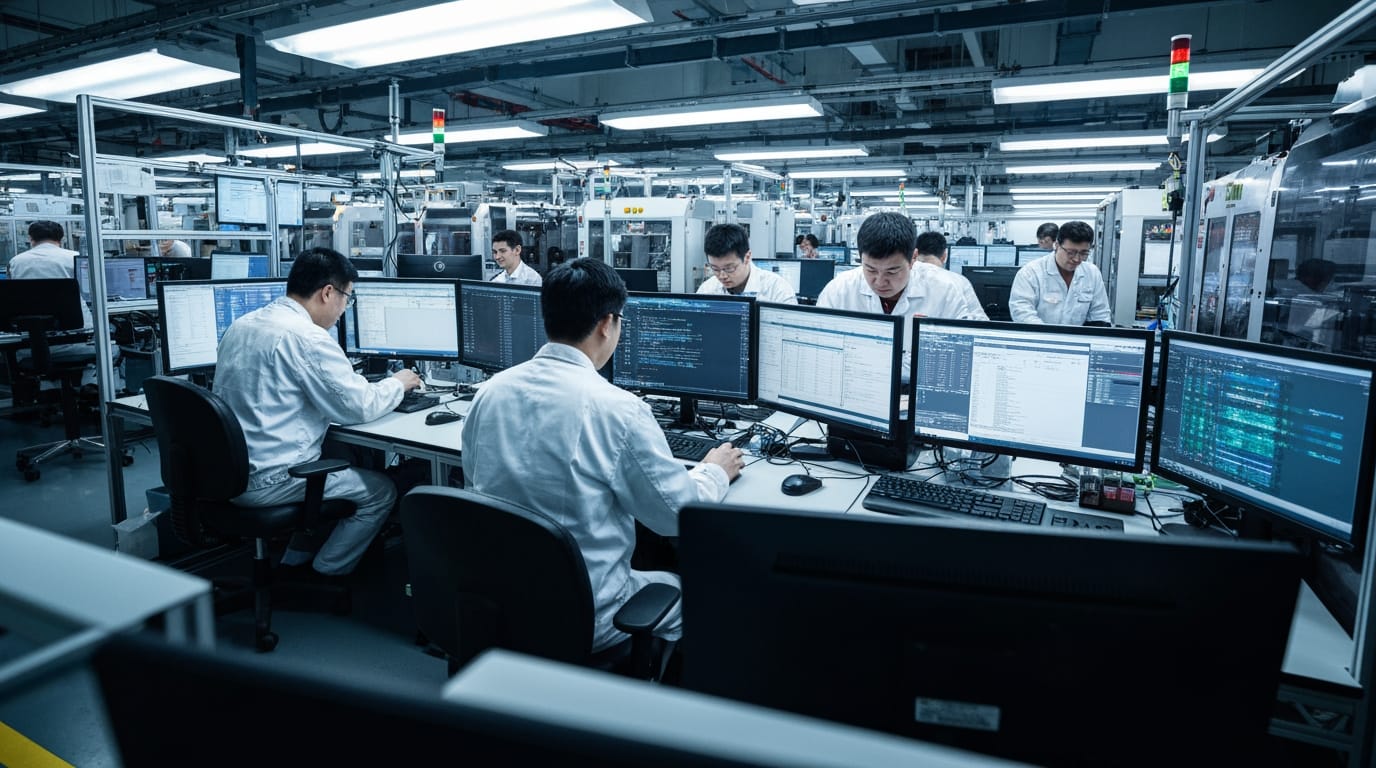
In a geopolitical chess match aimed at stifling China's technological advancement, a strategic move by the United States to restrict access to critical semiconductor technology appears to be yielding an unanticipated outcome: an accelerated push toward self-sufficiency and innovation within China's own chip industry. What was intended as a brake on Beijing's ambitions has, by many accounts, served as rocket fuel for its indigenous semiconductor development, creating a complex and rapidly evolving landscape for global technology and trade.
The Rationale Behind the Iron Curtain
The United States initiated a series of stringent export controls on advanced computing and semiconductor manufacturing items directed at China, citing national security concerns and a desire to maintain a global lead in artificial intelligence (AI) and other high-tech capabilities. Beginning with actions against companies like Huawei and ZTE in August 2018, and escalating significantly with comprehensive controls implemented in October 2022, these restrictions aimed to curb China's ability to access and develop cutting-edge chips. Subsequent tightening of these measures in 2023, 2024, and further restrictions in March and April 2025 and 2026 targeted advanced AI chips such as Nvidia's A100 and H100, AMD's MI308, and sophisticated manufacturing equipment, including ASML's deep ultraviolet (DUV) immersion lithography machines. The prohibitions also extended to limiting the involvement of U.S. persons in China's semiconductor facilities, seeking to restrict human capital flow. The underlying objective was clear: prevent China from acquiring the most advanced chip technology that could have dual-use applications for its military and give it an advantage in emerging fields like AI.
Beijing's Defiant Pivot: A National Mobilization
Rather than yielding to the pressure, China responded with a resolute national effort to overcome its dependencies and foster a self-reliant semiconductor ecosystem. This counter-strategy has been characterized by a massive infusion of state-backed investment and assertive policy directives. The China Integrated Circuit Industry Investment Fund, colloquially known as the "Big Fund," has been a cornerstone of this drive. Following successful first and second phases, a third phase, Big Fund III, launched in 2024 with a registered capital of 344 billion yuan (approximately $47.5 billion), significantly larger than its predecessors. This colossal fund aims to strengthen the entire domestic chip supply chain, investing in everything from design to manufacturing equipment.
Beyond financial backing, Beijing has implemented stringent policies to accelerate domestic adoption. An undocumented but enforced rule now requires Chinese chipmakers to use at least 50% domestically produced equipment when establishing new manufacturing capacity, with the long-term goal of achieving 100% local sourcing. This mandate is reshaping procurement decisions and forcing local fabs, which previously preferred established overseas suppliers, to qualify domestic tools at an unprecedented pace. The country has also actively recruited skilled workers, recognizing the strategic importance of human capital in this tech race.
From Constraint to Catalyst: Unexpected Progress
The unintended consequence of the U.S. restrictions has been a remarkable acceleration in China's indigenous semiconductor capabilities, particularly evident in several key areas. Perhaps one of the most striking demonstrations came in 2023 with the release of Huawei's Mate 60 Pro smartphone, powered by a domestically manufactured 7-nanometer (nm) chip produced by Semiconductor Manufacturing International Corporation (SMIC). This breakthrough surprised many observers who had estimated China was years away from such advanced production capabilities at scale.
Chinese chipmakers are reporting record revenues and anticipate further gains as domestic tech firms pivot to local alternatives. For instance, Huawei's Ascend 910C has emerged as a viable alternative to Nvidia's AI chips, now powering AI applications across various sectors within China. Domestic AI chips constituted nearly 41% of China's market in 2025, with Huawei alone accounting for approximately half of those sales, a significant shift from Nvidia's pre-2023 market dominance of over 90%.
The growth extends beyond advanced logic. China has made tremendous progress in "mature node" semiconductors (28nm and older), which are crucial for a vast array of applications including automobiles, consumer electronics, and telecommunication systems. In 2024, China added more new chip manufacturing capacity in these mature nodes than the rest of the world combined, and its share of global mature chip node manufacturing is projected to reach 39% by 2027. This expansion is supported by significant advancements in the domestic production of essential materials like photoresist and the rise of Chinese equipment manufacturers. Naura Technology Group, a state-backed entity, climbed from eighth to fifth place globally in sales volume for chip equipment manufacturers by 2025, now trailing only industry giants like ASML, Applied Materials, Lam Research, and Tokyo Electron. AMEC also entered the top 20, ranking 13th.
Global Reverberations and the Economic Toll
While spurring China's domestic industry, the U.S. chip curbs have also sent ripples through the global semiconductor market and exacted a notable economic toll on American and allied companies. U.S. firms like Nvidia and AMD have reported substantial projected losses—$5.5 billion for Nvidia and $1.5 billion for AMD—due to restricted sales in China, a market that historically accounted for a significant portion of global chip sales. These revenue shortfalls can impact future investment in research and development, potentially hindering the very innovation the U.S. seeks to protect.
The restrictions have contributed to a fragmentation of the global technology ecosystem. As China promotes homegrown standards and parallel supply chains, it could lead to higher costs for global consumers, with potential increases of 35% to 65% in semiconductor prices. Furthermore, China's aggressive expansion in mature nodes, potentially leading to overcapacity, could significantly impact prices for other manufacturers in countries like Taiwan. Geopolitically, the rise of a credible alternative supplier in China could diminish U.S. dominance in semiconductor markets, potentially enabling adversaries like Russia to access advanced processors and complicating choices for U.S. allies.
A Race Redefined
The U.S. strategy of imposing chip curbs on China, while driven by legitimate national security concerns and a desire to maintain technological superiority, has inadvertently catalyzed Beijing's formidable drive for self-sufficiency. What began as an effort to limit China's technological reach has evolved into a high-stakes race, fostering accelerated innovation and investment within China's domestic semiconductor industry. The short-term disruptions for Chinese enterprises have been offset by a long-term strategic pivot that is reshaping global supply chains and redefining the landscape of technological competition. As China continues to pour resources into its chip sector, the global technology stage appears increasingly bifurcated, setting the stage for a future where two distinct, yet interconnected, semiconductor ecosystems vie for dominance and influence.