Argentina Secures Massive Bailout Packages from IMF, World Bank, and IDB
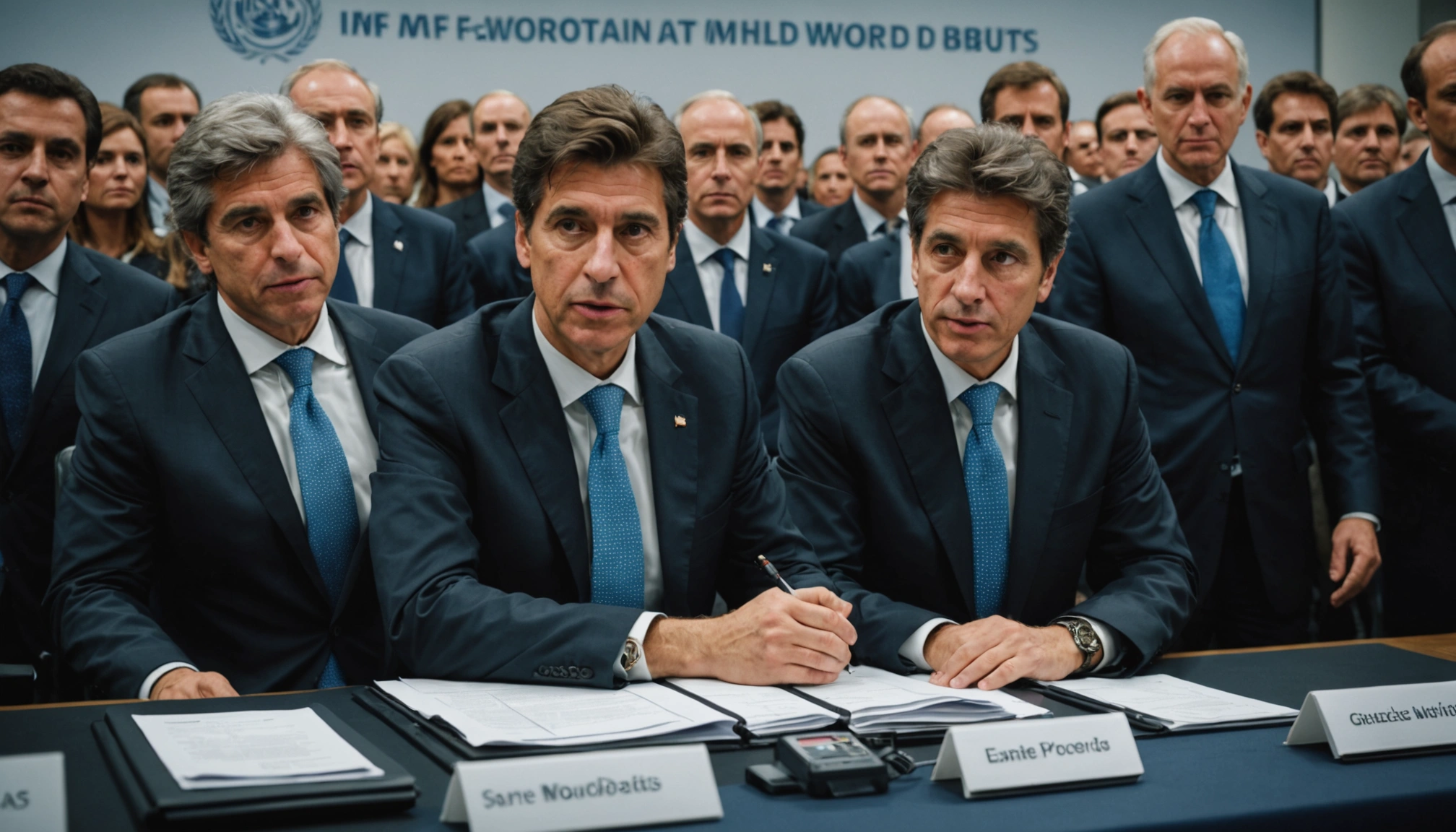
Argentina has secured a massive influx of financial aid from international institutions, signaling a potential turning point for the nation's struggling economy. The International Monetary Fund (IMF), the World Bank, and the Inter-American Development Bank (IDB) have collectively approved bailout packages totaling $42 billion, throwing a lifeline to President Javier Milei's ambitious reform efforts.
The IMF's executive board approved a new four-year $20 billion bailout package, with an immediate disbursement of $12 billion. The World Bank followed suit with a $12 billion support package, including $1.5 billion readily available. The Inter-American Development Bank (IDB) has also pledged up to $10 billion in financing for both the public and private sectors.
Milei's Austerity Measures and Economic Vision
President Milei, a self-described "anarcho-capitalist," has implemented a series of drastic austerity measures aimed at curbing rampant inflation and stabilizing the Argentine economy. These measures, while initially unpopular and triggering protests, have begun to show some positive results, including the nation's first budget surplus in over a decade.
Milei, in a televised address, confidently stated that Argentina's economy would experience unprecedented growth in the next 30 years. He emphasized that the influx of aid would fuel this expansion. His administration's economic program focuses on a zero-deficit fiscal rule and eliminating money printing by the Central Bank.
IMF's Vote of Confidence
The IMF's Managing Director, Kristalina Georgieva, expressed strong support for Milei's efforts, stating that the bailout was "a vote of confidence in the Government's determination to advance reforms, foster growth & deliver higher standards of living for the Argentine people." The IMF highlighted the "impressive progress in stabilizing the economy" achieved under Milei's leadership.
The IMF program aims to consolidate the initial gains from recent policy efforts, which include strong fiscal and monetary adjustments and deregulation efforts. It also seeks to address Argentina's remaining macroeconomic vulnerabilities. Key pillars of the program include maintaining a strong fiscal anchor, transitioning to a more robust monetary and foreign exchange regime with greater exchange rate flexibility, and advancing structural reforms to foster a more dynamic, market-oriented economy.
Easing Currency Controls
In conjunction with the bailout approvals, the Argentine government announced it would ease strict currency controls that have been in place since 2019. Economy Minister Luis Caputo confirmed that Argentines could now purchase unlimited amounts of U.S. dollars, removing the previous monthly limit of $200.
The Central Bank will allow the peso to float within a band of 1,000 to 1,400 pesos per dollar. The distribution of profits to foreign shareholders will be allowed starting in 2025, and deadlines for foreign trade operations will be relaxed.
Challenges and Opportunities Ahead
Despite the positive developments, Argentina still faces significant economic challenges. The country has a long history of economic crises and hyperinflation and is already the IMF's largest debtor.
Moody's, a credit rating agency, has warned that Argentina may need to renegotiate part of its foreign debt next year due to its narrow external balance. The government aims to maintain a balanced budget in 2025, targeting a primary surplus of at least 1.5% of GDP. However, the elimination of certain taxes could lead to a revenue loss, requiring further spending cuts.
Economists project positive growth for Argentina in 2025, with estimates ranging from 4% to 5.5%. Inflation is expected to decrease significantly from 2023 levels but will likely remain a concern. The government's success in maintaining fiscal credibility and improving external liquidity will be crucial for sustained economic improvement.
Argentina's History with the IMF
Argentina has a long and complex history with the IMF, having been bailed out 23 times since joining the institution in 1956. The country owes more debt to the IMF than any other nation. In 2018, the IMF provided Argentina with its largest loan ever, nearly $57 billion.
The IMF has acknowledged that previous bailout programs in Argentina have not always been successful. A 2022 report admitted that the 2018 bailout failed to achieve its objectives of restoring confidence in the country's fiscal viability and fostering economic growth.
Conclusion
The new bailout packages from the IMF, World Bank, and IDB represent a significant opportunity for Argentina to stabilize its economy and pursue sustainable growth. President Milei's austerity measures and commitment to economic reform have garnered international support, but the country still faces considerable challenges. The easing of currency controls and the influx of foreign investment could boost economic activity, but Argentina's long-term success will depend on its ability to maintain fiscal discipline, manage its debt burden, and implement structural reforms that promote productivity and competitiveness.
Related Articles

Ratko Mladić, "Butcher of Bosnia" and Convicted War Criminal, Dies at 84
THE HAGUE, Netherlands – Ratko Mladić, the former Bosnian Serb military commander known as the "Butcher of Bosnia" and convicted of genocide, war crimes, and crimes against humanity, has died at the age of 84. Serbian...


Long-Awaited 9/11 Mastermind Trial Set for 2028, Decades After Attacks
GUANTANAMO BAY, Cuba – Nearly a quarter-century after the devastating terror attacks of September 11, 2001, a military judge has finally set a trial date for Khalid Sheikh Mohammed, the alleged mastermind behind the...