Cuba Levels Terrorism Charges Against Six Following Deadly Speedboat Confrontation

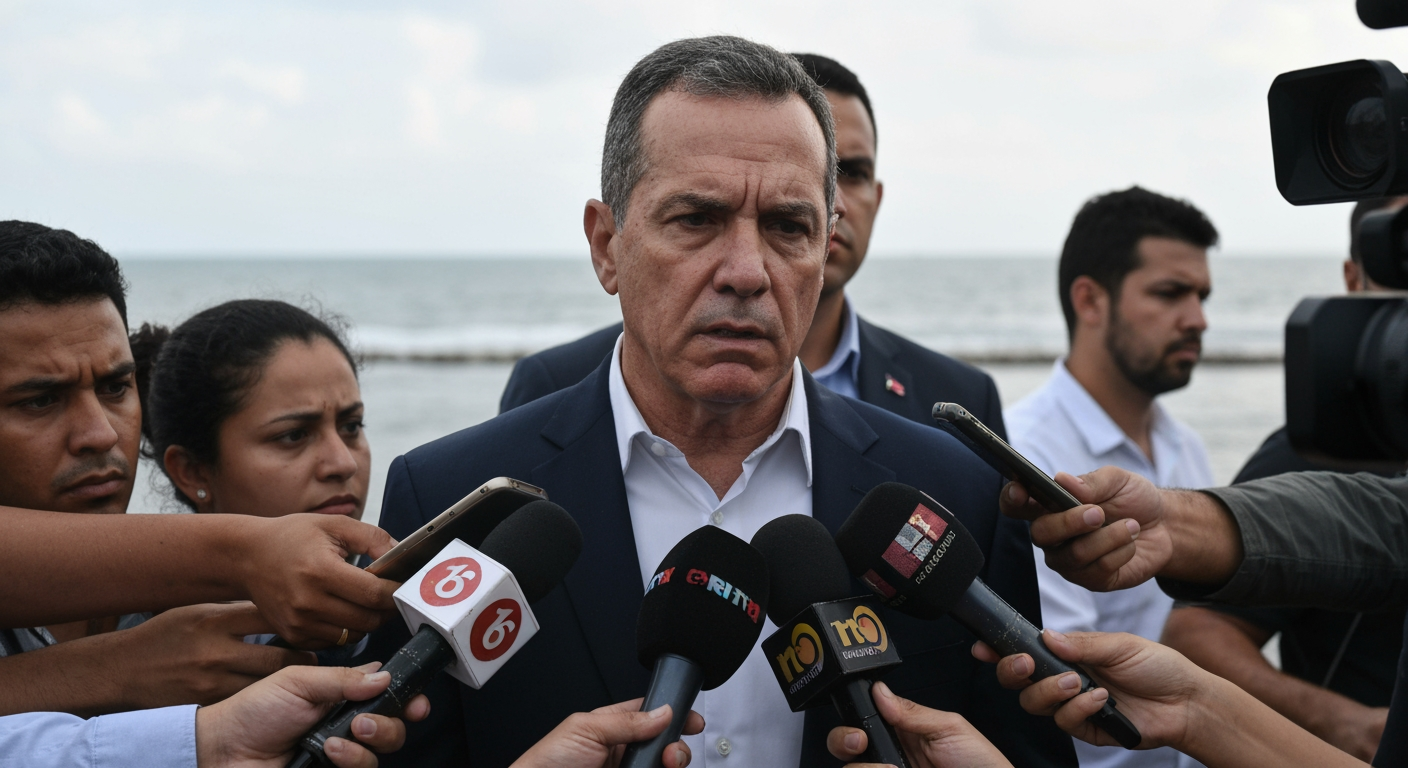
HAVANA – Cuban prosecutors have formally charged six individuals with terrorism, stemming from a dramatic speedboat shootout with the Cuban Coast Guard last week that resulted in the deaths of four others. The six men, identified as U.S.-based Cubans, are accused of attempting to infiltrate the island with weapons and a mission to destabilize the Cuban government. The incident, which unfolded in Cuban territorial waters, marks a significant escalation in the already tense relationship between Havana and Cuban exiles in the United States, drawing international attention and prompt investigations from both nations.
The confrontation occurred on February 25, 2026, when Cuban border forces intercepted a Florida-registered speedboat one nautical mile northeast of the El Pino canal in Cayo Falcones, off Cuba's north-central Villa Clara province. According to official Cuban statements, the speedboat's occupants allegedly opened fire on the approaching Cuban vessel, injuring a Cuban officer. Cuban forces returned fire, leading to a deadly exchange that left four individuals aboard the speedboat dead and six others wounded. The injured were subsequently detained by Cuban authorities. Cuban state media reported that preliminary declarations from the detained men indicated their intent to enter Cuba "for terrorist purposes."
The Confrontation: A Detailed Account
The Ministry of the Interior detailed the events of the incident, stating that the U.S.-flagged speedboat, bearing the Florida registration number FL7726SH, was heavily armed. Upon searching the vessel, Cuban authorities reported seizing an arsenal that included assault rifles, handguns, Molotov cocktails, bulletproof vests, telescopic sights, and camouflage uniforms. Specifically, they reported recovering 13 rifles, 11 pistols, and nearly 13,000 rounds of ammunition. Photos of the recovered armaments and the bullet-riddled speedboat were later displayed by Cuban officials on state television, showcasing the intensity of the close-range firefight.
The six individuals now facing terrorism charges have been identified as Amijail Sánchez González, Leordan Enrique Cruz Gómez, Conrado Galindo Sariol, José Manuel Rodríguez Castelló, Cristian Ernesto Acosta Guevara, and Roberto Azcorra Consuegra. Cuban authorities also announced the arrest of a seventh Cuban national, Duniel Hernández Santos, on the island itself, alleging he was dispatched from the United States to facilitate the reception of the infiltrators. Havana claims that at least two of the detained, Amijail Sánchez González and Leordan Enrique Cruz Gómez, were previously wanted in Cuba for their alleged involvement in planning and promoting terrorist acts. The official announcement of the terrorism charges by Cuban prosecutors came on March 3, with the defendants ordered into provisional detention.
Cuba's Stance on Terrorism and Legal Ramifications
The charges are being brought under Cuba's comprehensive 2001 Terrorism Law, a piece of legislation adopted in the wake of the September 11th attacks in the United States. This law defines terrorism broadly, encompassing acts that aim to cause "states of alarm, fear, or terror in the population," endanger human life or physical integrity, or threaten "material goods of significant value or importance, international peace, or the security of the Cuban State." The law also asserts extraterritorial jurisdiction, meaning it can be applied to acts prepared in foreign territories if they are intended to produce an effect in Cuba.
Under this stringent legal framework, those convicted of terrorist offenses in Cuba can face severe penalties, ranging from 10 to 30 years imprisonment, life imprisonment, or even the death penalty. While the death penalty remains on the statute books for such crimes, Cuba has observed a moratorium on its application for over a decade. Cuban authorities have consistently reiterated their "unwavering will to fight against terrorism" and their commitment to prevent the use of Cuban territory for organizing, financing, or executing terrorist acts against any country. They emphasize their readiness to cooperate internationally to suppress terrorism, provided it adheres to principles of mutual respect and international law.
A Web of International Tensions and Historical Context
The incident immediately intensified an already strained relationship between the United States and Cuba. All ten individuals aboard the speedboat were identified by Cuban authorities as Cubans residing in the United States. U.S. Secretary of State Marco Rubio promptly stated that the incident was not a U.S. government operation and that American authorities were independently gathering information to verify Cuba's account and determine the nationality of those involved. Rubio described such open-sea shootouts as "highly unusual" and confirmed ongoing contact between the U.S. and Cuban Coast Guards.
The Cuban government, led by President Miguel Díaz-Canel, has characterized the speedboat operation as an act of "terrorist or mercenary aggression" and vowed to defend the island's sovereignty and national stability with "determination and firmness." Cuban officials frequently cite a history of "numerous terrorist and aggressive infiltrations" originating from the United States since the 1959 revolution, often with significant human and material costs. This historical context, including events like the Bay of Pigs Invasion, shapes Havana's perspective on such incursions.
The incident also takes place against a backdrop of heightened U.S.-Cuba tensions, including economic sanctions imposed by the U.S. and Cuba's re-inclusion on the U.S. State Department's list of State Sponsors of Terrorism. The Trump administration, which has expressed a desire for "regime change" in Cuba, had previously tightened an energy blockade on the island. This political climate adds layers of complexity to the investigation and potential outcomes of the terrorism charges.
Broader Implications and Uncertain Future
The rapid charging of the six individuals with terrorism underscores the seriousness with which the Cuban government views the speedboat incident. The allegations of an armed infiltration intended to destabilize the country resonate deeply within Cuba's political narrative, where external aggression and counter-revolutionary activities are often emphasized. The detailed presentation of seized weaponry and the immediate application of anti-terrorism laws reflect a firm and decisive response from Havana.
For the United States, the situation presents a diplomatic challenge. While U.S. officials deny government involvement, the fact that the alleged perpetrators are U.S.-based Cubans and that the speedboat was Florida-registered links the incident inextricably to American soil. The U.S. Attorney's Office for the Southern District of Florida has indicated it is pursuing answers through "every legal and diplomatic channel available," highlighting the dual investigations underway. The human element is also poignant, with reports emerging of family members in the U.S. expressing shock and disbelief, like the daughter of one of the deceased who described her father's "obsessive and diabolical" quest for Cuban freedom after enduring hardships on the island.
The outcome of the trials and the broader international response will significantly influence the already precarious U.S.-Cuba relationship. This incident serves as a stark reminder of the enduring geopolitical fault lines in the Caribbean and the volatile consequences when political grievances manifest in armed conflict. The implications extend beyond the fate of the six charged individuals, potentially shaping future diplomatic engagements and security protocols in the region.
Related Articles

Ratko Mladić, "Butcher of Bosnia" and Convicted War Criminal, Dies at 84
THE HAGUE, Netherlands – Ratko Mladić, the former Bosnian Serb military commander known as the "Butcher of Bosnia" and convicted of genocide, war crimes, and crimes against humanity, has died at the age of 84. Serbian...

Long-Awaited 9/11 Mastermind Trial Set for 2028, Decades After Attacks
GUANTANAMO BAY, Cuba – Nearly a quarter-century after the devastating terror attacks of September 11, 2001, a military judge has finally set a trial date for Khalid Sheikh Mohammed, the alleged mastermind behind the...