Argentina's Divisive Labor Reform Nears Final Passage Amid Widespread Protests
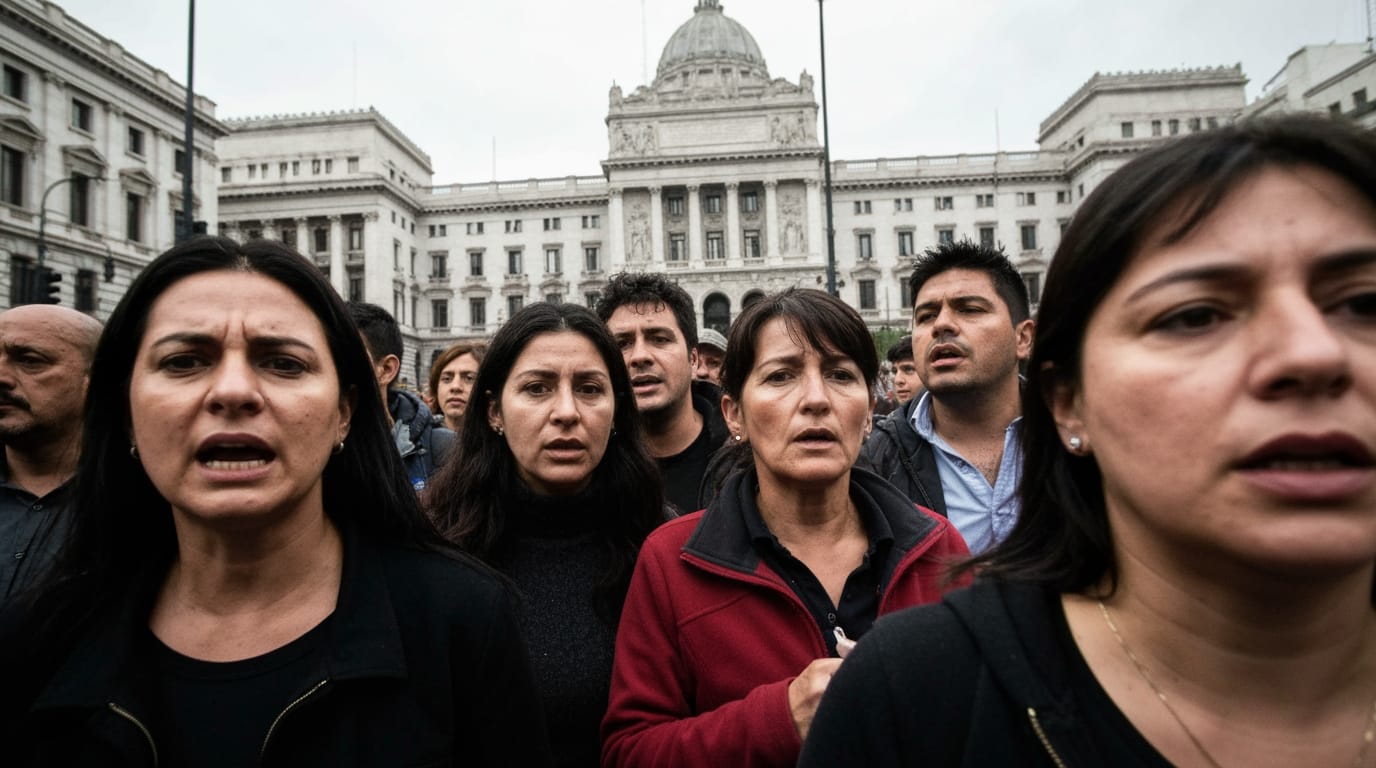
BUENOS AIRES – Argentina's highly contentious labor reform, a cornerstone of President Javier Milei's radical economic agenda, has cleared a significant hurdle in the Chamber of Deputies and now heads back to the Senate for final approval. The lower house's endorsement, secured by a narrow margin of 135 votes in favor to 115 against, arrived amidst a nationwide strike and intense street protests, underscoring the deep divisions this legislative overhaul has ignited across the South American nation. Proponents hail the measure as a crucial step toward modernizing Argentina's economy and fostering job growth, while critics fiercely contend it will dismantle decades of worker protections and deepen economic inequality.
A Legislative Battleground: The Path Through Congress
The journey of President Milei's labor reform through Argentina's Congress has been marked by fierce debate and political maneuvering. The Senate initially approved a version of the bill with 42 votes in favor and 30 against. However, following extensive deliberation, the Chamber of Deputies, or lower house, passed its version of the reform early on Friday, February 20, 2026. This critical vote, concluding a tense session, saw the bill advance, albeit with several modifications introduced by lawmakers. The procedural adjustments now necessitate the legislation's return to the Senate for a definitive vote on the amended text, an action widely anticipated to finalize its passage into law within days.
The government, led by House Speaker Martin Menem, celebrated the lower house's decision as a "historic step." Menem articulated that the measure aims to "close a wound that had been open for decades," describing the current labor framework as outdated and responsible for pushing millions into the informal economy, discouraging hiring, and making formal employment a privilege. He maintained that previous attempts at reform had been thwarted by entrenched interests prioritizing privilege over job creation. Senior government officials, including Presidential Secretary General Karina Milei and Cabinet Chief Manuel Adorni, were present during the legislative session, signaling the executive branch's strong commitment to the bill's passage.
Reshaping the Workplace: Key Provisions and Controversies
At the heart of the approved labor reform are a series of significant changes designed to dramatically alter the relationship between employers and employees in Argentina. The central tenets of the overhaul include provisions that would simplify the process for employers to hire and dismiss workers, while simultaneously reducing severance pay obligations. Specifically, the reform proposes to exclude extra income, such as bonuses, paid vacation, and the "thirteenth salary" (aguinaldo), from severance pay calculations. Furthermore, it stipulates that the base for severance calculations cannot exceed three times the average salary for a given position, a departure from the current system that bases calculations on an employee's best monthly payment without a maximum limit.
Beyond these economic adjustments, the reform also seeks to limit strike rights and increase permissible working hours. A controversial "hours bank" system could allow employees to "voluntarily" agree to work additional hours in exchange for docking those hours from future shifts, effectively permitting up to 12-hour workdays without overtime pay, provided a minimum 12-hour rest period between shifts is maintained. The legislation also grants companies the ability to negotiate labor and wage agreements directly with their workers, circumventing existing general sector agreements. Other provisions include restrictions on holiday entitlements and the introduction of an employer-financed severance fund, which critics warn could impact the national pension system. The bill also allows for payment in foreign currencies. One last-minute modification made in the lower house involved the removal of an article that would have reduced sickness-related benefits for employees, a small concession amidst the sweeping changes.
A Nation on Edge: Protests and Opposition Voices
The legislative progress of Milei's labor reform has been met with fierce resistance from Argentina's powerful labor unions and left-wing political groups. As the lower house debated the bill, a nationwide strike orchestrated by the General Confederation of Labor (CGT), the country's main labor federation, brought parts of the country to a standstill. Transport workers, public sector employees, and bank staff participated in the 24-hour stoppage, leading to dozens of flight cancellations and deserted train stations across the country.
Simultaneously, thousands of protestors converged near the legislative building in Buenos Aires, resulting in clashes with security forces. Reports indicated multiple detentions and injuries due to tear gas, with journalists covering the events also among those arrested. Opposition lawmakers vehemently condemned the reform, labeling it as detrimental to workers and small businesses. Victoria Tolosa Paz, a deputy from the Peronist bloc Union por la Patria, described the legislation as a "regressive step" that would fail to improve conditions for informal workers. She argued that the bill exhibits a "savage bias against labor" and would negatively impact industry and production. Unions contend that the proposed changes threaten long-standing worker protections, including the fundamental right to strike, and will exacerbate job insecurity in a country where nearly 40% of the workforce already lacks formal employment contracts. They point to an estimated 300,000 job losses since Milei's austerity measures began and the closure of 21,000 companies in the past two years as evidence of a struggling economy under the current administration.
Milei's Vision: Economic Revitalization Versus Social Cost
President Milei's administration champions the labor reform as a vital component of a broader economic overhaul aimed at deregulating markets, reducing state intervention, and fostering private-sector job creation. The government argues that the existing, rigid labor laws have stifled investment and contributed significantly to Argentina's high rates of informal employment. By increasing flexibility, reducing employer costs, and streamlining hiring and firing processes, the administration believes it can attract foreign investment and stimulate formal employment.
International investors have closely monitored the legislative process, viewing the labor reform's success as a key indicator of Milei's ability to implement his free-market agenda. The government has also highlighted that Milei's reforms have already contributed to stabilizing inflation rates, earning praise from international organizations. However, this economic vision comes at a significant social cost, according to critics, who warn that the benefits of deregulation may not trickle down to the working class, potentially leading to a further erosion of living standards and increased precarity for a large segment of the population. The intense debate encapsulates the fundamental ideological clash between Milei's libertarian, market-driven approach and traditional Argentine labor and social welfare policies.
An Uncertain Future for Argentina's Workforce
As the labor reform bill returns to the Senate for its final vote, Argentina stands at a crossroads. The impending decision will not only mark a significant legislative victory for President Milei but also usher in a new era for the country's labor landscape. The reforms represent a bold gamble by the Milei administration, betting that dismantling long-held worker protections will ultimately unlock economic growth and create a more dynamic job market. However, the vociferous opposition and widespread protests demonstrate the profound concerns over the potential social ramifications. The delicate balance between economic liberalization and the safeguarding of worker rights will continue to define Argentina's political and social discourse in the months and years to come, with the ultimate impact on the lives of millions of Argentine workers yet to be fully seen.


