Middle East Rocked as Israel Launches 'Preemptive' Strike on Iran, Escalation Feared

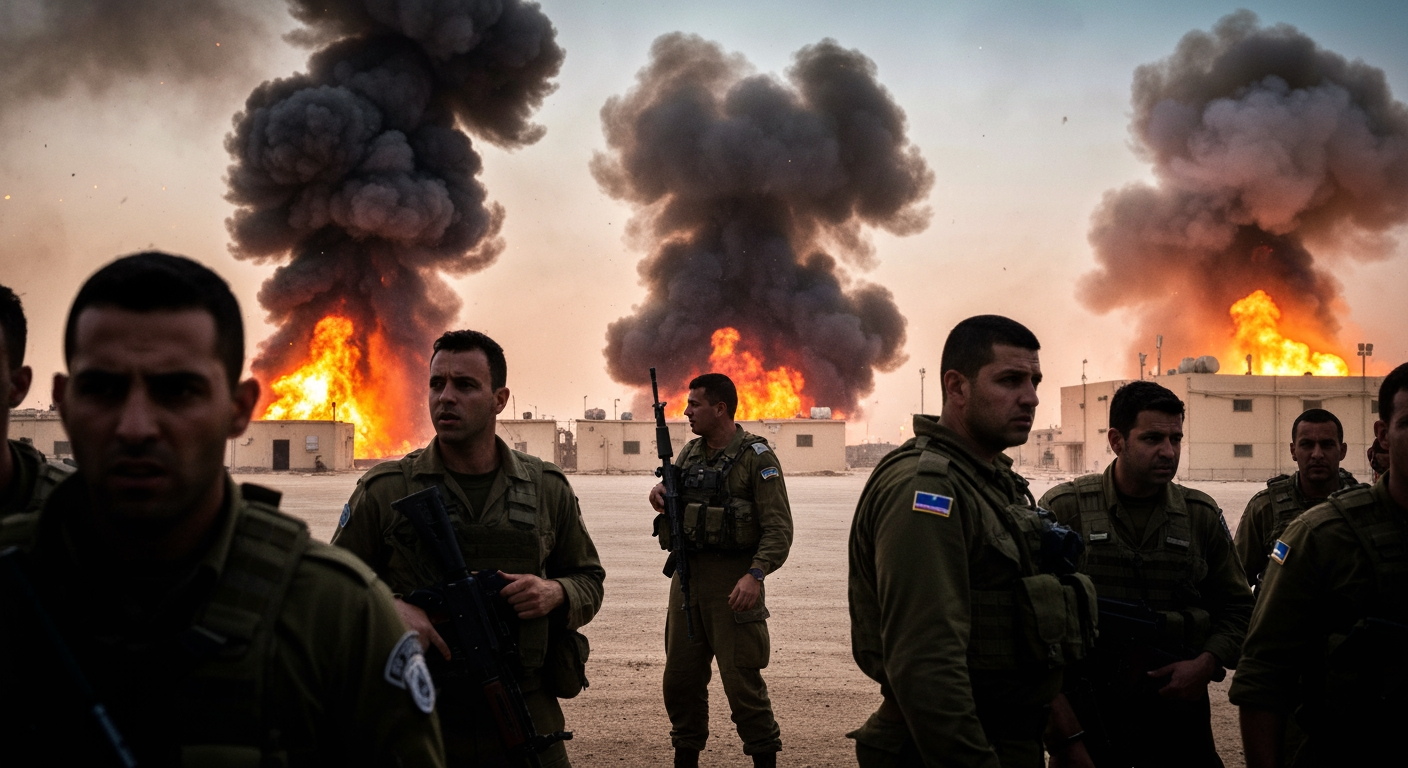
TEHRAN/JERUSALEM – In a dramatic escalation of long-simmering tensions, Israel launched a series of "preemptive" strikes against targets within Iran early Saturday, with explosions reported across the Iranian capital of Tehran. The audacious move, confirmed by Israeli Defense Minister Israel Katz, comes amid heightened regional instability and follows months of increasingly bellicose rhetoric and a recent breakdown in international nuclear negotiations with Tehran. The United States also reportedly participated in the coordinated attack, marking a significant turn in the protracted conflict.
The surprise offensive triggered immediate alarm worldwide, drawing swift declarations of a nationwide state of emergency in Israel and calls for civilians to remain near bomb shelters as the Israeli military braced for potential retaliation. The precision and scope of the strikes remain under assessment, but reports indicate multiple blasts rocked central Tehran, with some targeting areas near sensitive government facilities.
The Dawn Raid and Israel's Rationale
The Israeli Defense Ministry characterized the Saturday morning operation as a preemptive measure, asserting it was launched to "remove threats to the state of Israel" from an anticipated Iranian missile and drone attack in the immediate future. Defense Minister Israel Katz reiterated this justification, underlining Israel's commitment to safeguarding its security interests. The strikes occurred around 9:00 AM local time in Jerusalem and 10:30 AM in Tehran.
Reports from the ground in Tehran detailed several explosions, with smoke seen rising from downtown areas. Iranian state television acknowledged the blasts, though specific details regarding targets or casualties remained scarce in initial reports. While Israel announced its actions, U.S. officials, according to some reports, confirmed American military strikes on Iran were also underway, indicating a coordinated effort between the two allies. This joint action signifies a profound commitment to countering what both nations perceive as an immediate and credible threat from the Islamic Republic.
Targets and Domestic Fallout
Eyewitnesses in Tehran reported hearing multiple explosions, specifically mentioning missile strikes in the Republic area and along University Street and the Jomhouri area of the capital. One report indicated an apparent strike hit an area close to the offices of Iran's Supreme Leader Ayatollah Ali Khamenei, though it was unclear if the 86-year-old leader was present at the time. The lack of immediate detailed information from Iranian authorities makes it difficult to fully ascertain the extent of damage or specific infrastructure targeted.
In response to the escalating situation, Israel immediately moved to secure its home front. Sirens blared across the country, prompting urgent alerts from the Israel Defense Forces (IDF) Home Front Command instructing civilians to remain in close proximity to protected spaces. Israel also implemented a comprehensive closure of its airspace to civilian flights and placed restrictions on educational activities and large gatherings, underscoring the severity of the perceived threat and the expectation of Iranian counter-responses. The proactive measures highlight the tense readiness within Israel for potential retaliatory strikes.
A Cycle of Escalation and Diplomatic Dead Ends
Saturday's strike did not occur in a vacuum but rather as the latest, and perhaps most perilous, chapter in a prolonged shadow war between Israel and Iran. This confrontation follows a "12-day air war" in June of last year, during which Israel and the United States reportedly conducted strikes against Iranian nuclear installations. That prior engagement reportedly inflicted significant damage on Iran's nuclear facilities and military leadership, demonstrating a pattern of escalating direct military action.
The recent preemptive attack also coincides with the dramatic failure of fresh diplomatic efforts to de-escalate Iran's nuclear program. Just this week, negotiations between the U.S. and Iran in Geneva stalled without agreement, with significant divisions remaining on key issues. While Iran expressed willingness to discuss curbs on its nuclear program in exchange for sanctions relief, it steadfastly refused to link these discussions to its ballistic missile program. Israel, a staunch opponent of any deal that does not fully dismantle Tehran's nuclear infrastructure and restrict its missile capabilities, has repeatedly warned it would act unilaterally if necessary. The collapse of diplomacy effectively removed a potential off-ramp for the burgeoning military conflict.
Regional Ripple Effects and Global Concerns
The geopolitical implications of this direct military confrontation are profound, threatening to plunge the already volatile Middle East into a wider, more destructive conflict. The United States had been steadily augmenting its military presence in the region for weeks, deploying a substantial fleet of aircraft and warships, including the USS Gerald Ford aircraft carrier, near the coast of Haifa. This strategic buildup underscored growing international concern over Iran's nuclear trajectory and regional ambitions.
Prior to the strikes, the U.S. had issued stark warnings, urging its citizens to leave Israel, and the U.S. Embassy in Qatar implemented a shelter-in-place order for all personnel, signaling an awareness of imminent danger. Iran, for its part, has consistently denied seeking nuclear weapons, asserting its nuclear program is for peaceful purposes, yet it has also issued stern warnings of retaliation against American bases in neighboring countries should Washington initiate military action. The immediate aftermath of Saturday's strikes now sets the stage for a period of extreme uncertainty, with the potential for further reprisal attacks from Iran and its proxies, significantly destabilizing an already fragile region and casting a long shadow over global security.
The coordinated strikes by Israel and the U.S. represent a significant gamble in a high-stakes geopolitical chess match. While intended to neutralize immediate threats and deter Iran's nuclear ambitions, the action carries considerable risks of prolonged military engagement and regional upheaval. The world now watches intently for Iran's response, which will undoubtedly shape the trajectory of this renewed and dangerous confrontation in the Middle East.
Related Articles


Ratko Mladić, "Butcher of Bosnia" and Convicted War Criminal, Dies at 84
THE HAGUE, Netherlands – Ratko Mladić, the former Bosnian Serb military commander known as the "Butcher of Bosnia" and convicted of genocide, war crimes, and crimes against humanity, has died at the age of 84. Serbian...


Long-Awaited 9/11 Mastermind Trial Set for 2028, Decades After Attacks
GUANTANAMO BAY, Cuba – Nearly a quarter-century after the devastating terror attacks of September 11, 2001, a military judge has finally set a trial date for Khalid Sheikh Mohammed, the alleged mastermind behind the...