Armenia Navigates Perilous Geopolitical Tightrope Between Russia and the European Union

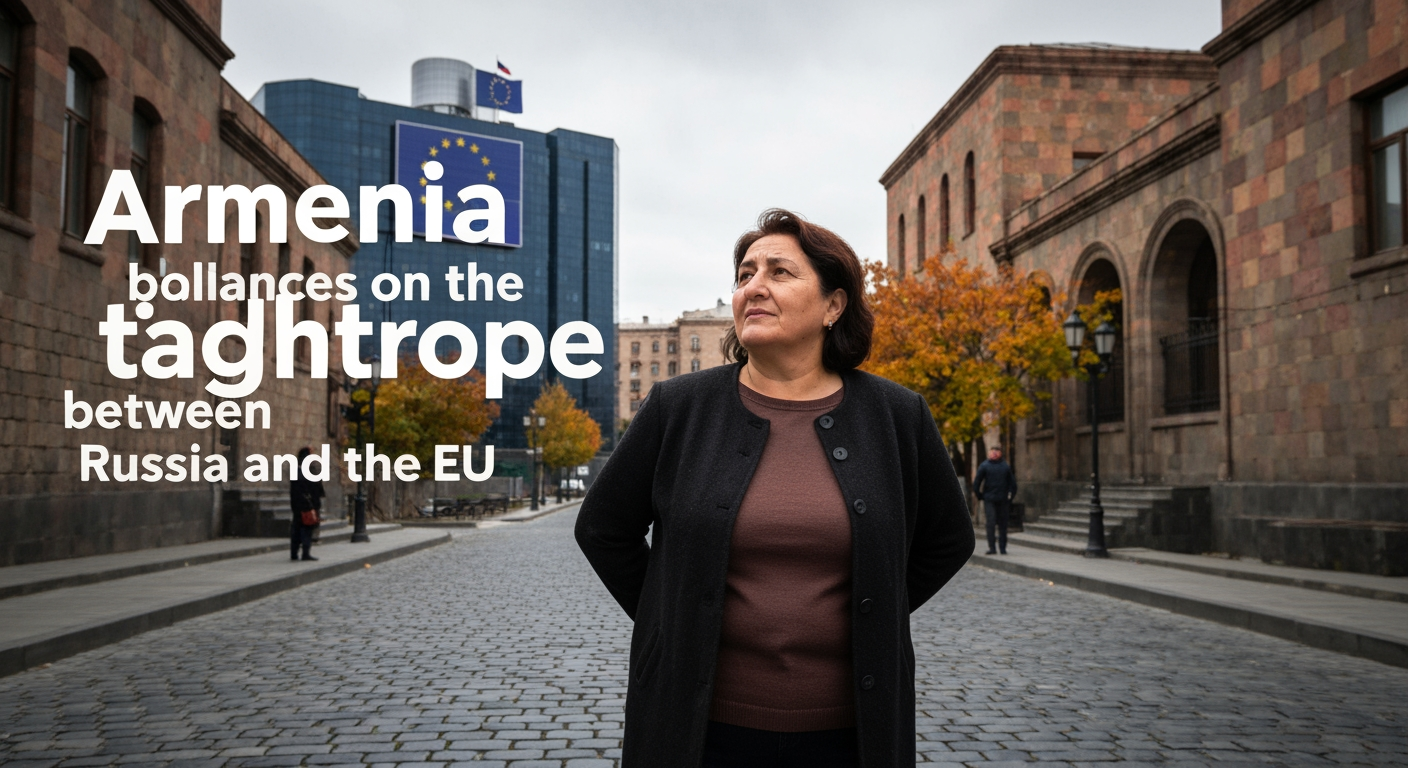
YEREVAN, Armenia – Armenia is engaged in a complex and delicate balancing act, gradually reorienting its foreign policy from a long-standing alliance with Russia towards deeper integration with the European Union. This strategic pivot, intensified by recent geopolitical shifts and security challenges, reflects Yerevan's determination to diversify its partnerships while contending with persistent Russian influence. The nation’s careful steps are charting a new course for the South Caucasus, though not without significant risks and potential rewards.
For decades, Armenia's foreign policy has been anchored firmly to Russia, a relationship forged by historical ties, shared security concerns, and deep economic interdependence. Russia has served as Armenia's primary security guarantor, maintaining a military base in Gyumri and playing a crucial role in regional stability, particularly concerning the Nagorno-Karabakh conflict. Yerevan is a full member of the Russia-led Eurasian Economic Union (EAEU) and was a participant in the Collective Security Treaty Organization (CSTO). This close alignment provided Armenia with military assistance and economic resources, including favorable gas prices, and made Russia a dominant force in its import and export markets.
The Shifting Sands of Security: Post-Karabakh Realities
The impetus for Armenia's re-evaluation of its traditional alliances largely stems from the two Nagorno-Karabakh conflicts in 2020 and 2023. During these periods of intense fighting with neighboring Azerbaijan, Yerevan perceived a lack of robust support from its long-time ally, Russia. Armenian authorities openly criticized Russian peacekeepers for their perceived failure to prevent Azerbaijan's military offensives and the subsequent displacement of over 100,000 ethnic Armenians from the region. This disillusionment, coupled with Russia's preoccupation with the conflict in Ukraine, spurred a profound re-assessment of Armenia's security architecture. As one analyst noted, the events in Nagorno-Karabakh served as a "belated demonstration that Russia is dangerously unreliable as a partner."
In response, Armenia has taken concrete steps to distance itself from Moscow's security orbit. In February 2024, Prime Minister Nikol Pashinyan confirmed that Armenia had frozen its participation in the CSTO, viewing the organization as "a threat to the national security of Armenia." March 2024 saw the official expulsion of Russian border guards from Zvartnots International Airport in Yerevan, signaling a reduction in Russia's security presence. Furthermore, Armenia joined the International Criminal Court (ICC) in 2023, a move that Moscow publicly condemned as an "unfriendly step."
A Decisive Turn Towards Europe
Concurrently with its calibrated disengagement from Russia, Armenia has significantly intensified its overtures to the European Union. This strategic diversification aims to strengthen diplomatic and military cooperation with new and existing partners, including the EU, France, and the United States. The EU has emerged as Armenia's largest donor and a key political and economic partner, with relations based on the Comprehensive and Enhanced Partnership Agreement (CEPA), which fully came into force in March 2021.
The most prominent indicators of this westward shift were the back-to-back summits hosted in Yerevan in early May 2026. These included the eighth gathering of the European Political Community (EPC) and the first-ever bilateral EU-Armenia summit. During these landmark events, European Commission President Ursula von der Leyen and European Council President António Costa emphasized that relations between the EU and Armenia were reaching a "new level." Agreements were formalized on a new EU-Armenia connectivity partnership, designed to boost infrastructure and trade routes linking Europe to Central Asia via the South Caucasus, with EU investments anticipated to reach €2.5 billion under its Global Gateway strategy. Additional financial aid, including a €270 million Resilience and Growth Plan and multiple tranches from the European Peace Facility totaling €30 million by early 2026, further underscored the deepening partnership. Steps were also initiated towards visa liberalization for Armenian citizens, and the mandate for the European Union Monitoring Mission (EUMA) was extended until 2027.
Perhaps most symbolically, in March 2025, the Armenian parliament approved a law formally outlining the country's path toward European integration, officially endorsing Armenia's EU accession. This move signals Armenia's ambition to ultimately seek full EU membership, a goal openly supported by Prime Minister Pashinyan.
The Precarious Balance: Risks and Economic Realities
Despite Armenia's pronounced pivot towards the West, completely severing ties with Russia remains a complex and challenging prospect. Yerevan remains deeply intertwined with Moscow economically, politically, and militarily. Russia continues to be a major commercial partner, accounting for 54% of Armenia's imports and 24% of its exports. Favorable gas prices from Russia also represent a significant economic advantage for Armenia. Moreover, Armenia still hosts Russia's only military base in the South Caucasus, a remnant of decades of strategic alliance.
This continued interdependence creates a precarious balancing act. Russian President Vladimir Putin has explicitly warned Armenia that membership in both the EU and the Eurasian Economic Union is "impossible by definition," highlighting fundamental incompatibilities in market regulations and obligations. Moscow has also expressed concerns that deepening ties with the EU could negatively impact Armenia's commitments within the EAEU framework.
Armenian leadership acknowledges the challenge, seeking to reduce dependence on Moscow without completely alienating its powerful neighbor. Public opinion in Armenia reflects this complexity, with a February 2026 poll indicating that 56% of Armenians desire a foreign policy that fosters good relations with both the West and Russia. While anti-Russia sentiment has grown following recent conflicts, a significant portion of the population still holds pro-Russia views. Armenia's government is thus pursuing a slow, step-by-step process of loosening Russia's economic and security grip, recognizing the long-standing dependencies that make abrupt "either-or" choices difficult. Recent measures by Armenia to curb the circumvention of sanctions against Russia demonstrate an alignment of values and interests with the European Union.
A Future Defined by Choice
Armenia's journey along this geopolitical tightrope is fraught with high stakes. The upcoming parliamentary elections in June 2026 will be crucial in determining the future trajectory of the nation's foreign policy. A government committed to further diversification and European integration would likely accelerate the current trend, while a more traditionalist or Russia-leaning coalition could slow the pace of change.
The European Union, for its part, is keen to support Armenia's democratic development and reduce its reliance on Russia, offering incentives through trade, energy cooperation, and governance initiatives. However, the EU has yet to offer clear timelines for potential membership, robust security guarantees, or comprehensive alternatives to Russian energy. As Armenia strives for peace with its neighbors and seeks to solidify its democratic gains, its ability to navigate these complex geopolitical currents will define its future and reshape the geopolitical landscape of the South Caucasus.
Related Articles


Mounting Frustration Grips Russia as Economic Hardship and War's Toll Deepen
Moscow, Russia – A palpable shift in public sentiment is emerging across Russia, with growing frustration among citizens fueled by a confluence of economic pressures, increasing internet restrictions, and the undeniable...

Germany's Strategic Calculus: Ukraine Aid is an Investment in European Security, Not Charity
Berlin – The ongoing provision of substantial aid to Ukraine by Germany and its allies is increasingly being framed not as an act of altruism, but as a crucial investment in European security and stability. This...