Historic Shift in West Bengal: BJP Triumphs, Bolstering Modi's National Standing
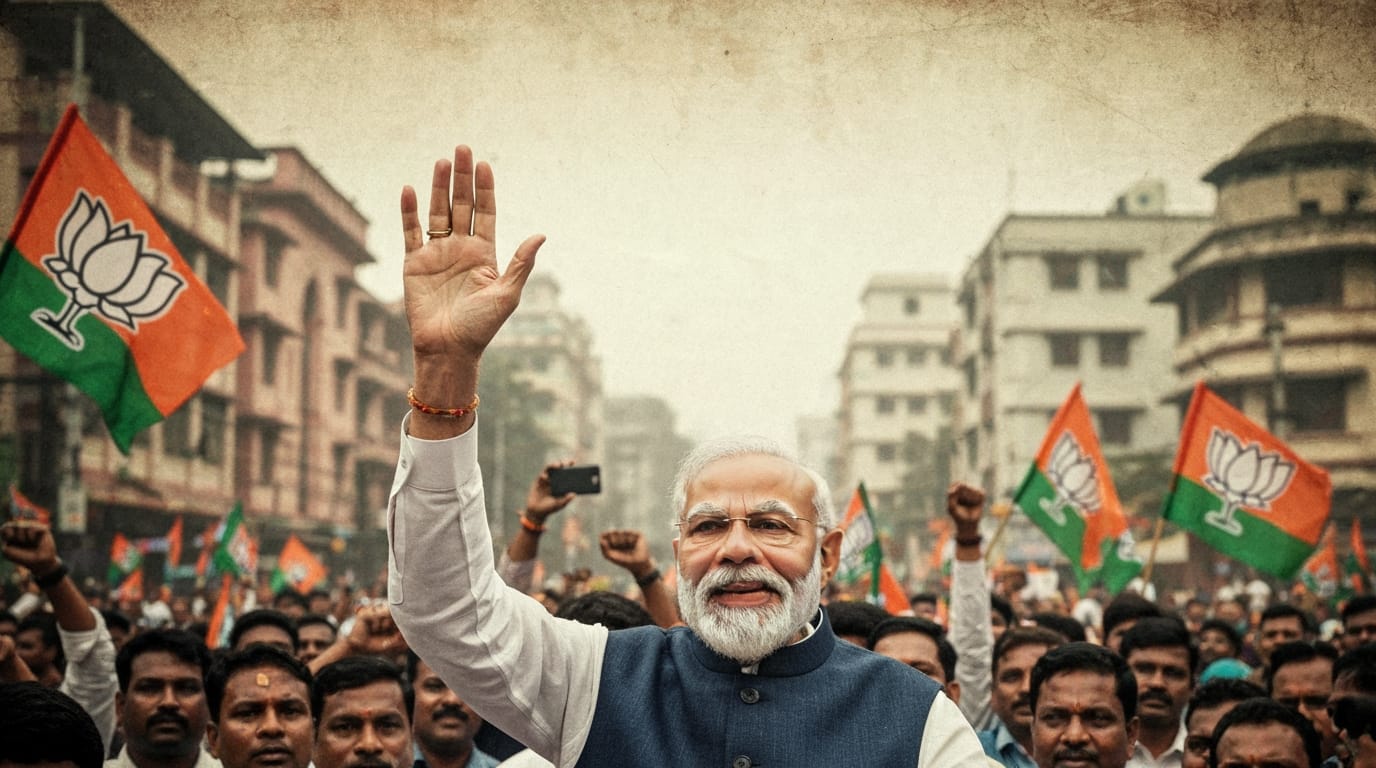
KOLKATA, India — In a political earthquake reshaping India's electoral map, the Bharatiya Janata Party (BJP) has secured an unprecedented and resounding victory in West Bengal's assembly elections, ousting the formidable Trinamool Congress (TMC) after 15 years of rule. This landmark win, declared on May 4, 2026, marks the first time the BJP will govern the strategically vital eastern state, significantly boosting Prime Minister Narendra Modi's national momentum and solidifying his party's expanding influence across the country.
The outcome not only delivers West Bengal, a long-standing opposition bastion, into the BJP's fold but also reasserts the party's dominance following a mixed performance in the 2024 general elections. The defeat is a significant blow to TMC chief Mamata Banerjee, a vocal critic of Modi, who suffered a personal setback by losing her own constituency.
The Shattering of a Stronghold
The BJP's triumph in West Bengal is historic, as the party had never before won assembly elections in the state. Early results indicated the BJP securing over 205 of the 294 assembly seats, well past the majority mark of 148. Final tallies showed the BJP clinching 206 seats, a dramatic surge from its 2021 performance where it managed only 77 seats. Conversely, the TMC, led by Chief Minister Mamata Banerjee, was reduced to approximately 80 seats, a sharp decline from its 215 seats in 2021.
In a particularly stunning turn of events, Mamata Banerjee, who had been Chief Minister since 2011, lost her own Bhabanipur constituency to BJP's Suvendu Adhikari by more than 15,000 votes. This personal defeat underscores the magnitude of the anti-incumbency wave that swept across the state. The BJP's impressive vote share climbed to around 45.8%, a significant increase from 38.4% in 2021, while the TMC's share dropped to 40.8% from 48.5%. The election saw a record voter turnout of 92.47%, reflecting the high stakes and intense political engagement.
Factors Behind the Saffron Surge
Several factors converged to fuel the BJP's unprecedented victory. A palpable anti-incumbency sentiment against the 15-year rule of the TMC played a crucial role. Voters expressed dissatisfaction over issues such as corruption, the flight of industries, unemployment, and perceived deterioration in law and order. Reports indicated widespread complaints about the high-handedness of local TMC leaders and workers.
The BJP’s meticulously organized campaign machinery, spearheaded by Prime Minister Modi and Home Minister Amit Shah, resonated with a significant portion of the electorate. The party successfully leveraged national muscle with local grievances, focusing on issues like alleged illegal immigration from Bangladesh and the state's economic woes. Analysts also pointed to a strategic consolidation of Scheduled Caste (SC) and Scheduled Tribe (ST) votes, as well as significant gains in urban and mixed constituencies, contributing to the BJP's broad victory. The narrative of "Hindu consolidation" and a perception that the TMC appeased Muslims also contributed to the BJP's success. Controversial revisions to voter rolls, which critics alleged disproportionately affected minority communities, were also highlighted as a contributing factor.
National Ramifications and Modi's Renewed Mandate
The West Bengal outcome carries profound national implications for Indian politics, particularly for Prime Minister Modi and the BJP. This victory significantly strengthens Modi's standing midway through his third term and marks a return to the strong political momentum the party experienced before the 2024 general election, where it lost its outright majority in parliament. The win helps offset that electoral setback, reinforcing the BJP's dominant position and extending its "hegemonic power" across India.
For the BJP, the capture of West Bengal, alongside retaining Assam and holding Puducherry, means an expansion of its control over eastern India. This geographical expansion is critical to the party's ambition of being a truly pan-Indian force. The increased numbers in state assemblies are expected to ease the passage of contentious legislation in the Rajya Sabha, where the BJP-led alliance is anticipated to improve its strength. The victory also bolsters the perception of Home Minister Amit Shah as a key electoral strategist and potential successor to Modi, influencing internal party dynamics.
A Fractured Opposition and Future Challenges
The West Bengal election result delivers a severe blow to the already weakened opposition parties in India. Mamata Banerjee, who had emerged as one of Modi's most prominent national critics and a potential leader for a united opposition front, sees her national aspirations significantly diminished. The defeat of the TMC, a key constituent of the Congress-led INDIA alliance, is expected to further weaken the opposition's leverage as Modi looks towards a potential record fourth term in 2029. Other opposition parties like the Indian National Congress and the Communist Party of India (Marxist) also performed poorly, further consolidating the BJP's ascendancy.
The new BJP government in West Bengal, however, inherits a complex set of challenges. The state grapples with a crushing debt burden, projected to be over Rs 7 lakh crore-Rs 8 lakh crore, with interest payments consuming a substantial portion of the revenue. Law and order issues, deeply entrenched over decades, also present a significant hurdle. Furthermore, the implementation of policies like the Citizenship Amendment Act (CAA) and the National Register of Citizens (NRC) could trigger social unrest, particularly in border districts where concerns about statelessness are high. Economically, the state faces challenges like high unemployment rates and the broader impact of global economic shifts, including the US war on Iran.
The West Bengal election of 2026 represents a watershed moment in Indian politics. The BJP's historic breakthrough signifies a powerful consolidation of its national agenda and a profound reorientation of political power in the country's east. While the road ahead for the new state government is fraught with challenges, the verdict unequivocally strengthens Prime Minister Modi's position and reshapes the national political discourse for the foreseeable future.