Germany Poises Naval Assets for Critical Strait of Hormuz Mission Amid Regional Tensions
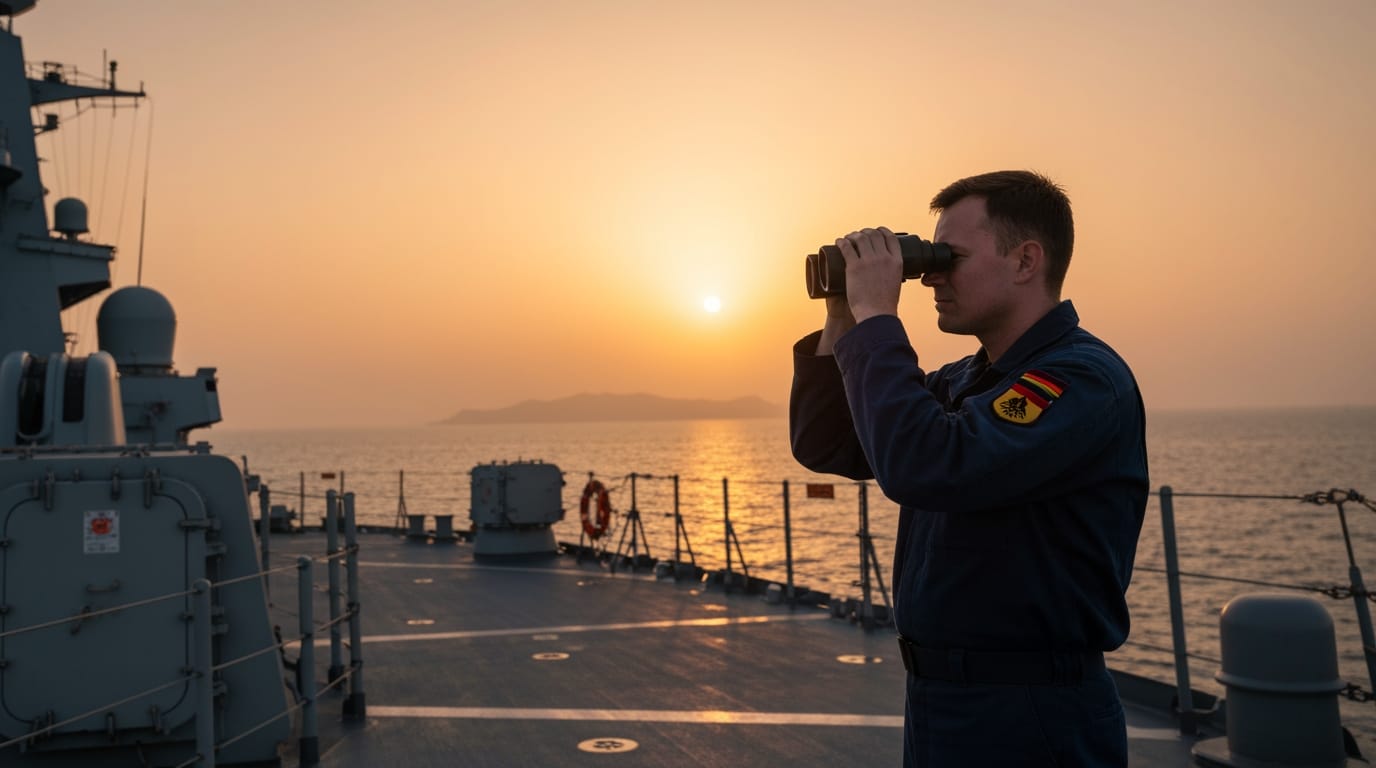
Germany is strategically positioning naval vessels in the Mediterranean, including the minesweeper Fulda and the support ship Mosel, in preparation for a potential international mission to safeguard shipping through the volatile Strait of Hormuz. This proactive deployment, confirmed by German defense officials, underscores Europe's growing commitment to securing global trade routes and follows heightened instability in the critical waterway. The move represents a significant step for Germany, which has traditionally been cautious about military engagements outside its immediate defense sphere, signaling a deepening involvement in global maritime security alongside its European allies.
The Geopolitical Crucible of Hormuz: A Lifeline Under Threat
The Strait of Hormuz, a narrow waterway connecting the Persian Gulf with the Gulf of Oman and the Arabian Sea, stands as one of the world's most vital maritime chokepoints. Its economic significance is immense, with an average of 21 million barrels of oil per day, equivalent to 21% of global petroleum liquids consumption, transiting through it in 2018. Over a quarter of the global liquefied natural gas (LNG) trade also relies on this strategic passage. Any disruption to shipping in this strait has immediate and far-reaching consequences for global energy supplies and trade, impacting economies worldwide.
In recent years, the region has been plagued by escalating tensions, marked by attacks on commercial shipping, the seizure of vessels, and naval blockades. These incidents have highlighted the vulnerability of this critical artery and the pressing need for concerted international efforts to ensure the freedom and safety of navigation. The ongoing "US-Israeli war on Iran" (as described in one report) further exacerbates the instability, leading to unprecedented disruptions of global oil and gas flows and elevating the stakes for all nations dependent on the strait.
Germany's Measured Approach to Maritime Security
Germany's preparations involve the deployment of specialized naval assets, primarily focusing on its advanced mine clearance capabilities. The minesweeper Fulda has already departed from Kiel for the Mediterranean, while the support vessel Mosel, currently in the Aegean Sea, is being readied for potential redeployment. German Defense Minister Boris Pistorius emphasized the navy's expertise in detecting and clearing mines, a crucial contribution to securing shipping lanes in a potentially mined environment.
However, any actual deployment to the Strait of Hormuz is contingent upon several stringent conditions, reflecting Germany's cautious foreign policy doctrine. These prerequisites include a sustained halt in hostilities in the region, a clear international legal mandate (preferably from the United Nations), and parliamentary approval from the German Bundestag. Chancellor Friedrich Merz has reiterated these conditions, stating that Germany is prepared in principle to contribute to securing transit routes once these diplomatic and legal frameworks are in place. This measured approach aims to provide a significant and visible contribution to international efforts without engaging in direct military confrontation, focusing on a purely defensive and stabilizing role.
European Unity in a Volatile Region
Germany's current preparations are part of a broader, coordinated European initiative, distinct from previous U.S.-led operations that Berlin opted not to join in 2019. This European effort traces its roots to the European Maritime Awareness in the Strait of Hormuz (EMASoH) mission, also known as Operation AGENOR, which was launched in January 2020. EMASoH, a French-led initiative, aims to protect maritime flows, enhance situational awareness, and promote de-escalation through both diplomatic and military tracks.
Initially, Germany provided political support to EMASoH alongside Belgium, Denmark, France, Greece, Italy, the Netherlands, Norway, and Portugal. The current move suggests a more direct military participation, aligning with a growing European consensus on the need to actively secure these vital waterways. France and the United Kingdom are also reportedly preparing for a joint naval operation in the area, indicating a concerted European strategy to respond to the instability. This collaborative stance demonstrates Europe's collective determination to protect its economic interests and uphold the principle of freedom of navigation in a region critical for global trade.
The Stakes and Potential Challenges
The mission in the Strait of Hormuz carries inherent risks, particularly concerning the potential for naval mines and the complex coordination required among multiple international actors. The German Navy's focus on mine clearance underscores the gravity of the threats to shipping. Effective coordination and information sharing are paramount to avoid miscalculations in a busy and strategically sensitive waterway.
Beyond military capabilities, the mission also incorporates a crucial diplomatic component, aiming for de-escalation and fostering regional dialogue. The overarching goal is to deter future conflicts and restore confidence within the shipping and insurance industries, rather than seeking a conventional military victory. This requires a long-term commitment and a nuanced approach to navigating the intricate geopolitical landscape of the Persian Gulf. The presence of international naval forces serves as a deterrent, redistributing the burden of security and making any disruptive actions by hostile entities less effective and more escalatory.
In conclusion, Germany's readiness to deploy naval assets to the Strait of Hormuz marks a pivotal moment in its foreign and security policy. It signals a robust commitment to international security and the protection of vital global trade arteries, undertaken with a cautious yet determined approach. By emphasizing mine clearance expertise and operating within a broader European framework, Berlin seeks to contribute significantly to stabilizing a region critical to the world economy. The successful implementation of this mission hinges on achieving a cessation of hostilities and securing the necessary international mandates and parliamentary approvals, reflecting a responsible and strategic engagement in a complex geopolitical environment.


