Artemis II Crew Crosses Lunar Midpoint, Sends Back Breathtaking Earth Images
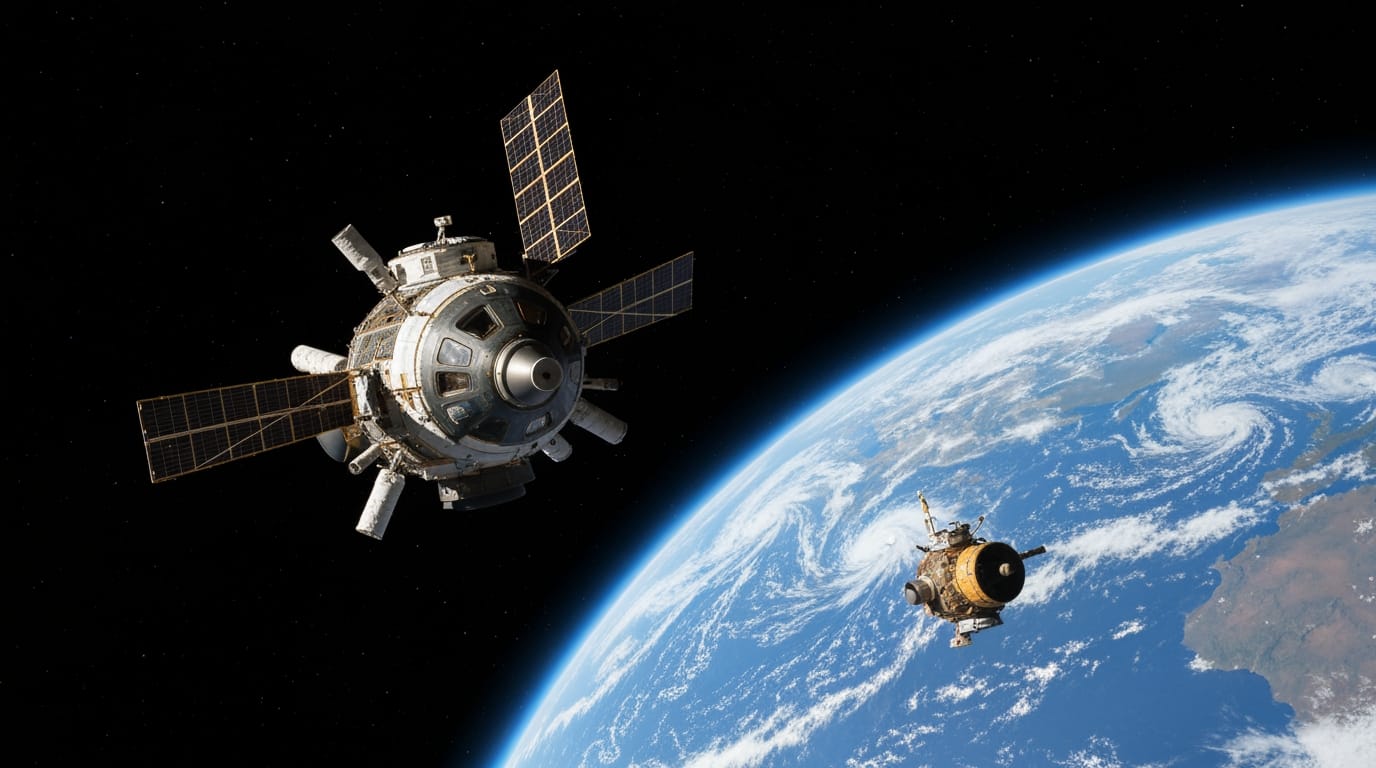
The Artemis II crew has reached a pivotal milestone on their historic journey, passing the halfway point to the Moon and offering humanity a fresh perspective of its home planet through newly released images. This critical mission, marking the first time humans have ventured toward the Moon in over five decades, continues to validate the systems and capabilities necessary for a sustained human presence on and around the lunar surface. The four-member international crew is on track to set a new human spaceflight distance record as they meticulously test the Orion spacecraft during their 10-day expedition.
A Crucial Milestone on the Path to the Moon
Launched from Kennedy Space Center on April 1, 2026, the Artemis II mission embarked with a clear objective: to conduct a crewed flight test of the Orion spacecraft beyond low Earth orbit. The crew, comprising NASA astronauts Commander Reid Wiseman, Pilot Victor Glover, and Mission Specialist Christina Koch, alongside Canadian Space Agency Mission Specialist Jeremy Hansen, has diligently worked through initial flight phases, verifying the myriad systems designed to support human life in deep space.
After spending approximately 25 hours orbiting Earth to ensure all spacecraft systems were functioning optimally, the critical Translunar Injection (TLI) burn propelled Orion out of Earth's gravitational embrace and onto its lunar trajectory. The halfway point to the Moon was achieved approximately two days, five hours, and 24 minutes after liftoff, a moment that elicited a "collective expression of joy" from the astronauts. At this juncture, the Orion spacecraft was situated more than 136,080 miles (219,000 kilometers) from Earth, steadily increasing its distance from our home planet. Astronaut Christina Koch remarked on the stunning view of the Moon becoming increasingly prominent from the docking hatch, describing it as "a beautiful sight."
Earth's Radiant Portrait from the Cosmic Distance
Among the most captivating aspects of the mission's progress has been the release of stunning photographs of Earth, captured by the Artemis II crew from their unique vantage point. The initial images shared included a curved slice of Earth visible through one of Orion's windows, followed by a full portrait of the entire globe. These breathtaking visuals depicted deep blue oceans, swirling white cloud formations, and even a vibrant green aurora glowing over the planet.
The downlinked images, the first from a crewed lunar mission in over half a century, carry profound scientific and emotional weight. NASA's Lakiesha Hawkins, an exploration systems leader, underscored the unifying power of these images, noting, "It's great to think that with the exception of our four friends, all of us are represented in this image." Pilot Victor Glover further articulated this sentiment, reflecting on Earth's appearance from space: "You look amazing. You look beautiful. From up here, you also look like one thing. We're all one people." For Jeremy Hansen, on his inaugural journey into space, the experience has been one of wonder, describing the views as "extraordinary" and admitting that floating in zero gravity makes him "feel like a little kid." These human perspectives underscore the inspiring nature of space exploration and its capacity to transcend earthly divisions.
Rigorous Testing for Future Lunar Exploration
The primary purpose of Artemis II extends beyond a mere flyby; it is a meticulously planned flight test designed to validate the Orion spacecraft's performance with a human crew aboard in the deep space environment. The mission's 10-day itinerary is packed with critical objectives aimed at ensuring the safety and functionality of the systems that will eventually enable humans to live and work on the Moon.
Throughout their journey, the astronauts are conducting comprehensive checks of Orion's life support systems, exercising equipment, and habitation provisions. They are also performing crucial tests of manual piloting capabilities, radiation shielding effectiveness, and spacesuit performance in a flight environment. One of the mission's notable achievements will be setting a new record for the farthest distance humans have ever traveled from Earth. Orion is designed to loop approximately 4,700 miles (7,600 kilometers) beyond the Moon's far side, reaching a maximum distance of around 252,799 miles (406,841 kilometers) from Earth. This free-return trajectory utilizes the Moon's gravity to slingshot the spacecraft back towards Earth without requiring additional propulsion for the return journey. These extensive tests and the data collected are indispensable for the subsequent missions that will ultimately return humans to the lunar surface.
Laying the Groundwork for a Sustainable Lunar Presence
Artemis II is a cornerstone mission within NASA's broader Artemis program, an ambitious initiative aimed at returning humans to the Moon for the first time since Apollo 17 in 1972. The overarching goals of the Artemis program include establishing a sustainable human presence on the Moon and leveraging these lunar endeavors as a stepping stone for future human missions to Mars.
The uncrewed Artemis I mission in 2022 successfully demonstrated the capabilities of the Space Launch System (SLS) rocket and the Orion capsule in a lunar flyby, paving the way for this crewed follow-up. Looking ahead, Artemis III is currently planned to test lunar landers in Earth orbit, with Artemis IV targeted for 2028 as the mission to achieve the first human landing of the program. Subsequent missions envision annual landings and the development of a permanent lunar base, underscoring a long-term commitment to lunar exploration. The Artemis program also emphasizes international collaboration through initiatives like the Artemis Accords and partnerships with commercial aerospace companies such as SpaceX and Blue Origin, fostering a global effort in space exploration. Furthermore, the Artemis II crew itself reflects this international and inclusive vision, with Victor Glover becoming the first person of color, Christina Koch the first woman, and Jeremy Hansen the first Canadian to venture around the Moon.
The journey of Artemis II represents a critical step forward in humanity's renewed pursuit of lunar exploration. By successfully validating Orion's systems and demonstrating human capabilities in deep space, the mission is not only fulfilling its immediate objectives but also setting the stage for future lunar landings and the establishment of a sustained human presence beyond Earth. The awe-inspiring images of our planet, sent back by the intrepid crew, serve as a powerful reminder of our shared home and the limitless potential of human ingenuity and cooperation as we continue to reach for the stars.


