Artemis II Enters Lunar Gravitational Sphere, Paving Way for Deep Space Exploration
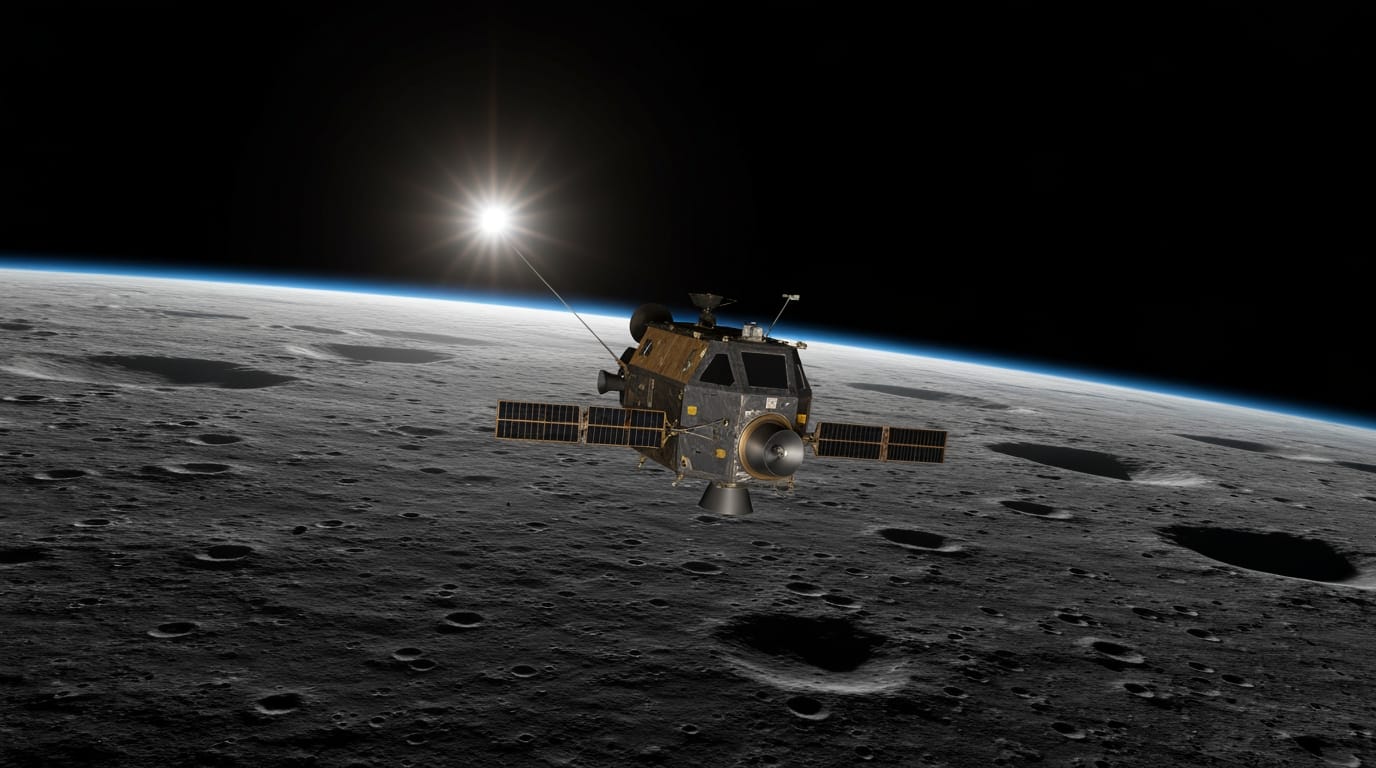
ORION SPACECRAFT, LUNAR ORBIT – Humanity’s return to the lunar vicinity reached a pivotal milestone today as NASA’s Artemis II mission, carrying four astronauts, successfully entered the Moon’s sphere of gravitational influence. This critical transition, occurring approximately 12:37 a.m. EDT on April 6, marks a significant step in the first crewed mission of NASA's Artemis program, setting the stage for a historic lunar flyby and heralding a new era of deep space exploration.
The four-person crew aboard the Orion spacecraft – NASA astronauts Commander Reid Wiseman, Pilot Victor Glover, Mission Specialist Christina Koch, and Canadian Space Agency (CSA) Mission Specialist Jeremy Hansen – are now operating under the predominant gravitational pull of the Moon, a complex orbital environment that demands precision and mastery from both the crew and mission control. This achievement moves the mission closer to its ambitious goals of testing Orion's capabilities and pushing the boundaries of human spaceflight further than any generation has traveled in over half a century.
Navigating the Lunar Threshold: A Gravitational Dance
The entry into the Moon's gravitational sphere of influence occurred approximately four days, six hours, and two minutes into the mission, with Orion positioned about 39,000 miles (62,800 km) from the Moon and 232,000 miles (373,400 km) from Earth. This invisible boundary signifies the point where the Moon's gravitational force exerts a stronger pull on the spacecraft than Earth's, necessitating meticulous trajectory adjustments to ensure a precise lunar flyby. The successful negotiation of this gravitational shift is a testament to the advanced engineering of the Space Launch System (SLS) rocket and the Orion spacecraft, as well as the expertise of the flight control teams.
The lunar flyby, anticipated later today, will see Orion loop around the Moon's far side, reaching a closest approach of about 4,047 to 4,070 miles (6,513 to 6,549 km) from the lunar surface. This maneuver will not involve landing or entering lunar orbit but is designed to gather critical data on spacecraft systems and crew performance in the deep space environment. During this phase, the crew will surpass the record for the farthest humans have ever traveled from Earth, extending beyond the 248,655 miles (400,171 km) achieved by Apollo 13, to approximately 252,757 miles (406,773 km).
Crew's Historic Journey and Rigorous Testing
The four astronauts on Artemis II are not only breaking distance records but are also making history with several significant "firsts." Victor Glover is the first person of color, Christina Koch is the first woman, and Jeremy Hansen is the first non-American to travel around the Moon. Commander Reid Wiseman holds the distinction of being the oldest person to embark on this journey. Their mission, scheduled for approximately 10 days, is a comprehensive test flight for the Orion spacecraft's vital systems.
Since their launch from Kennedy Space Center on April 1, 2026, the crew has been actively engaged in validating the spacecraft’s life support systems, communication capabilities, and propulsion, navigation, and environmental controls. They have also conducted crucial tests of their spacesuits and performed various operational demonstrations, including managing waste and assessing non-critical equipment. These meticulous checks are vital to ensuring the safety and functionality of the Orion capsule for future long-duration human missions.
A Glimpse of the Orientale Basin and a Brief Silence
As Orion approached the Moon, the crew has already provided humanity with stunning visual documentation. On Sunday, NASA published an image captured by the Artemis II crew, revealing a distant Moon with the prominent Orientale basin visible. This massive, bullseye-shaped impact crater has been photographed by orbiting cameras before, but the mission marks the first time it has been seen with human eyes.
A notable aspect of the lunar flyby will be a planned communication blackout of about 40 minutes as the Orion spacecraft passes behind the Moon. During this period, the Moon will block direct radio signals between the spacecraft and NASA's Deep Space Network, momentarily isolating the crew from Earth. This experience, reminiscent of the Apollo era, represents both a technical challenge and a profound moment of human exploration beyond Earth's immediate reach.
Paving the Way for a Sustainable Lunar Presence
Artemis II is a critical stepping stone in NASA's broader Artemis program, which aims to return humans to the Moon by 2028 and establish a permanent lunar base in the 2030s. The program envisions the Moon as a proving ground for future human missions to Mars, leveraging its reduced gravity and potential resources for interplanetary travel.
The mission builds upon the success of Artemis I, an uncrewed test flight in 2022 that thoroughly evaluated the SLS rocket and Orion capsule. Following Artemis II, the program plans for Artemis III to focus on testing commercial lunar landers in Earth orbit, while Artemis IV is slated as the first crewed lunar landing since Apollo 17 in 1972. Each mission is designed to incrementally advance the capabilities needed for sustained human presence in space, from deep space communication to radiation shielding and in-space logistics.
The successful entry into the Moon's gravitational influence underscores the methodical progression of the Artemis program. This test flight, with its crew of pioneering astronauts, is gathering invaluable data that will directly inform and enable humanity's ambitious future endeavors to live and work on the Moon and venture deeper into the solar system. The journey of Artemis II represents a tangible leap forward, rekindling the spirit of lunar exploration and laying crucial groundwork for the next generation of space pioneers.


