Asia-Pacific on Edge: Shangri-La Dialogue Reveals Region's Accelerated Path to Rearmament
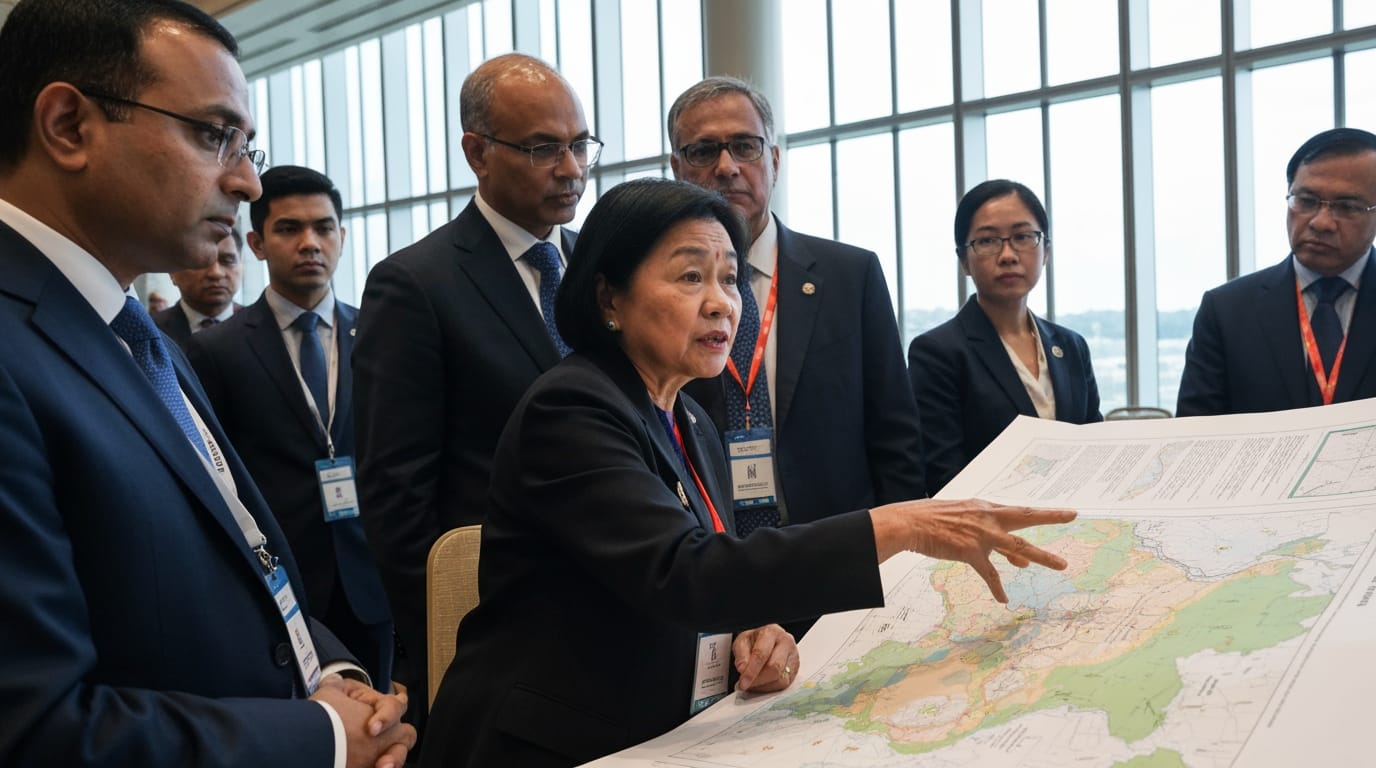
Singapore, May 31, 2026 – The Asia-Pacific region is undergoing a significant military transformation, marked by rapidly escalating defense spending and modernization efforts, a trend sharply in focus at the recently concluded 23rd Shangri-La Dialogue in Singapore. As geopolitical tensions simmer and major powers vie for influence, nations across the Indo-Pacific are enhancing their military capabilities at an unprecedented pace, signaling a collective shift toward a more heavily armed and potentially volatile future. The annual defense summit, which convened over 550 delegates including defense ministers, military chiefs, and security experts from more than 40 countries from May 29 to May 31, served as a critical platform for discussions on regional security challenges, underscoring a growing sense of urgency regarding an evolving security landscape.
The Mounting Defense Bill: A Region Prepares
The drive toward rearmament is evident in the substantial increases in defense budgets across Asia. In 2025, global military expenditure reached $2.887 trillion, marking a 2.9% real-terms increase over 2024, with Asia and Oceania alone experiencing an 8.1% surge in spending, totaling $681 billion. This upward trajectory is projected to continue, with Asian countries expected to increase their defense spending by another 3.4% in real terms in 2026.
China remains the largest contributor to this regional growth, with its military expenditure reaching $336 billion in 2025, a 7.4% increase. Its official defense budget for 2026 is projected to rise by 6.4% in real terms, exceeding $270 billion and accounting for over 40% of Asia's aggregated defense spending. Other nations are following suit. Japan, moving away from its post-war pacifist stance, saw its military expenditure jump by 9.7% to $62.2 billion in 2025 and is accelerating a major shift in its security posture through increased spending, deeper military cooperation, and relaxed arms export restrictions.
Australia, for its part, is undergoing a "hard power transformation," committing more than 40% of its 2026 defense budget to maritime capabilities. New Zealand recently approved an additional $1.5 billion for defense, with a significant focus on maritime security. Southeast Asian nations are also actively modernizing their forces; Indonesia increased its defense spending by 27% in 2025, while the Philippines boosted its 2026 defense budget by 4.2% for its 'Re-Horizon 3' equipment plan.
US Secretary of War Pete Hegseth, speaking at the Dialogue, explicitly urged Indo-Pacific allies to ramp up their military spending, advocating for nations to commit 3.5% of their GDP to defense expenditure. Hegseth praised countries that embrace this responsibility, stating that they would be prioritized for benefits such as expedited arms sales, deep industrial base collaboration, and expanded intelligence sharing. He emphasized that a favorable balance of power requires capable allies with real military strength and industrial capacity, highlighting that the security burden should not be disproportionately carried by the United States.
Geopolitical Flashpoints Fueling the Buildup
The heightened military preparedness is largely a response to persistent and intensifying geopolitical flashpoints across the region. The South China Sea remains a primary area of contention, with ongoing disputes and incidents repeatedly featuring in discussions. The 2016 arbitral tribunal ruling, which found in favor of the Philippines against China's claims, continues to be a point of reference, with calls for compliance. During the Dialogue, the Philippines' Defense Secretary Gilberto Teodoro Jr. reaffirmed his nation's commitment to sovereignty and freedom from dominant power influence, notably rejecting accusations of "new militarism" against Japan. An incident involving a Dutch frigate in the South China Sea also drew sharp exchanges, underscoring the fragility of maritime peace.
The prospect of conflict over Taiwan continues to be a central concern for both the United States and China. Major military doctrines from both global powers are focused on the self-governing island, with the US aiming for Taiwan's sustainable defense and China outlining a counter-intervention strategy. While Secretary Hegseth struck a more conciliatory tone regarding US-China relations compared to previous years, he notably omitted Taiwan from his roll call of allies, a move that garnered attention and concern among some observers. The economic implications of a conflict over Taiwan are staggering, with Bloomberg Economics estimating a potential $10.7 trillion cost to the global economy in the first year alone.
Beyond these regional hot spots, global instability, including ongoing conflicts in Europe and the Middle East, is casting a long shadow over the Asia-Pacific. The Iran war, in particular, has caused significant disruptions to global energy supplies and reinforced a sense of heightened uncertainty. Vietnamese President To Lam, in his keynote address, stressed the need for the Asia-Pacific to find its own solutions and uphold a rules-based order, practicing self-restraint and building trust amid great-power rivalry.
Alliances and Counterbalances: Reshaping Regional Security
In response to the complex threat environment, the Asia-Pacific security architecture is rapidly evolving. Nations are not only boosting their individual capabilities but also strengthening existing alliances and forging new partnerships. The Quadrilateral Security Dialogue (Quad) involving the US, India, Australia, and Japan, as well as AUKUS (Australia, United Kingdom, United States) and various trilateral arrangements, are becoming increasingly prominent. Australia's Defense Minister emphasized that security in the region is "indivisible," advocating for collective efforts through alliances and partnerships to prevent conflict.
Singapore's Defence Minister Chan Chun Sing highlighted the critical need for continued dialogue and practical cooperation to build confidence, maintain open communication channels, and reduce the risk of misinterpretation as defense spending rises. He stressed that countries, especially smaller ones, must invest in security and maintain relevance without necessarily taking sides in great-power competition.
Despite the emphasis on cooperation, China's delegation, whose Defense Minister Dong Jun was absent for the second consecutive year, advocated for resolving differences through dialogue and building an inclusive regional security architecture based on its Global Security Initiative (GSI). Chinese representatives also questioned what they termed Japan's "new militarism," expressing concerns about an accelerating arms race.
The Stakes of a More Militarized Asia
The path toward rearmament in the Asia-Pacific presents a delicate balance between deterrence and heightened risk. While increased military capabilities are intended to safeguard national interests and deter aggression, they also carry the inherent danger of miscalculation and unintended escalation. The rising defense budgets divert resources that could otherwise be used for economic and social development, potentially creating an economic burden.
The discussions at the Shangri-La Dialogue 2026 underscored a regional landscape characterized by strategic flux and increasing complexity. The consensus among leaders was that the stakes are higher than ever, requiring constant vigilance, transparent intentions, and robust diplomatic engagement alongside military modernization. The Asia-Pacific finds itself at a critical juncture, navigating a future where increased military strength must be carefully managed to prevent it from becoming a catalyst for conflict rather than a guarantor of peace.


