Attorney General Pam Bondi Faces Intense Scrutiny Over Handling of Sensitive Epstein Files
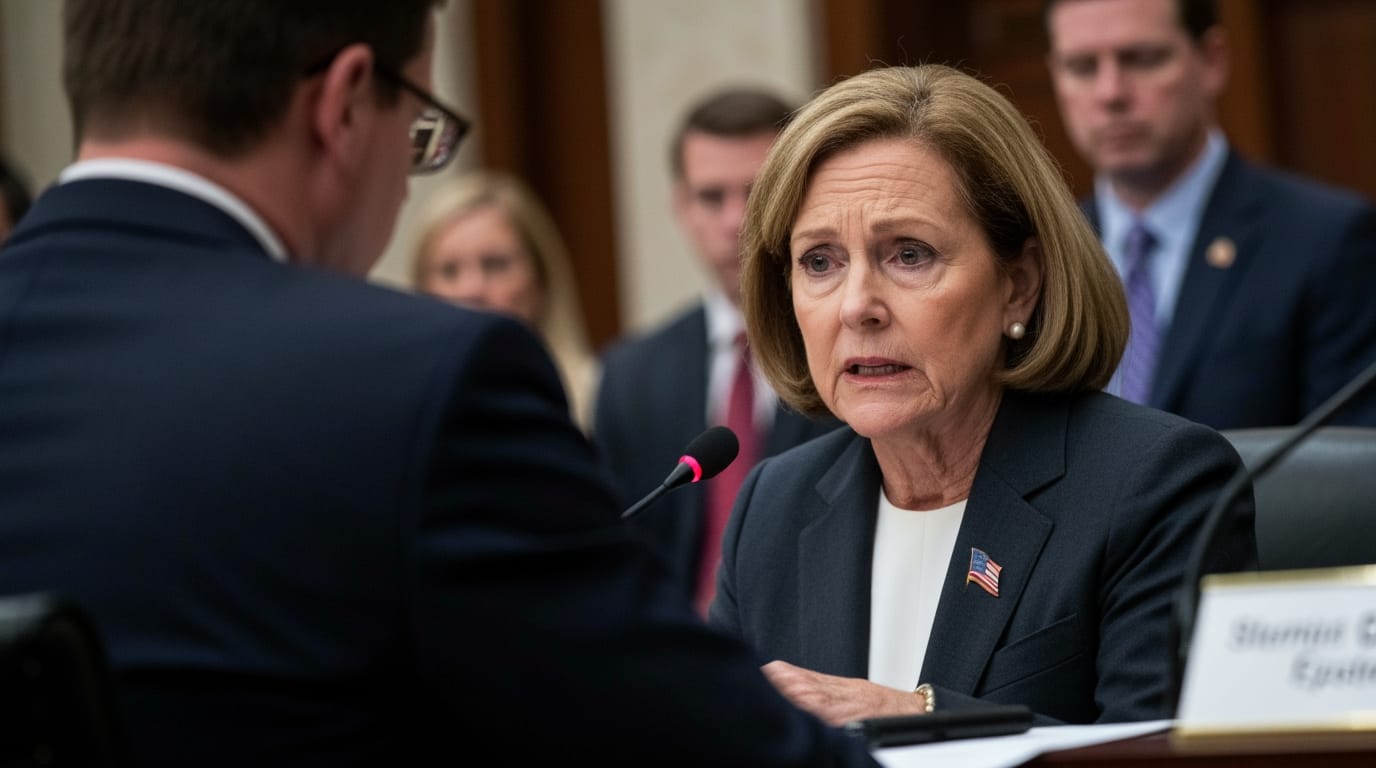
WASHINGTON – U.S. Attorney General Pam Bondi endured a sharp questioning session this week from lawmakers concerning the Department of Justice's (DOJ) management of the Jeffrey Epstein files, as congressional leaders and victim advocates voiced deepening frustrations over alleged delays and questionable redactions. The contentious hearing before the House Judiciary Committee on Wednesday highlighted persistent concerns that the DOJ has failed to fully comply with a congressional mandate for transparency, potentially shielding powerful figures connected to the deceased financier and convicted sex offender.
The intense scrutiny comes amid accusations of a "massive Epstein cover-up" within the Justice Department. Lawmakers pointed to a significant discrepancy between the volume of documents legally required for public release and what has actually been made available, fueling a growing debate about accountability and the integrity of the federal government's handling of the high-profile case. The release of these files carries immense public interest, given Epstein's extensive network of influential associates and the grave nature of his crimes against underage girls.
Congressional Mandate and DOJ's Response Under Fire
Central to the current controversy is the Epstein Files Transparency Act (EFTA), overwhelmingly passed by Congress in November of the preceding year. This legislation unequivocally mandated that the Department of Justice release all six million documents, photographs, and videos in its possession related to Epstein within 30 days. A key provision of the EFTA stipulated that while the identities of Epstein's victims were to be protected, powerful figures associated with him could not be shielded from public scrutiny based on "embarrassment, reputational harm, or political sensitivity."
However, House Judiciary Committee Democrats expressed strong dissatisfaction during the hearing, alleging that the DOJ had released only three million of the six million required documents. Representative Jamie Raskin, the ranking Democrat on the committee, accused Bondi of overseeing a deliberate effort to conceal information, asserting that the names of "abusers, enablers, accomplices and co-conspirators" had been redacted in apparent violation of the law. Compounding these concerns, Raskin and others highlighted instances where, conversely, the names and sensitive details of victims were reportedly left unredacted, drawing sharp criticism for what was described as a "sloppy and inconsistent" approach.
Attorney General Bondi staunchly defended the DOJ's actions, emphasizing the monumental task of reviewing millions of pages of material. She stated that more than 500 attorneys and reviewers dedicated thousands of hours to the painstaking process of complying with the congressional directive. Bondi acknowledged that three million pages, including 180,000 images, had been publicly released. She attributed any redaction errors to the sheer volume of material and the constrained timeframe, assuring the committee that the department would rectify any mistakes promptly. In an emotional statement, Bondi expressed profound regret for the suffering of all victims, particularly those affected by Epstein. Despite her defense, the presence of several Epstein survivors in the hearing room, some of whom raised their hands to indicate their inability to reach the DOJ directly, underscored the profound human impact of the case and the ongoing demand for answers.
Bondi's Past Statements and Shifting Narratives
This recent grilling is not the first time Attorney General Bondi's handling of Epstein-related matters has drawn criticism. Early in her tenure as Attorney General, in February of the previous year, Bondi publicly stated on a national news program that an "Epstein client list was sitting on my desk right now to review." This assertion generated considerable public anticipation for a comprehensive disclosure of Epstein's associates. However, a subsequent department memo issued four months later contradicted this claim, stating there was no evidence of such a list, nor any indication that Epstein blackmailed anyone.
This discrepancy has fueled skepticism among critics and some segments of the public, leading to accusations that the Justice Department, under Bondi's leadership, has offered conflicting narratives. Congressman Ro Khanna, the sponsor of the EFTA, has publicly expressed his belief that the DOJ is not adhering to the letter of the law regarding the document release. These perceived inconsistencies have further intensified calls for greater transparency and raised questions about the administration's true intentions regarding the full disclosure of information connected to Epstein's illicit activities.
Lingering Questions from Her Florida Tenure
Prior to her appointment as U.S. Attorney General, Pam Bondi served as Florida's Attorney General from 2011 to 2019. During this period, she was known for her vocal advocacy against human trafficking, often characterizing it as "modern-day slavery" and emphasizing her department's "all-hands-on-deck approach" to combat it. Given Epstein's known criminal activities in Palm Beach, Florida, which date back to a 2005 investigation, questions have consistently arisen about why his case was not more aggressively pursued by the Florida Attorney General's office during her leadership.
Legal scholars have noted that while federal and state governments operate as distinct entities, both possess the power to prosecute individuals for the same crimes under their respective laws. Therefore, some legal experts suggest that Bondi's office theoretically "could have tried" Epstein during her tenure in Florida. While there is no direct evidence to suggest a deliberate cover-up by Bondi's office during her time as Florida's chief legal officer, the lack of significant action against Epstein during a period when substantial evidence and lawsuits were becoming public has continued to be a point of contention and public debate, especially in light of her current role and the ongoing scrutiny of the Epstein files.
Implications for Public Trust and Political Accountability
The unfolding revelations from the Epstein files, combined with the controversy surrounding their release, have significant implications for public trust in government institutions and political accountability. The release of documents, which began with a small batch in December 2025 and a larger set of three million pages in January 2026, has already exposed new details about Epstein's ties to various influential individuals globally and within the United States. While a mention in these files does not automatically imply wrongdoing, it has led to increased scrutiny and, in some cases, political repercussions for those named.
The ongoing debate over redactions and the perceived shielding of powerful individuals associated with Epstein raise fundamental questions about whether justice is applied equally, regardless of wealth or influence. This sentiment was echoed by Democrats during the hearing, who accused Bondi of prioritizing the protection of politically connected figures over full transparency. The entire episode underscores a broader public demand for accountability and a clear, unambiguous commitment to uncovering the full scope of Epstein's network and holding all responsible parties to account.
Conclusion
The recent congressional hearing, where Attorney General Pam Bondi faced intense questioning regarding the Jeffrey Epstein files, represents a critical juncture in the long-running saga surrounding the disgraced financier. Lawmakers' accusations of an incomplete and improperly redacted release of documents have deepened concerns about transparency and the Justice Department's adherence to a clear congressional mandate. While Bondi has defended her department's efforts, citing the immense logistical challenges, the perceived inconsistencies in the release process and her own past statements continue to fuel public and political dissatisfaction.
As the legal and political ramifications continue to unfold, the scrutiny on the DOJ's handling of these sensitive documents remains intense. The pursuit of justice for Epstein's victims and the demand for full accountability for anyone who enabled his crimes hinge on the complete and transparent disclosure of these files. The ongoing debate serves as a stark reminder of the enduring societal wounds inflicted by Epstein's actions and the public's unwavering expectation that no individual, regardless of their status, should be above the law.


