Tesla Files Criminal Complaint Against Union Member Amid Escalating German Labor Dispute
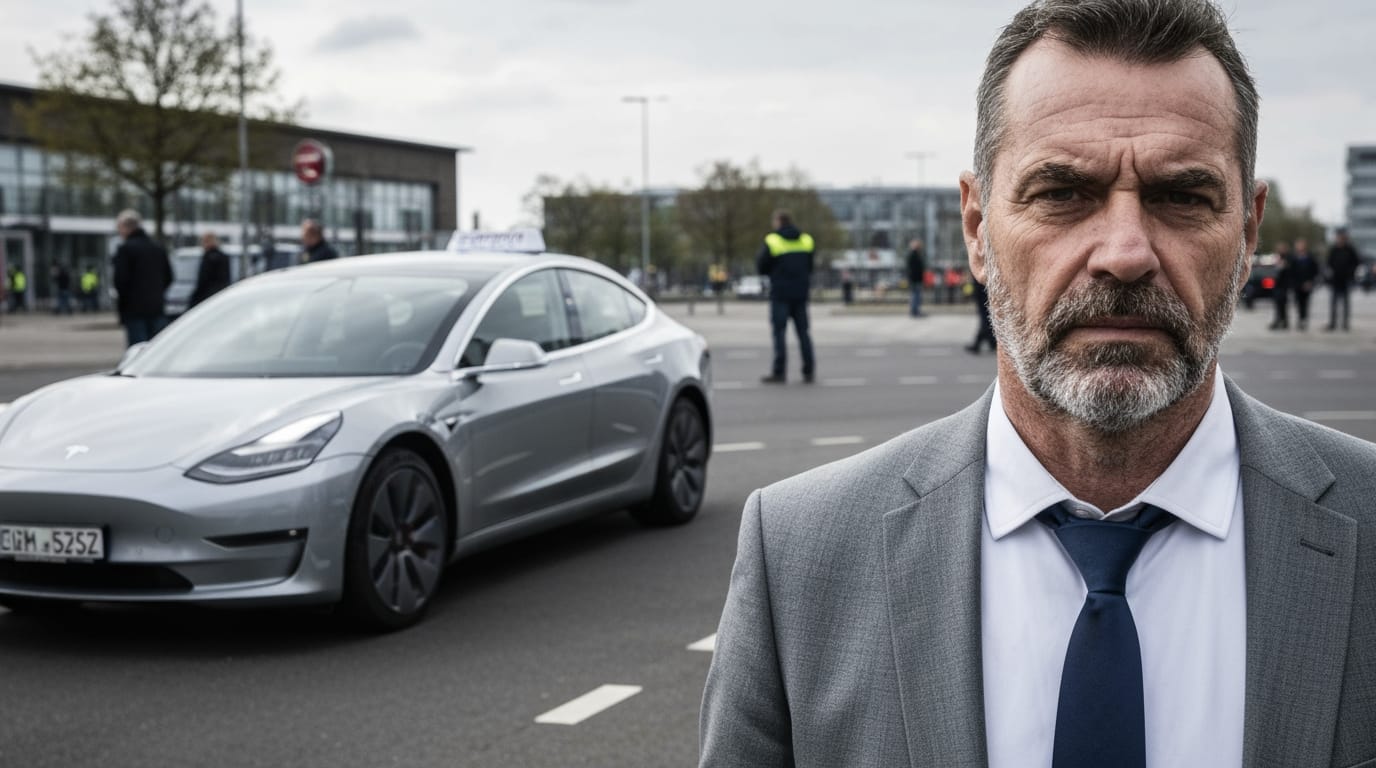
BERLIN, Germany – Tensions between electric vehicle giant Tesla and Germany's powerful trade union IG Metall have reached a critical juncture after Tesla filed a criminal complaint against an external IG Metall representative. The complaint, filed on February 10, 2026, alleges the union member secretly recorded an internal works council meeting at the company's Gigafactory Berlin-Brandenburg in Grünheide. This incident marks a significant escalation in the ongoing struggle over labor representation and working conditions at Tesla's sole European manufacturing facility, drawing national attention to the clash between American corporate culture and Germany's deeply entrenched industrial relations system.
The Alleged Recording Incident Fuels Further Hostilities
The criminal complaint stems from an incident on Tuesday, February 10, when an external representative from IG Metall, attending a works council meeting as a guest, was allegedly caught recording the proceedings using a laptop computer. André Thierig, Tesla's factory manager in Germany, confirmed the company's action, stating on social media that the recording was "truly beyond words" and that police were called. Under German law, works council meetings are considered non-public events, and unauthorized recording constitutes a criminal offense. This legal move by Tesla underscores the company's firm stance on the confidentiality of its internal discussions. IG Metall, in turn, swiftly dismissed Tesla's account, labeling it a "calculated lie" timed strategically to influence upcoming works council elections scheduled for March.
Tesla's Stance Against Unionization in Germany
Since establishing its Gigafactory in Grünheide, Tesla has consistently resisted efforts by IG Metall to organize its workforce and implement collective bargaining agreements. The company maintains that its employees already enjoy favorable working conditions and compensation packages that are often superior to those negotiated through traditional union agreements. Tesla has characterized IG Metall's actions as attempts to disrupt its independent operations and impede its success strategy. This anti-union posture aligns with Tesla's global approach, where it has historically pushed back against unionization efforts, notably in the United States.
Elon Musk, Tesla's CEO, has openly expressed skepticism toward unions, once describing them as an "external authority" whose interests might not align with the company's. This philosophy appears to guide the management at Giga Berlin, which has explicitly warned that increased union influence could jeopardize future expansion plans at the facility. André Thierig, the plant manager, has drawn a "red line" against demands such as a 35-hour workweek, suggesting that such changes could impact the company's ability to operate efficiently and flexibly.
IG Metall's Relentless Drive for Worker Representation
IG Metall, Germany's largest and most influential industrial union with over 2 million members, has been persistent in its campaign to secure better worker representation and working conditions at the Giga Berlin plant. The union argues that without a collective agreement, Tesla's wages often fall below industry standards, and workers lack the comprehensive protections and benefits typically afforded by union contracts. IG Metall's efforts are rooted in addressing various employee concerns, including reports of chronic overwork, inadequate breaks, and high absenteeism rates, which the union attributes to poor working conditions and intense production pressure. A survey conducted by IG Metall indicated that a significant majority of Tesla workers felt overworked, with many expressing doubts about their ability to sustain the demanding pace until retirement.
The union's strategy primarily involves strengthening its presence within the works council – a statutory body in German companies representing employee interests. While IG Metall secured a substantial number of seats in earlier works council elections, it has yet to achieve a controlling majority. The upcoming March 2026 works council elections are therefore seen as crucial for the union to increase its influence. Previous contentious issues include the dismissal of a union-affiliated works council member, which IG Metall condemned as an attempt to intimidate pro-union employees, and disputes over sick leave policies, where the union has alleged that Tesla employed "aggressive tactics," including home visits to employees on sick leave and demands for private medical diagnoses. IG Metall claims to have recovered nearly €500,000 for workers in 2024 through legal actions related to disputed sick pay.
The Broader Context of German Industrial Relations
This escalating dispute at Giga Berlin is more than just a company-specific disagreement; it highlights a fundamental clash between Tesla's American-style management practices and Germany's robust system of co-determination. German labor law grants significant rights to works councils, allowing them to consult on major company decisions and even delay or block executive policies related to factory operations, firings, overtime, and working hours. IG Metall's strong presence and long history of successful collective bargaining across the German automotive industry, including at major players like Volkswagen, BMW, and Mercedes-Benz, position it as a formidable opponent.
Tesla's attempts to navigate around these established norms, such as registering as a European Company (Societas Europaea or SE) to potentially lessen co-determination requirements, have only intensified the union's resolve. The incident involving the alleged recording further polarizes the relationship, with both sides leveraging the situation to rally support ahead of the critical works council elections. The outcome of this ongoing conflict at Giga Berlin will not only shape the future of labor relations within Tesla's German operations but could also set a precedent for how other international companies engage with the powerful German labor movement.
A High-Stakes Battle with Far-Reaching Implications
The criminal complaint filed by Tesla against an IG Metall representative represents a significant escalation in a protracted and increasingly acrimonious labor dispute. It transforms a battle over workplace conditions and representation into a legal confrontation, underscoring the deep ideological divide between the electric vehicle manufacturer and Germany's most powerful industrial union. With upcoming works council elections poised to potentially shift the balance of power, the implications of this conflict extend beyond the factory floor, impacting Tesla's public image, its operational flexibility in Germany, and the broader landscape of labor relations in a nation proud of its strong worker protections. The resolution of this high-stakes battle will be closely watched by industries across Germany and beyond, as it may foreshadow future challenges for companies seeking to operate outside established labor norms.


