Dual Cyclone Assault Batters Madagascar, Leaving Dozens Dead and Widespread Devastation
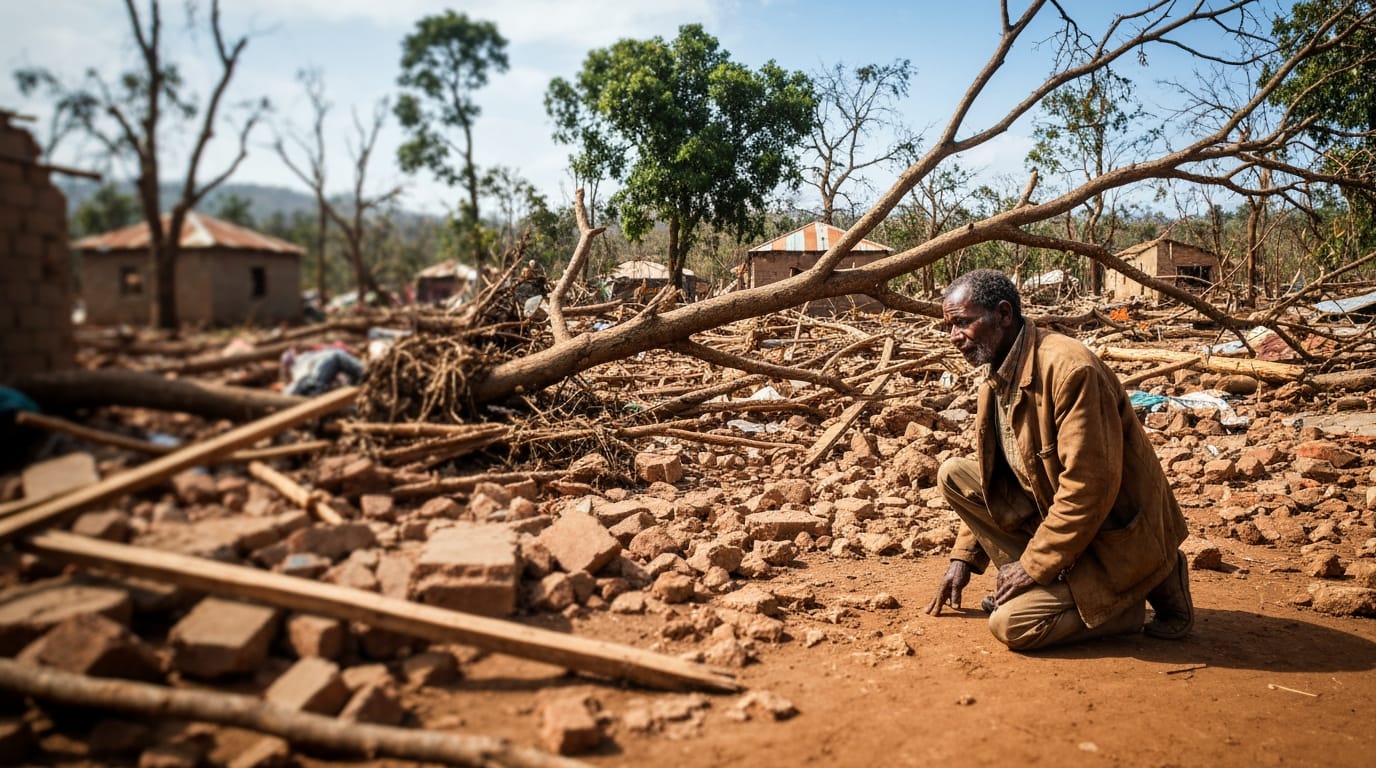
ANTANANARIVO, Madagascar – Madagascar finds itself reeling from a devastating one-two punch of powerful tropical cyclones, with Cyclone Gezani making landfall just days after Tropical Cyclone Fytia swept across the island nation. The successive storms have claimed at least 34 lives, displaced tens of thousands, and inflicted catastrophic damage on critical infrastructure and homes, exacerbating the humanitarian crisis in a country already highly vulnerable to extreme weather events.
The latest calamity struck late Tuesday, February 10, when Tropical Cyclone Gezani roared ashore near Toamasina, Madagascar's principal port city, unleashing winds gusting up to 250 kilometers per hour (155 mph). The tempest flattened homes, uprooted trees, toppled power poles, and plunged entire neighborhoods into darkness, with officials describing the aftermath as "total chaos." At least 20 fatalities have been attributed to Gezani, with many victims perishing as their houses collapsed under the storm's immense force. The National Office for Risk and Disaster Management (BNGRC) reported at least 30 injuries and the evacuation of over 2,700 people in the immediate wake of the cyclone, with 15 individuals still reported missing. The city of Toamasina, home to approximately 300,000 residents, bore the brunt of Gezani's destructive power, witnessing widespread devastation.
A Relentless Barrage: Gezani Follows Fytia's Fury
Gezani's arrival marked the second significant tropical cyclone to strike Madagascar within a mere two weeks, underscoring the relentless nature of the current cyclone season. Less than two weeks prior, Tropical Cyclone Fytia traversed the island, leaving a trail of its own destruction. Fytia, which formed over the northern Mozambique Channel, brought heavy rainfall and strong winds, killing at least 14 people and displacing more than 31,000. The storm prompted red alerts across several regions, with warnings of potential floods and landslides as daily rainfall totals reached approximately 150 millimeters in the heaviest hit areas. An estimated 40,000 homes were at risk of flooding from Fytia, compounding the existing vulnerabilities of communities. The cumulative impact of these back-to-back storms has severely strained emergency response capabilities and left countless families in dire need of assistance.
A Recurring Nightmare: Madagascar's Battle with Cyclones
The recent onslaught of Gezani and Fytia is not an isolated incident but rather the latest chapter in Madagascar's enduring struggle with powerful tropical cyclones. Situated in the South-West Indian Ocean, the island nation is highly susceptible to these atmospheric phenomena, particularly during the cyclone season, which typically spans from November to April. In recent years, the frequency and intensity of these storms appear to be increasing, a trend many attribute to climate change.
Just last year, in March 2024, Cyclone Gamane unexpectedly struck northern Madagascar, specifically the Vohemar district, claiming at least 18 lives and displacing over 20,000 people. Gamane's stationary movement amplified its destructive impact, leading to severe flooding and the destruction of hundreds of homes. The year before, in early 2023, Cyclone Freddy, an exceptionally long-lived and powerful storm, made its first landfall on Madagascar's eastern coast. While initial impacts in Madagascar saw fewer immediate fatalities (around 7-17 directly from landfall), it still affected over 200,000 people, damaged more than 40,000 houses, and displaced thousands. Freddy went on to cause much greater devastation in Mozambique and Malawi.
The 2022 cyclone season was also particularly brutal, with Cyclones Batsirai and Emnati hitting the island in quick succession. Cyclone Batsirai, which made landfall in February 2022, was especially destructive, claiming at least 121 lives and affecting over 143,000 people. It destroyed nearly 9,000 houses and damaged thousands more, leaving over 112,000 displaced. Just 18 days later, Cyclone Emnati struck, impacting many areas still recovering from Batsirai. Emnati caused at least 15 deaths and displaced approximately 44,000 people, further damaging homes, schools, and health centers. The cumulative death toll from extreme weather events in Madagascar since January 2022, including Batsirai and Emnati, reached 205 people by March 2022.
Heightened Vulnerability and Humanitarian Fallout
The relentless parade of cyclones has plunged Madagascar, already one of the world's poorest nations, into a perpetual state of crisis. The country consistently ranks among those most at risk from climate change, facing not only cyclones but also severe droughts that have caused widespread hunger and near-famine conditions.
The humanitarian consequences of these storms are profound. Beyond the immediate fatalities and injuries, tens of thousands are regularly displaced, forced into temporary shelters, or left with no shelter at all. The destruction of homes is widespread, with many structures, particularly those made of earth or less durable materials, simply collapsing under the force of winds and floods. Essential services are frequently disrupted; telecommunication networks go down, electricity and water supplies are cut off, and roads and bridges become impassable, isolating affected communities and hampering rescue and aid efforts.
The impact on critical social infrastructure is equally severe. Cyclones routinely damage or destroy schools and health centers, depriving tens of thousands of children of education and hindering access to vital medical services, particularly at a time when waterborne diseases become a greater risk due to widespread flooding and compromised sanitation. Agriculture, the backbone of Madagascar's economy, suffers immensely, with vast hectares of crops destroyed, exacerbating food insecurity for millions. The loss of livelihoods for farmers and artisans creates a long-term challenge for economic recovery and self-sufficiency.
Building Resilience Amidst Ongoing Crises
In the face of such overwhelming challenges, national and international humanitarian organizations, alongside the Malagasy government, are continually engaged in emergency response and recovery efforts. These include providing immediate lifesaving aid, setting up emergency shelters, distributing food and essential supplies, and working to restore basic services. However, the sheer scale and frequency of these disasters often outstrip available resources.
The long-term solution lies in building greater resilience. This involves strengthening early warning systems, improving infrastructure to withstand extreme weather, implementing better land-use planning, and investing in climate adaptation strategies. There is also a critical need for sustained international support, both in emergency aid and in funding for climate resilience initiatives, to help Madagascar break free from this destructive cycle. The human cost of these cyclones is immense, and without concerted global action, the people of Madagascar will continue to face an uphill battle against the increasing wrath of a changing climate.