Australia Confirms First Mainland H5 Bird Flu Case in Wild Bird
Perth, Western Australia – Australia has confirmed its first-ever detection of highly pathogenic avian influenza (HPAI) H5 in a wild bird on the mainland, marking a significant development in the global spread of the deadly virus. The H5 strain, which has devastated bird and mammal populations across the world, was identified in a single brown skua, a migratory seabird, found in Western Australia. The confirmation, announced on June 20, 2026, ends Australia's unique status as the only continent to have avoided this particular virulent strain on its mainland.
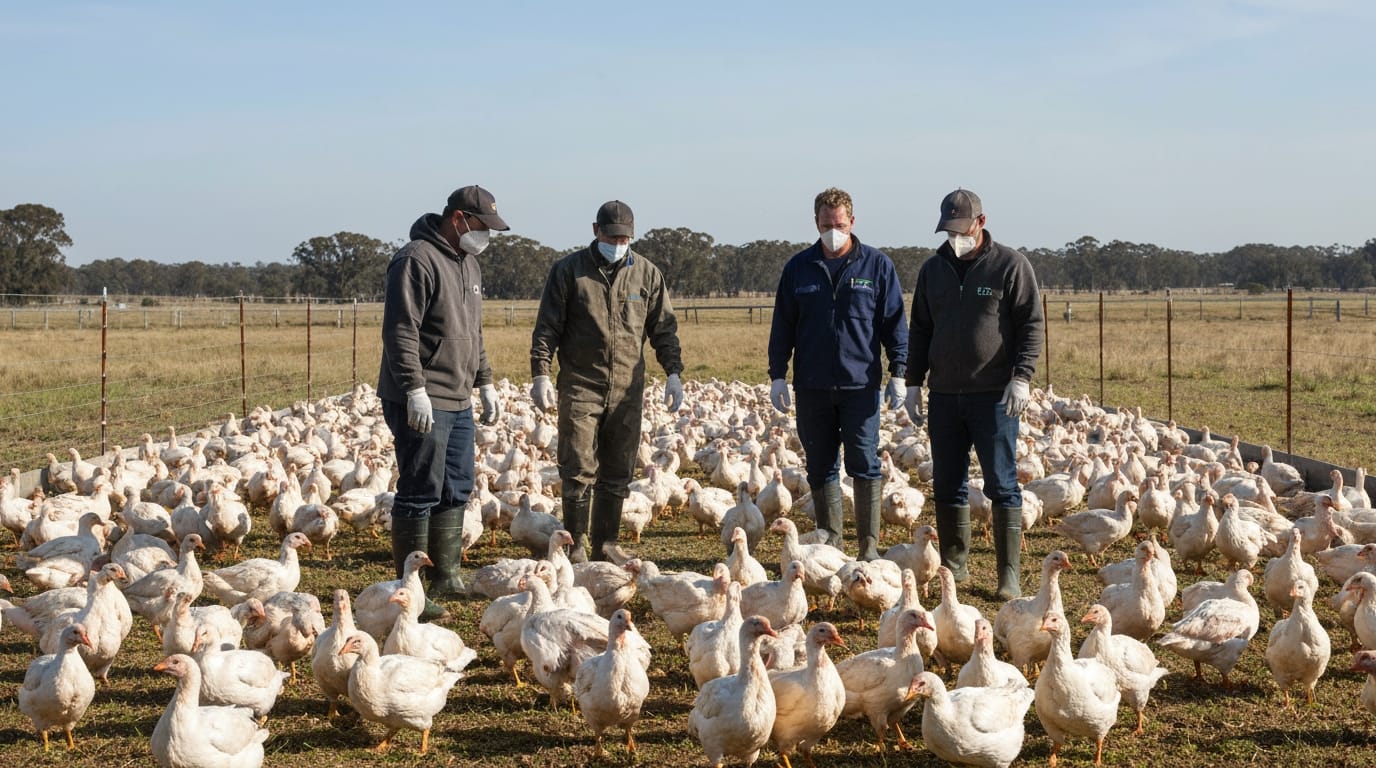
The discovery has prompted an immediate and coordinated national response from Australian authorities, aiming to assess the extent of the infection and implement containment measures. While officials emphasize that there have been no detections in commercial poultry or evidence of mass mortalities in other species on the mainland to date, the presence of the globally circulating H5 strain raises critical concerns for Australia's unique ecosystems and its robust agricultural sector.
Initial Detection and Confirmation
The H5 high pathogenicity avian influenza was confirmed by the CSIRO Australian Centre for Disease Preparedness (ACDP) on June 20, 2026. The infected brown skua was found sick in an isolated area of southern Western Australia on June 14. Further testing is underway for a second bird, a giant petrel from the same region, which also returned a suspect positive result for H5 avian influenza. These migratory seabirds occasionally visit southern Australia, highlighting a probable pathway for the virus's introduction to the continent. The Western Australia Department of Primary Industries and Regional Development is leading the on-ground response activities, with support from the Department of Agriculture, Fisheries and Forestry for national coordination.
Global Context and Australia's Precarious Position
For years, Australia had remained the sole inhabited continent free from the globally dominant H5 strain, particularly the H5N1 lineage, which has caused unprecedented outbreaks and mass die-offs in wild birds, poultry, and some mammal species worldwide since 2020. This previous isolation was largely attributed to Australia not being on a major migratory pathway for ducks and geese from the Northern Hemisphere, which are primary carriers of influenza viruses. However, experts had long predicted that the virus could eventually arrive, potentially via shorebirds or seabirds from the sub-Antarctic region.
Indeed, a precursor to this mainland detection occurred in late 2025, when H5 bird flu was confirmed in wildlife on Heard Island, a remote sub-Antarctic Australian territory. Researchers believe that the H5N1 strain there was responsible for the deaths of thousands of elephant seal cubs, with reports suggesting 13,000 out of 17,000 baby seals were killed since August 2025. This incident served as a stark reminder of the potential devastating impact the virus could have on Australia's native wildlife, which is largely immunologically naive to this particular strain.
Preparedness and Public Health Response
Recognizing the increasing global threat, the Australian government has been actively preparing for the potential arrival of H5 bird flu. More than $113 million has been invested by the Albanese Government to strengthen national preparedness. A dedicated Australian Government Taskforce was established in 2024, involving multiple departments including Agriculture, Environment, Health, and the National Emergency Management Agency, to bolster resilience and response capabilities. National simulation exercises have also been conducted since 2024 to refine response plans.
Regarding human health, the Australian Centre for Disease Control advises that H5 bird flu currently poses a low health risk to the public, as it rarely affects humans unless there is direct and close contact with sick birds or contaminated environments. Food Standards Australia and New Zealand also confirmed that chicken meat and eggs remain safe to eat if handled and cooked correctly, as bird flu is not a food safety risk under these conditions. It is important to distinguish the current wild bird detection from a human case of H5N1 reported in Australia in May 2024. That case involved a 2.5-year-old child who likely acquired the infection overseas in India and recovered, with no evidence of local transmission.
Potential Impacts on Wildlife and Agriculture
While no detections have been made in poultry on the mainland, the arrival of H5 bird flu carries significant risks for Australia's commercial poultry industry. Australia has a history of successful responses to avian influenza outbreaks, though these have typically involved different strains, primarily H7 viruses. Outbreaks in 2020, 2024, and 2025 in Victoria, New South Wales, and the ACT, affecting poultry farms, were swiftly brought under control through established emergency animal disease protocols.
However, the H5 strain's high pathogenicity and global spread mean its establishment could have severe consequences. Experts warn that Australia's unique wildlife, including many threatened species, is particularly vulnerable. The Chief Veterinary Officer has stressed the urgent need for surveillance to determine if the infection has established in wild native bird populations. The public is urged to report any sick or dead wild birds or animals to authorities via the Emergency Animal Disease Hotline, while avoiding direct contact to prevent potential spread.
Conclusion
The confirmation of H5 high pathogenicity avian influenza on the Australian mainland represents a new chapter in the nation's biosecurity challenges. While preparedness measures have been robust, the actual presence of the virus necessitates intensified vigilance and a sustained, coordinated effort across government agencies, industries, and communities. The immediate focus remains on extensive surveillance to track the virus's movements in wildlife and prevent any spillover into domestic poultry, protecting both Australia's vital agricultural sector and its irreplaceable native fauna from the widespread devastation observed globally. The situation underscores the interconnectedness of global health and the constant need for readiness in the face of evolving infectious diseases.


