Hard-Right Firebrand Dominates First Round, Poised for Presidency in Colombia's Polarized Election
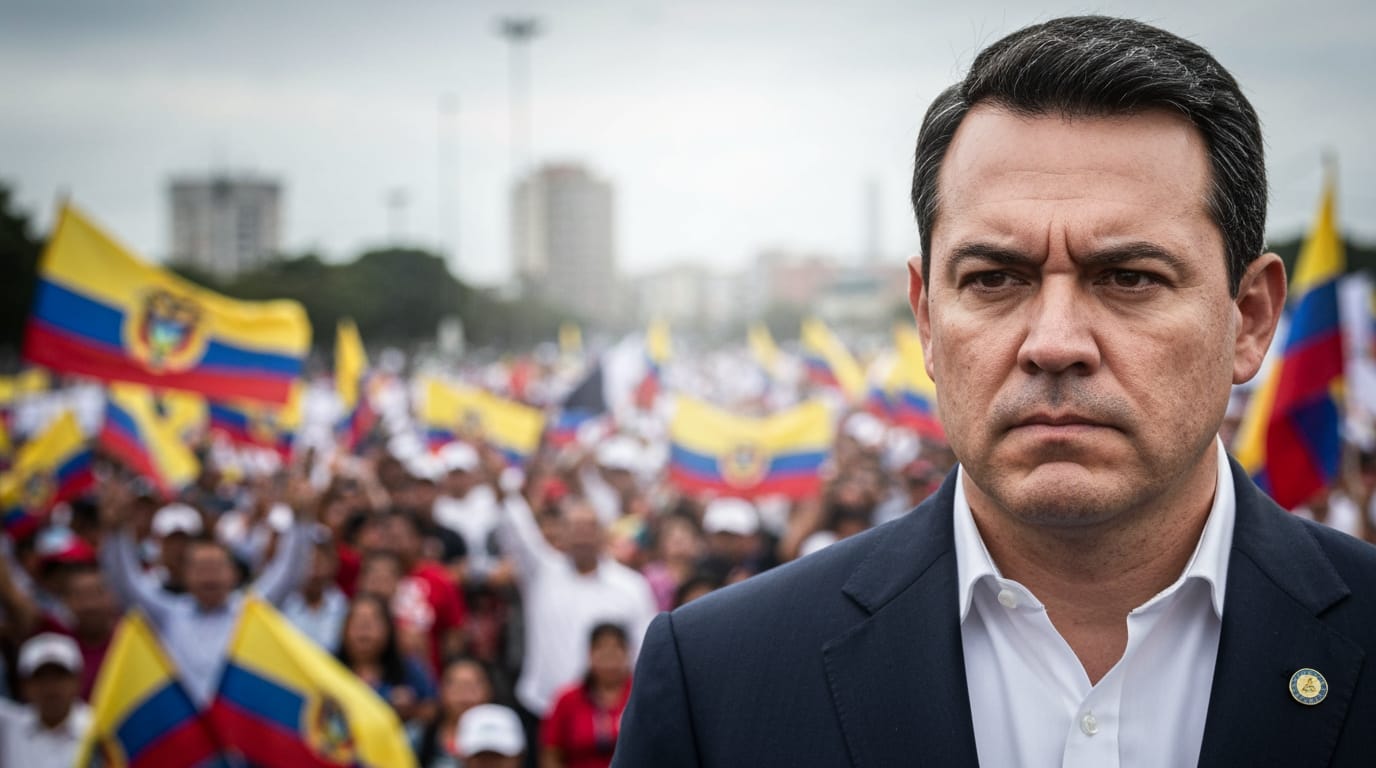
Bogotá, Colombia – In a political earthquake that has reshaped Colombia's future, hard-right outsider Abelardo de la Espriella, known widely as "El Tigre," surged to an unexpected first-place finish in the presidential election's initial round on May 31, 2026. Securing 43.7% of the vote, de la Espriella has positioned himself as the frontrunner against progressive Senator Iván Cepeda, who garnered 40.9%. With the runoff election having just concluded on June 21, the nation awaits final results, but the decisive first-round victory and subsequent consolidation of conservative support place de la Espriella firmly on the path to the presidential palace, signaling a potential dramatic shift in the country's political trajectory.
The First Round Upset: A Clear Message for Change
The May 31st first round saw an electorate eager for change, propelling Abelardo de la Espriella, candidate for the Defenders of the Motherland movement, to a commanding lead. De la Espriella captured more than 10.3 million votes, outperforming pre-election polls that had often placed his progressive rival, Iván Cepeda, in the lead. Cepeda, an ally of outgoing President Gustavo Petro and proponent of the "Historic Pact" coalition, received approximately 9.6 million votes. The substantial lead for de la Espriella surprised many observers, underscoring a deep-seated desire among Colombian voters for a departure from the current political establishment. The results also delivered a significant blow to more traditional conservative candidates, notably Paloma Valencia, who finished a distant third with only 6.9% of the vote, despite earlier polling suggesting stronger support. This outcome not only highlighted de la Espriella's broad appeal within right-leaning segments but also indicated a rejection of centrist and traditional political offerings, pushing the election towards a highly polarized contest between the far right and the far left.
A Clash of Ideologies: De la Espriella vs. Cepeda
The runoff campaign, leading up to the June 21st vote, presented Colombians with a stark choice between two diametrically opposed visions for the nation. Abelardo de la Espriella, a lawyer and self-described political outsider, built his platform on a tough-on-crime agenda, promising the construction of "mega-prisons" and a significant reduction of the state by 40%. Known for his outspoken admiration of international right-wing figures such as Donald Trump, Nayib Bukele, and Javier Milei, de la Espriella has also pledged to promote conservative values in education and adopted the persona of "El Tigre" (The Tiger) to convey strength and decisiveness. His rapid ascent in popularity is attributed to voters' anxieties regarding security and economic instability, offering a hardline solution to perceived national challenges.
Conversely, Iván Cepeda, a seasoned progressive senator and human rights activist, has campaigned on continuing and refining the "total peace" agenda initiated by President Gustavo Petro. This involves negotiating peace pacts with guerrilla groups and criminal organizations, a strategy that has faced considerable challenges and skepticism. Cepeda's platform emphasized social reforms and a continuation of the left-wing political project, aiming to address inequality and historical grievances. However, concerns about the efficacy of current government policies on security and health, coupled with Cepeda's perceived lack of charisma, presented difficulties in expanding his base beyond traditional leftist voters. The contrast between de la Espriella’s decisive, populist rhetoric and Cepeda's more nuanced, continuity-focused approach underscored the profound ideological chasm that defines contemporary Colombian politics.
Political Climate: Polarization and Anxieties Drive the Electorate
The 2026 presidential election unfolded against a backdrop of deep political anxiety and widespread calls for change within Colombia. Voter turnout for the first round was notably high, reaching nearly 58%, approximately three percentage points higher than the previous election, signaling an engaged but divided electorate. This increased participation reflected a nation grappling with persistent violence, economic upheaval, and a sense of disillusionment with established political norms. The strong performance of both de la Espriella and Cepeda highlighted a profound polarization, as voters gravitated towards candidates at the political extremes, leaving little room for moderate alternatives.
Adding to the tense political atmosphere, President Gustavo Petro and Iván Cepeda initially cast doubt on the accuracy of the early first-round results, alleging without evidence that hundreds of thousands of votes were manipulated. Petro publicly stated he would not accept the preliminary results released by the National Civil Registry, an independent body overseeing elections. While Cepeda later tempered his stance, acknowledging that any irregularities would likely not amount to outright fraud, these claims further fueled public distrust and underlined the volatile nature of the election. The electoral context was further complicated by the assassination of a leading candidate in the preceding year, contributing to an environment of instability and heightened political tensions.
Path to the Runoff and Looming Implications
Following the first-round results, Abelardo de la Espriella swiftly moved to consolidate support from the broader conservative spectrum. A crucial development was the pledge of support from Paloma Valencia, who, despite underperforming, commanded 1.6 million votes in the first round. Analysts suggest that the majority of these votes, representing traditional conservative and right-leaning constituents, were likely to transfer to de la Espriella in the runoff. This consolidation provided "El Tigre" with significant momentum and a clear advantage heading into the final vote. His campaign strategically focused on attracting voters concerned about security and economic policies, promising a radical break from the current administration's approach.
A de la Espriella presidency would herald a dramatic shift in Colombia's domestic and international policies. Domestically, his promises of an aggressive crackdown on crime and a significant reduction in state expenditure suggest a move towards more authoritarian governance and a redefinition of public services. Internationally, his admiration for populist right-wing leaders indicates a potential realignment of Colombia's foreign policy, possibly strengthening ties with like-minded nations and adopting a more confrontational stance on regional issues. The election's outcome, particularly de la Espriella's strong positioning, reflects not only a unique Colombian dynamic but also a broader trend of rightward shifts in Latin American politics.
A Nation at a Crossroads
As Colombia processes the results of the June 21st runoff, the trajectory set by the first round remains undeniable. The election of 2026 stands as a testament to a deeply polarized nation, where voters have emphatically expressed a desire for profound change, albeit from vastly different ideological perspectives. Abelardo de la Espriella's commanding performance in the first round and the subsequent consolidation of conservative forces positioned him as the likely next leader, promising a radical transformation of the country. The incoming administration, regardless of who ultimately takes office, will face the formidable task of uniting a divided populace, addressing persistent security challenges, and navigating complex economic headwinds. The journey ahead for Colombia is set to be one of significant ideological and political contention, defining the nation's path for years to come.


