NEET Retest Sees Low Turnout Amidst Lingering Controversy Over Medical Entrance Exam
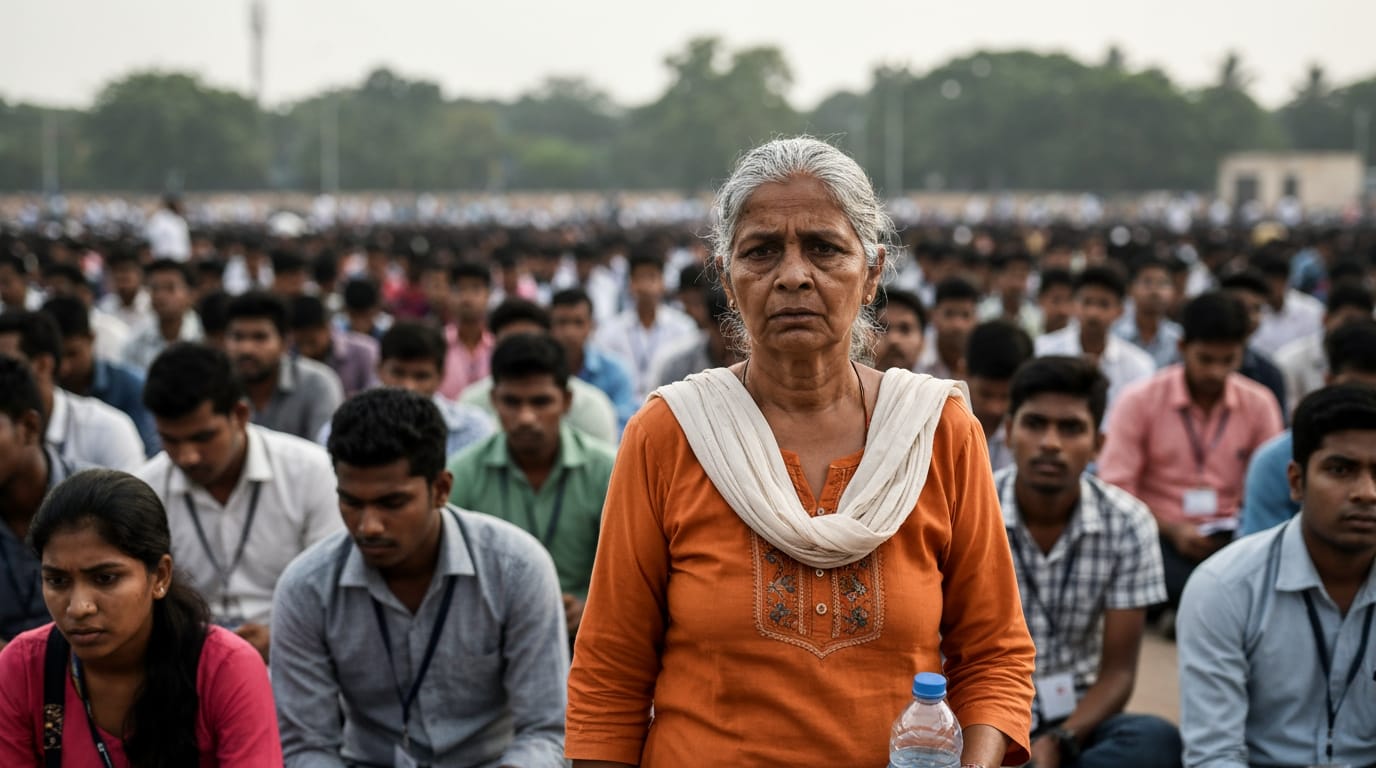
New Delhi, India – India's highly anticipated NEET-UG 2024 re-examination, held on June 23, 2024, for 1,563 candidates, witnessed a notably low attendance, underscoring the deep-seated anxieties and complexities surrounding the country's premier medical entrance test. The retest was mandated by the Supreme Court following widespread allegations of irregularities, including disputed grace marks and localized paper leaks in the initial examination held on May 5, which originally saw over 2.4 million aspirants participate nationwide.
The Genesis of a National Controversy
The National Eligibility-cum-Entrance Test (NEET-UG) 2024, a crucial gateway for admissions to undergraduate medical and dental courses, plunged into controversy shortly after its conduct on May 5. Over 24 lakh candidates appeared for the examination across 4,750 centers in 571 cities, including international locations. However, the declaration of results on June 4 sparked immediate outrage and widespread protests. Several issues came to the forefront, most prominently the arbitrary awarding of "grace marks" to 1,563 candidates due to perceived time loss at certain examination centers. This unprecedented move by the National Testing Agency (NTA), which conducts the exam, drew heavy criticism, particularly after it contributed to an unusually high number of students (67) achieving perfect scores of 720/720, with several toppers reportedly from the same center.
Adding fuel to the fire were persistent allegations of question paper leaks. While the NTA initially denied widespread leaks, stating that the integrity of the examination was not compromised, localized instances of paper leaks were acknowledged in regions like Hazaribagh, Jharkhand, and Patna, Bihar. These multiple grievances led to a torrent of petitions filed in various High Courts and eventually the Supreme Court, demanding a re-examination and a thorough investigation into the alleged malpractices. The sheer scale of the examination and the life-altering stakes for millions of young aspirants transformed the issue into a national debate on fairness and accountability in the Indian education system.
Supreme Court's Intervention and the Targeted Retest
In response to the mounting pressure and numerous petitions, the Supreme Court took a decisive stand. On June 13, the Centre informed the Supreme Court of its decision to revoke the grace marks awarded to the 1,563 candidates and offer them an option to reappear for a retest. This decision followed the recommendations of a high-powered committee constituted to examine the issue of compensatory marks. The re-examination was subsequently scheduled for June 23, 2024, with results slated for release by June 30.
However, in a significant ruling on July 23, the Supreme Court refused to cancel the entire NEET-UG 2024 examination. Chief Justice D.Y. Chandrachud, leading the bench, stated that there was insufficient evidence to conclude a "systemic breach" that would vitiate the results for all 2.4 million candidates. The court prioritized the broader impact on the vast majority of students and the potential disruption to the academic calendar if a complete retest were ordered. Instead, it directed the NTA to reevaluate scores for all candidates based on a clarified answer key for a disputed Physics question, which could lead to score adjustments. The Supreme Court also affirmed that the counselling process for admissions would proceed as planned, commencing July 6.
The Retest: A Low Turnout and Difficult Choices
The retest on June 23, specifically for the 1,563 candidates affected by grace marks, was conducted at seven centers across six cities including Balod and Dantewada in Chhattisgarh, Bahadurgarh in Haryana, Chandigarh, Meghalaya, and Surat in Gujarat. Despite the opportunity to improve their scores, only 813 (approximately 52%) of the eligible candidates actually appeared for the re-examination, while a significant 750 (48%) chose to be absent.
Candidates who opted for the retest would have their scores from this new examination considered final, overriding their previous scores from May 5. Conversely, those who decided not to reappear would have their original scores, without the controversial grace marks, taken into account. This presented a difficult choice for many students, weighing the uncertainty of a new exam against potentially lower original scores. The low turnout suggests varied calculations and perhaps a sense of fatigue or distrust among some aspirants.
Broader Implications and Ongoing Scrutiny
The NEET-UG 2024 controversy has cast a long shadow over the National Testing Agency, raising serious questions about its operational integrity and the sanctity of national competitive examinations. The Central Bureau of Investigation (CBI) has taken over the probe into the alleged paper leaks, with arrests made in connection with the Hazaribagh leak. This ongoing investigation seeks to uncover the extent of malpractices and identify any beneficiaries of fraudulent activities.
Beyond the immediate retest, the government has constituted a committee, headed by former ISRO chief K. Radhakrishnan, to recommend reforms in the functioning of the NTA and the conduct of future entrance examinations. The outcome of this committee's recommendations will be critical in restoring public confidence in the examination system. For the millions of students who appeared for the original exam, the journey towards medical admission is fraught with anxiety, with the counselling process now underway amidst calls for greater transparency and accountability.
The NEET-UG 2024 saga highlights the immense pressure on India's youth aspiring for professional careers and the imperative for examination bodies to uphold the highest standards of fairness and security. While the retest offered a partial resolution for a segment of affected students, the broader issues of systemic vulnerabilities and trust in national testing mechanisms continue to demand comprehensive and sustained attention.


