Alan Greenspan, Former Federal Reserve Chair and Economic Titan, Dies at 100
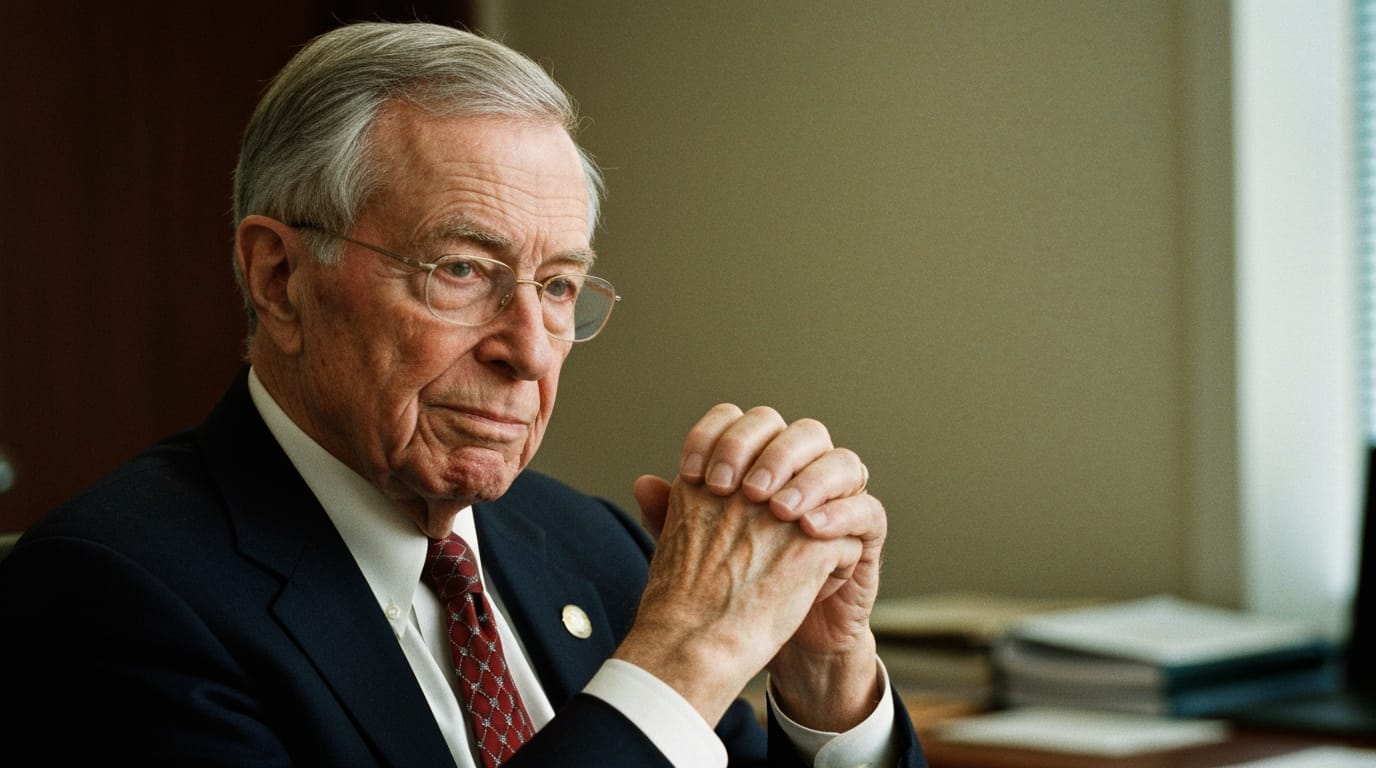
Alan Greenspan, the influential economist who steered the U.S. Federal Reserve through nearly two decades of unprecedented economic growth and tumultuous financial crises, died Monday at the age of 100. His passing marks the end of an era defined by his stewardship of monetary policy, a period during which he became one of the most recognizable and often enigmatic figures in global finance. His long tenure, from August 1987 to January 2006, saw him lauded as a "maestro" for his steady hand, yet later criticized for policies that some argue contributed to the financial instabilities that followed his retirement.
Greenspan's remarkable 18.5-year leadership of the central bank, serving under four presidents—Ronald Reagan, George H.W. Bush, Bill Clinton, and George W. Bush—was the second-longest in the Fed's history. His career spanned from the immediate aftermath of the 1987 stock market crash to the nascent stages of the subprime mortgage crisis, leaving an indelible mark on the American and global economies.
The Maestro's Era: Navigating Crises and Cultivating Growth
Greenspan's initiation as Fed Chair was nothing short of a baptism by fire. Just two months into his term, the stock market experienced "Black Monday" in October 1987, with the Dow Jones Industrial Average plummeting by 22.6% in a single day. Greenspan's swift and decisive response, affirming the Fed's readiness to provide liquidity to the financial system, is widely credited with preventing a deeper collapse and stabilizing markets. This proactive stance laid the groundwork for what market observers would later dub the "Greenspan put," a perceived assurance that the Fed would intervene to cushion severe market downturns.
Throughout the 1990s, Greenspan presided over an era of robust economic expansion, characterized by low inflation and significant technological advancements. His deft handling of monetary policy during this period earned him widespread acclaim, including the moniker "the maestro." He deftly navigated other significant challenges, such as the Asian financial crisis in 1997, the Russian debt default in 1998, and the bailout of the hedge fund Long-Term Capital Management that same year. His Federal Reserve also implemented interest rate cuts in the aftermath of the September 11, 2001, terrorist attacks to support the economy.
However, the tech boom of the late 1990s also brought Greenspan's famous warning of "irrational exuberance" in a December 1996 speech. Despite this cautionary note, the market continued its ascent for several years, and when the dot-com bubble eventually burst around 2000, many believed the Fed's multiple interest rate hikes contributed to its deflation.
Economic Philosophy and Evolving Perspectives
Greenspan's economic philosophy was significantly shaped by his early association with objectivist philosopher Ayn Rand, whose ideas on laissez-faire capitalism and free markets resonated deeply with him. Throughout his career, he emphasized controlling inflation as a primary objective for the central bank, believing it was essential for long-term economic stability and growth. He argued for minimal government intervention and championed deregulation, an approach that would later face intense scrutiny.
In his post-Fed career, Greenspan himself acknowledged that his anti-regulation approach had flaws, particularly in light of the 2008 financial crisis. He once stated that he had found a "flaw in the model" that he had held for 40 years, referring to his belief that financial institutions could adequately regulate themselves.
Legacy Under Scrutiny: Bubbles and the Great Recession
Despite his successes in maintaining economic stability through various shocks, Greenspan's legacy became increasingly complex following his departure from the Fed. Critics point to the "easy money" policies during his later years, particularly the decision to lower interest rates to 1% in 2004, as a significant factor in fueling the housing bubble. While Greenspan argued that the housing bubble was a global phenomenon caused by declining long-term interest rates, he did acknowledge that low short-term rates might have contributed to the rise in U.S. home prices.
Many economists and policymakers contend that his policies and a general inclination towards deregulation fostered excessive risk-taking within the financial sector, ultimately paving the way for the 2008 global financial crisis. The "Greenspan put," initially praised for stabilizing markets, was later seen by some as encouraging moral hazard, leading investors to believe the Fed would always cushion their losses. This perception, combined with a lack of stringent regulation on emerging financial products, became central to the critiques of his tenure.
From Jazz Musician to Economic Statesman
Born in New York City on March 6, 1926, Alan Greenspan initially pursued a path in music, studying clarinet and saxophone at the Juilliard School. He later transitioned to economics, earning multiple degrees from New York University. Before his storied career at the Fed, Greenspan worked as an economic consultant, founding Townsend-Greenspan & Co., Inc. He also gained significant government experience as the chairman of the Council of Economic Advisers under President Gerald Ford from 1974 to 1977.
In his personal life, Greenspan married journalist Andrea Mitchell in 1997. Even after retiring from the Federal Reserve, he remained an active voice in economic discussions, offering insights and consulting through his firm, Greenspan Associates LLC.
A Complex Legacy
Alan Greenspan's passing closes a chapter in economic history marked by both profound stability and brewing instability. He will be remembered for his intellectual prowess, his calm demeanor during crises, and his instrumental role in shaping U.S. monetary policy for nearly two decades. His unique ability to navigate complex economic landscapes cemented his status as a titan of central banking. However, his legacy remains a subject of ongoing debate, reflecting the intricate and often contradictory forces that shape modern economies and the profound impact a single individual can have on their trajectory. His career stands as a testament to the immense power and responsibility inherent in leading the world's most influential central bank.


