Australia Mobilizes Extensive Financial Aid for Wildfire-Ravaged New South Wales
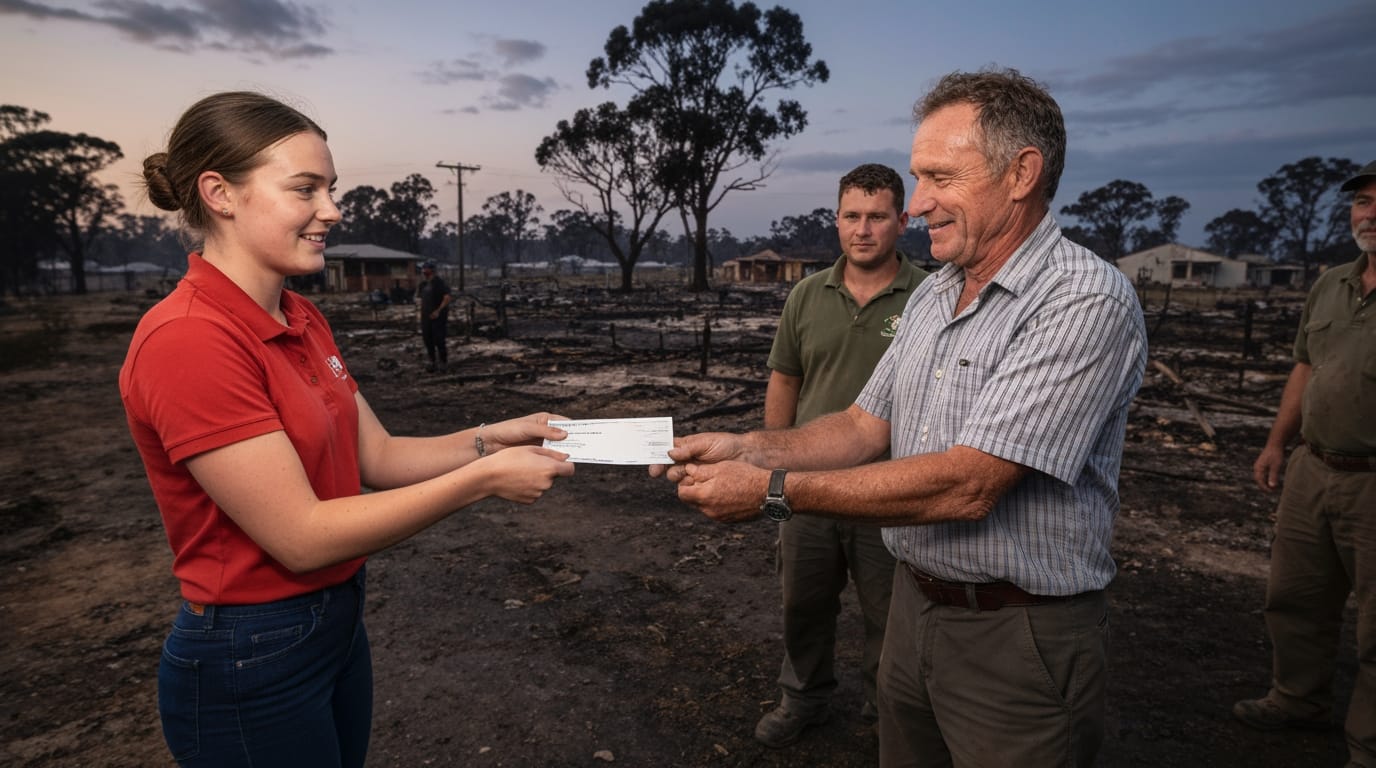
SYDNEY, Australia – As destructive wildfires tear through New South Wales (NSW), the Australian government has swiftly activated comprehensive disaster relief funding to support the beleaguered state, offering a critical lifeline to thousands of affected residents, businesses, and communities. The emergency declaration, made on Sunday, December 7, 2025, comes as firefighters battle more than 60 blazes, some burning out of control, across the state's central coast and other regions, signaling a perilous start to Australia's bushfire season. The scale of the immediate damage includes at least 12 homes destroyed in areas like Koolewong and four near Bulahdelah, alongside significant harm to critical infrastructure, agricultural assets, and vast tracts of national parks.
Immediate Response and Relief Activation
The joint federal and New South Wales Labor governments moved rapidly to trigger the Disaster Recovery Funding Arrangements (DRFA), a crucial mechanism that facilitates cost-sharing between the Commonwealth and states for natural disaster recovery. This activation ensures immediate financial assistance is available for a range of urgent needs, including emergency accommodation, clean-up operations, and early rebuilding efforts. Prime Minister Anthony Albanese, speaking on Sunday, emphasized the fortune of no reported loss of life thus far, but underscored the challenging summer ahead, characterizing it as "difficult" like recent seasons.
Under the DRFA, the Australian Government can contribute up to 75% of the assistance, which is then delivered through state and territory agencies. For individuals directly impacted, the Australian Government Disaster Recovery Payment (AGDRP) offers a lump sum of $1,000 per eligible adult and $400 per child, intended to help cover immediate costs such as food, clothing, and medicine. Additionally, the Disaster Recovery Allowance (DRA) provides short-term income support for up to 13 weeks for those who lose income due to the disaster. These payments are designed as an "emergency helping hand" rather than full compensation for losses, acknowledging the primary responsibility of state governments in disaster response.
Broader Support for Recovery and Rebuilding
Beyond immediate personal aid, the activated DRFA measures extend to broader recovery initiatives. Local Government Areas (LGAs) in NSW, including Central Coast, Mid Coast, Upper Hunter, Muswellbrook, Warrumbungle, and Dubbo, have been declared eligible for support. This encompasses funding for counter-disaster operations, such as firefighting activities and incident management, and the reconstruction of essential public assets.
Small businesses, primary producers, and non-profit organizations are also vital beneficiaries of the relief package. They can access natural disaster recovery grants for clean-up and restoration costs, along with concessional loans to aid in their recovery. For example, grants of up to $25,000 may be available for businesses and non-profits, while primary producers could access up to $75,000 through Special Disaster Relief Grants or concessional loans up to $130,000. These programs are critical for sectors like agriculture, which suffered an estimated $4-5 billion in losses during the 2019-20 Black Summer fires, primarily from destroyed crops and livestock.
Human and Economic Impact
The human toll of wildfires extends far beyond property damage. Evacuations, the loss of homes, and the disruption of daily routines inflict profound emotional and psychological trauma on affected individuals and communities. The experience of emergency evacuation and losing personal belongings or livelihoods can have lasting mental health impacts, requiring long-term support and recovery efforts. Previous disaster responses have included mental health packages, such as the $2.2 million allocated in Queensland following the 2023 bushfires, to address these critical needs.
Economically, the fires disrupt local and national economies significantly. Direct costs include firefighting and emergency services, while indirect costs stem from lost business and tourism revenue, agricultural damage, and declines in property values. Major bushfire events have historically had a negative, albeit short-term, impact on Gross Domestic Product (GDP) and consumer sentiment, particularly at local and regional levels where industries like tourism and farming bear the brunt. The prolonged disruption to power supplies and infrastructure further exacerbates these economic challenges, hindering recovery efforts.
The Broader Context of Australia's Bushfire Threat
Australia has a long history of devastating bushfires, with the "Black Summer" fires of 2019-2020 burning an estimated 24.3 million hectares, destroying over 3,000 buildings, and claiming 33 lives. That event alone led to an estimated economic impact of up to A$40 billion. New South Wales is recognized as one of the country's most wildfire-prone regions, and authorities consistently warn that the risk is increasing due to climate change, leading to longer and more challenging bushfire seasons.
The continuous threat necessitates ongoing investment in preparedness and mitigation. In Western Australia, for instance, the government committed $4 million in June 2024 to help 27 local governments prepare for the bushfire season through mitigation activities like reducing fuel levels and creating firebreaks. The federal budget for 2024-25 also included significant investments in enhancing emergency response capabilities and risk reduction, acknowledging the increasing frequency and severity of natural hazards. These proactive measures, alongside responsive financial aid, form the multi-faceted approach Australia takes to manage its persistent battle against bushfires.
Conclusion
The activation of extensive financial aid for New South Wales underscores the Australian government's commitment to supporting communities grappling with the immediate and long-term impacts of wildfires. From direct payments to affected individuals to grants and loans for struggling businesses and farmers, the comprehensive package aims to cushion the blow of disaster and facilitate a robust recovery. As the current bushfire season unfolds, the coordinated efforts between federal and state governments, combined with the resilience of affected communities and the dedication of emergency services, remain crucial in navigating what is anticipated to be another challenging period for Australia.