Iran Announces World Cup Boycott Amid Escalating Conflict with United States
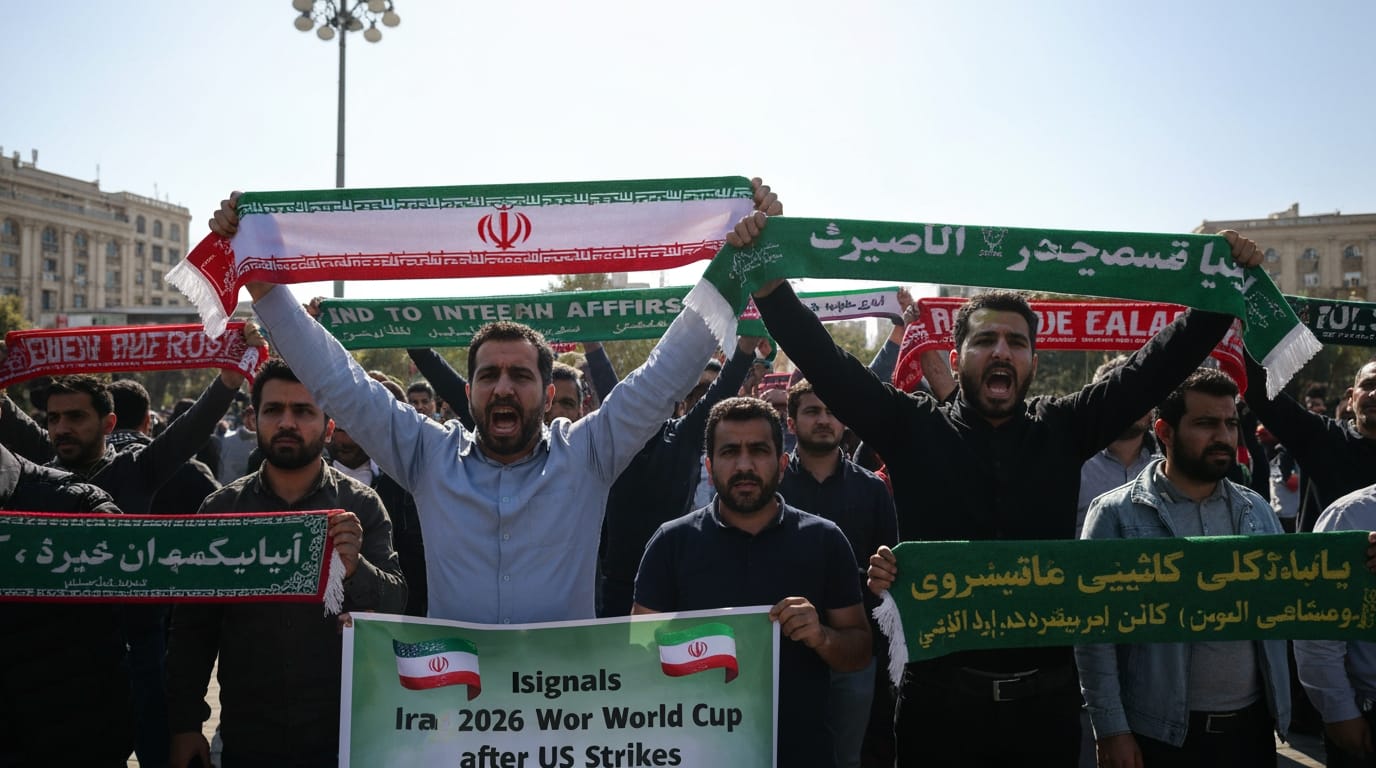
Tehran, Iran – In a dramatic escalation of geopolitical tensions, Iran’s Sports Minister, Ahmad Donyamali, announced today that the nation’s men's national football team will officially boycott the 2026 FIFA World Cup. The decision comes in direct response to recent military strikes carried out by the United States and Israel against Iranian targets, which reportedly resulted in the death of Supreme Leader Ali Khamenei and ignited a broader regional conflict. The withdrawal casts a long shadow over the upcoming global sporting event and underscores the profound impact of the ongoing hostilities on international relations.
War Erupts: The Catalyst for Withdrawal
The genesis of Iran's unprecedented boycott lies in a series of joint airstrikes launched by the United States and Israel on February 28, 2026. These surprise attacks targeted multiple locations across Iran, with Iranian authorities confirming the death of Supreme Leader Ali Khamenei and other high-ranking officials. The coordinated offensive, which the US and Israel stated aimed to induce regime change and target Iran's nuclear and ballistic missile programs, marked a significant turning point, sparking what has been termed the "2026 Iran war."
In the immediate aftermath, Iran retaliated with its own barrage of missile and drone strikes against Israeli interests, US military bases, and allied nations in the region, including Azerbaijan, Bahrain, Iraq, Jordan, Kuwait, Oman, Qatar, Saudi Arabia, Turkey, and the United Arab Emirates. The ensuing conflict has led to thousands of casualties and widespread displacement, fundamentally altering the geopolitical landscape of the Middle East. This exchange of hostilities followed a period of heightened tensions throughout late 2025 and early 2026, characterized by massive anti-government protests in Iran, a US military buildup in the Middle East, and stalled nuclear negotiations.
Iran's Stance: "No Possibility of Participation"
Speaking to state television on Wednesday, Minister Donyamali articulated the profound reasons behind Iran's decision. "Considering that this corrupt regime [the US] has assassinated our leader, under no circumstances can we participate in the World Cup," Donyamali stated, emphasizing the direct link between the military actions and the boycott. He further elaborated on the devastating human cost, noting that the country had been "forced to fight two wars in eight or nine months," resulting in the deaths of "thousands of our people." The minister conveyed a sense of insecurity for the nation's athletes, adding, "Our children are not safe and, fundamentally, such conditions for participation do not exist."
The declaration by the Sports Minister confirms earlier indications from Mehdi Taj, president of the Iranian Football Federation, who had hinted at a potential boycott in early March. Taj had questioned the rationality of sending a national team to a tournament hosted by a nation actively engaged in conflict with Iran, stating, "After this attack [on Iran], we cannot be expected to look forward to the World Cup with hope."
The World Cup's Unsettled Stage
The 2026 FIFA World Cup, scheduled to take place from June 11 to July 18, is co-hosted by the United States, Mexico, and Canada. Iran had successfully qualified for the prestigious tournament and was drawn into Group G, where it was slated to face Belgium, Egypt, and New Zealand. All three of Iran's group-stage matches were scheduled to be played on US soil, with two in Inglewood, California, and one in Seattle.
The prospect of Iran's participation had already sparked diplomatic discussions, with FIFA President Gianni Infantino reportedly meeting with US President Donald Trump. According to Infantino, President Trump had assured him that the Iranian team would be "welcome" to compete in the United States. However, Minister Donyamali's unequivocal statement directly contradicts this assurance, highlighting the severe disconnect between sporting diplomacy and the harsh realities of international conflict.
The boycott presents a significant challenge for FIFA, which strictly prohibits political interference in sport and has mechanisms in place for disciplinary action against teams that withdraw from competitions. FIFA rules stipulate that a heavy fine would be imposed, with further sporting sanctions possible. Historically, no nation has withdrawn from a men's FIFA World Cup since France and India opted out in 1950 due to travel costs. A more recent precedent, however, saw Indonesia stripped of its hosting rights for the men's Under-20 World Cup in 2023 after refusing to host the Israeli team. This underscores FIFA's willingness to act when political stances directly impact tournament participation.
Broader Implications and Regional Instability
The Iranian boycott of the World Cup is a stark indicator of the deepening crisis in the Middle East. The ongoing conflict has had far-reaching consequences, impacting not only human lives and regional stability but also global markets. Oil prices have surged, with Brent crude spiking to nearly $120 a barrel at one point, reflecting concerns over disruptions to oil supplies, particularly after Iran threatened to block the Strait of Hormuz, a crucial global shipping lane.
US Secretary of War Pete Hegseth stated that US attacks on Iran were continuing with intensity, while acknowledging a reduction in Iran's retaliatory missile launches, though Iran continued targeting oil infrastructure and shipping. Public opinion in the United States remains divided on the military action, with polls indicating more opposition than support for the intervention, and widespread concerns about rising gas prices and the potential for a prolonged conflict.
This sporting withdrawal adds another layer to an already complex and volatile situation, illustrating how interconnected global events have become. The World Cup, often seen as a unifying force, now finds itself entangled in a geopolitical standoff with profound implications beyond the football pitch. The absence of one of the qualified nations serves as a potent symbol of a world increasingly fractured by conflict and political discord.


