Bacteria Rewrite the Genetic Rulebook, Challenging Fundamental Principles of Life
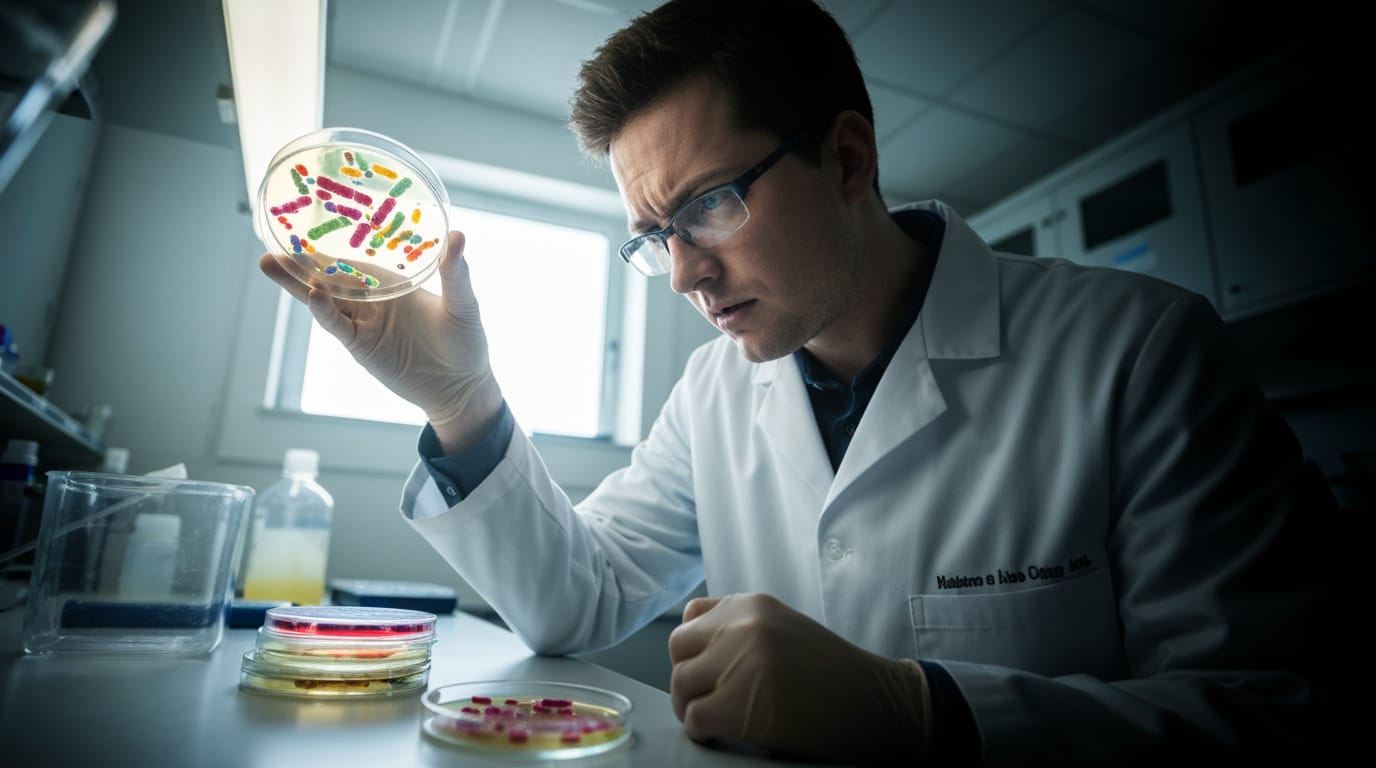
For decades, the "Central Dogma" of molecular biology has stood as a cornerstone of our understanding of life, dictating that genetic information flows strictly from DNA to RNA to protein. Complementing this, the universal genetic code, where specific three-letter sequences (codons) consistently translate into particular amino acids or termination signals, has been deemed largely immutable across all forms of life. However, a growing body of research is revealing that bacteria, and their ancient relatives, archaea, are far more adaptable than previously imagined, bending and even breaking these foundational rules in unexpected ways. Recent discoveries highlight a dynamic microbial world where genetic instructions are interpreted with astonishing flexibility, forcing a reevaluation of what was once considered a fixed blueprint of life.
The Enduring Dogma and Its Universal Code
First articulated by Francis Crick in 1958, the Central Dogma posits a unidirectional flow of genetic information: DNA contains the master instructions, which are transcribed into messenger RNA (mRNA), and then translated into proteins, the workhorses of the cell. This principle underpins much of modern biology, explaining how genes are expressed and how heredity works. A key component of this system is the genetic code, a language composed of 64 three-nucleotide "words" or codons. Of these, 61 specify one of the 20 standard amino acids, while the remaining three (UAA, UAG, and UGA) traditionally function as "stop" codons, signaling the termination of protein synthesis. This code has long been considered nearly universal, a shared biological vocabulary across all domains of life, from bacteria to humans. Textbooks have emphasized its consistency, with only minor variations noted in mitochondrial genomes or certain organisms.
Redefining "Stop": The Flexible Genetic Lexicon
Contrary to the long-held belief in a rigid genetic code, numerous bacteria and archaea have developed sophisticated mechanisms to reinterpret these fundamental instructions, particularly the stop codons. One striking example comes from Methanosarcina acetivorans, an archaeon that produces methane. This microbe can read the UAG codon in two different ways: sometimes as a conventional stop signal, and other times as a command to insert pyrrolysine, an unusual 22nd amino acid. This genetic ambiguity means that a single stretch of DNA can lead to the production of two distinct protein versions, with environmental conditions influencing the outcome. The incorporation of pyrrolysine, found in certain bacteria and archaea, is crucial for metabolizing methylamines and producing methane, suggesting that this flexibility provides an evolutionary advantage.
Further challenging the notion of fixed stop codons, a newly identified protist, Oligohymenophorea sp. PL0344, was found to reassign not one, but two common stop codons (UAA and UAG) to different amino acids – lysine and glutamic acid, respectively. This unprecedented combination underscores the remarkable plasticity of genetic codes in nature. Such discoveries highlight that the "universal" genetic code is not as universally conserved as once thought, with codon reassignments acting as a mechanism for organisms to expand their proteomic diversity and adapt to specific ecological niches.
Dynamic Genomes: Inversions and Reverse Information Flow
Beyond redefining individual codons, bacteria exhibit other mechanisms that introduce a surprising dynamism into their genetic material and information flow. Researchers have observed that bacteria can dynamically rearrange their DNA by flipping segments within single genes. These "DNA inversions" are reversible and can drastically alter protein production, activate or deactivate genes, or even lead to the synthesis of entirely different proteins from the same underlying genetic sequence. This reversible genetic switch offers bacteria a powerful tool for rapid adaptation to changing environments, challenging the static view of gene structure.
Even more remarkably, an immune defense system identified in the bacterium Klebsiella pneumoniae appears to defy the traditional direction of the Central Dogma. In this system, genetic instructions originating in RNA flow backward to DNA before resuming the conventional path from DNA to RNA to protein. This exception demonstrates a novel pathway for genetic information transfer, suggesting that nature can employ alternative routes for genetic regulation and defense, moving beyond the long-established linear progression. These findings, along with the well-known phenomenon of horizontal gene transfer (where bacteria readily swap genetic material), paint a picture of bacterial genomes as highly fluid and adaptive systems.
Beyond DNA: Heritable Information in Regulatory Networks
The conventional understanding of heredity centers on DNA as the sole carrier of heritable traits. However, recent studies suggest that bacteria possess a form of "memory" that extends beyond their genetic sequence. Research indicates that bacterial cells can "remember" transient environmental changes and pass these memories onto their progeny for multiple generations, even without alterations to their DNA. This non-genetic inheritance is mediated through changes in gene regulatory networks. Rather than being encoded directly in the DNA sequence, the information resides in the altered states of these networks, influencing how genes are expressed. This discovery broadens the definition of heritable information, demonstrating that complex regulatory states, not just DNA sequences, can be transmitted across generations in bacteria.
Implications and Future Frontiers
These groundbreaking discoveries fundamentally reshape our understanding of life's genetic machinery. The Central Dogma, while still a powerful framework, is proving to be a flexible guideline rather than an unbreakable law, particularly in the microbial world. The implications are far-reaching. For evolutionary biology, these findings suggest novel pathways for adaptation and diversification, as organisms explore different ways to encode and express genetic information. For biotechnology and synthetic biology, this deeper understanding of genetic code flexibility opens new avenues for innovation. Scientists are already exploring the potential to engineer bacteria with expanded genetic codes to produce novel proteins or compounds, with applications in medicine and industry. The ability of bacteria to tolerate and even leverage genetic ambiguity also raises critical questions about genetic containment in engineered organisms and the potential for new forms of life with unconventional genetic systems.
In conclusion, the microbial world continues to reveal its astonishing complexity and ingenuity. Far from adhering rigidly to a single set of rules, bacteria and archaea demonstrate an evolutionary prowess that constantly pushes the boundaries of our genetic understanding. These organisms, seemingly simple, are in fact master innovators, continually rewriting the genetic rulebook and offering invaluable insights into the dynamic nature of life itself.