Bangladesh Goes to Polls in Landmark Election, Facing Critical Democracy Test
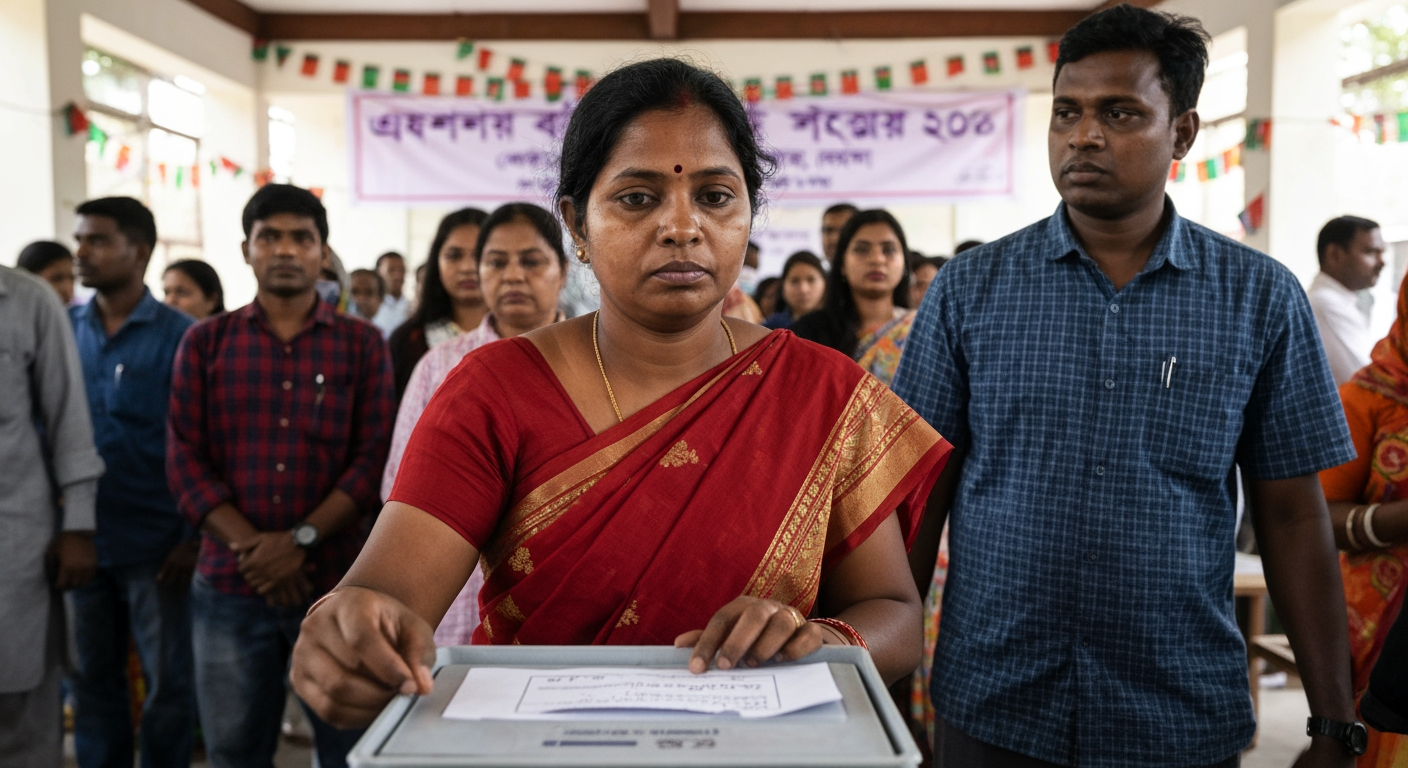
DHAKA, Bangladesh – Millions of Bangladeshis began casting their ballots today, February 12, 2026, in a pivotal national election that stands as a profound test for the nation's democratic trajectory. This election marks the first time citizens are heading to the polls since a mass uprising in August 2024 ended the 15-year rule of former Prime Minister Sheikh Hasina, ushering in an interim administration. More than 127 million eligible voters, including a significant bloc of young, first-time participants, will not only elect their parliamentary representatives but also vote in a crucial referendum on constitutional reforms aimed at reshaping the country’s governance. The high stakes are underscored by a turbulent political history, pre-election violence, and intense international scrutiny, all converging to define Bangladesh's path forward.
A Nation at the Crossroads: The Post-Uprising Landscape
Today's general election is unfolding in a political climate vastly different from previous polls, following the dramatic ouster of Sheikh Hasina and her Awami League government in 2024. The student-led "Monsoon Revolution" of July 2024 culminated in Hasina's resignation and subsequent ban of her party, fundamentally altering Bangladesh's political landscape. The ensuing period saw the establishment of an interim government led by Nobel Peace Prize laureate Muhammad Yunus, tasked with overseeing a transition to fair and free elections.
The interim administration has steered the country towards this dual election and constitutional referendum, a historic first for Bangladesh. Voters are presented with two ballots: one for parliamentary candidates and another for the "July National Charter," a comprehensive package of proposed institutional reforms. These reforms include critical measures such as prime ministerial term limits, enhanced checks on executive power, and potentially a shift to a bicameral legislature, aimed at preventing the concentration of power that critics argued characterized the previous regime. The outcomes of both the election and the referendum will define not only who governs but also the very framework of future governance, presenting a profound choice for the nation.
The Reshaped Political Landscape and Key Players
The most striking feature of this election is the absence of Sheikh Hasina's Awami League from the ballot. The party, which had dominated Bangladeshi politics for over a decade and a half, was banned due to allegations of orchestrating repression during the 2024 protests and its leaders facing investigations for crimes against humanity. This ban has effectively reshaped the competitive environment, leading to a "bipolar contest" between the Bangladesh Nationalist Party (BNP), now led by Tarique Rahman, and a powerful alliance spearheaded by the Jamaat-e-Islami and the youth-led National Citizen Party (NCP).
The BNP is widely considered the frontrunner in this election, seeking to capitalize on the political vacuum left by the Awami League's forced exit. However, the Jamaat-e-Islami and its alliance with the NCP have emerged as significant challengers, particularly appealing to a younger, politically engaged demographic. The youth vote, comprising nearly 44% of the electorate (those aged 18 to 37), is seen as a decisive factor. Many of these young citizens are first-time voters who came of age during a period of diminished electoral competitiveness and are eager to participate in what is perceived as a genuinely free contest. The introduction of postal voting for expatriate Bangladeshis also marks an effort to broaden participation and engage the country's extensive diaspora.
Shadows of Violence and Concerns for Fairness
Despite hopes for a more transparent and credible election, the run-up to polling day has been marred by concerning incidents of political violence. Human rights organizations have documented numerous clashes, attacks on journalists, and concerns regarding the safety of minority communities. Reports indicate over 1,400 incidents of political violence and nearly 200 deaths under the interim government, with significant concerns raised about the human rights situation. Religious minorities, particularly Hindus, have experienced renewed violence, highlighting persistent issues of protection and accountability.
In response to these challenges and the historical volatility of Bangladeshi elections, a massive security operation has been implemented. Over 300,000 security personnel, including army and paramilitary forces, have been deployed nationwide to ensure a peaceful voting process. The impartiality of these forces and the interim government is under intense observation. Furthermore, approximately 500 foreign observers from various international bodies, including the European Union and the Commonwealth, along with around 150 foreign journalists, are present to monitor the electoral proceedings, underscoring the global interest in the fairness of this election. Concerns have also been voiced by UN experts regarding increasing intolerance, threats to journalists and human rights defenders, and the spread of disinformation on social media platforms.
Economic Imperatives and Future Trajectories
Beyond the immediate political contest, this election holds significant implications for Bangladesh's economic future. The country's vital garment industry, which accounts for a substantial portion of its export earnings and GDP, has been under severe strain due to external tariffs and domestic political unrest. A stable, democratically elected government is crucial for restoring investor confidence, ensuring policy predictability, and navigating complex international trade relations.
The interim government, under Muhammad Yunus, has already taken steps to stabilize the economy, including securing international financial support and new trade agreements. However, persistent inflation, particularly in essential commodities, remains a concern for ordinary citizens, who are also grappling with issues of corruption and unemployment. The manifestos of the contesting parties address these economic challenges, with both the BNP and the Jamaat-NCP alliance proposing measures to improve the economy, increase social spending, and address issues like the low tax-to-GDP ratio. The ability of the new government to effectively address these deep-seated economic issues will be critical for maintaining social stability and sustaining Bangladesh's growth trajectory.
A Decisive Moment for Democracy
As polls close and the nation awaits the results, Bangladesh stands at a pivotal juncture. This election, the first genuinely competitive national vote in over a decade, represents a profound opportunity to reset democratic norms and restore public trust in the electoral process. The widespread participation of young voters, the comprehensive reform proposals embedded in the July National Charter, and the heightened international attention collectively signify the immense aspirations tied to this democratic exercise.
However, the path ahead remains uncertain. The legacies of political polarization, instances of violence, and lingering human rights concerns pose significant challenges. Whether the outcomes of today's voting lead to durable institutional reform and a more inclusive political environment or exacerbate existing divisions will largely determine Bangladesh's stability and standing on the global stage for years to come. The collective will of the Bangladeshi people, expressed through their ballots, will ultimately chart the course for their nation's democratic future.
Sources
- thewire.in
- idea.int
- hindustantimes.com
- indopremier.com
- sundayguardianlive.com
- cfr.org
- lowyinstitute.org
- eastasiaforum.org
- southasianvoices.org
- sundayguardianlive.com
- acleddata.com
- hrw.org
- electionresult2026bd.com
- amnesty.org
- newsonair.gov.in
- thehindu.com
- indianexpress.com
- fairobserver.com
- anfrel.org
- muslimnetwork.tv
- moderndiplomacy.eu
- capitaleconomics.com
- trtworld.com
- cpd.org.bd
Related Articles


Mounting Frustration Grips Russia as Economic Hardship and War's Toll Deepen
Moscow, Russia – A palpable shift in public sentiment is emerging across Russia, with growing frustration among citizens fueled by a confluence of economic pressures, increasing internet restrictions, and the undeniable...

Germany's Strategic Calculus: Ukraine Aid is an Investment in European Security, Not Charity
Berlin – The ongoing provision of substantial aid to Ukraine by Germany and its allies is increasingly being framed not as an act of altruism, but as a crucial investment in European security and stability. This...