Bangladesh Grapples with Rohingya Repatriation as Crisis Enters Eighth Year
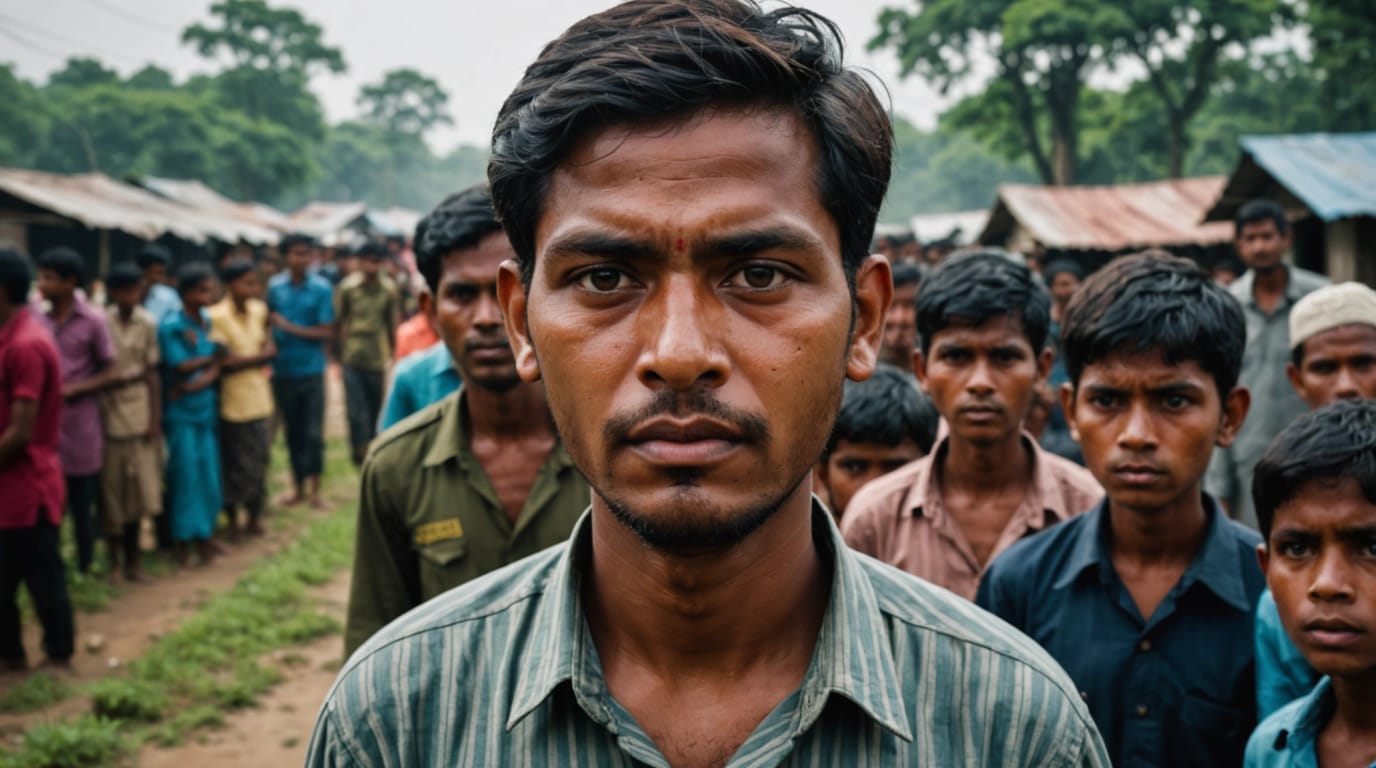
Cox's Bazar, Bangladesh – As the Rohingya refugee crisis enters its eighth year, Bangladesh faces mounting challenges in its efforts to repatriate nearly one million refugees to their homeland in Myanmar. The mass exodus began in August 2017, when a brutal military crackdown in Myanmar's Rakhine State forced over 700,000 Rohingya to flee across the border into Bangladesh. While Bangladesh has provided refuge to these displaced people, the long-term sustainability of hosting such a large population remains a significant concern, complicated by Myanmar's ongoing instability and the refugees' fears for their safety.
The Weight of a Million Souls
Currently, Bangladesh hosts close to one million Rohingya refugees, predominantly in the overcrowded camps of Cox's Bazar, the world's largest refugee settlement. These camps, characterized by limited resources and dire living conditions, have become a humanitarian focal point. Over half of the refugee population are children, facing restricted access to education, skills development, and future livelihood opportunities. The refugees rely almost entirely on humanitarian aid, with 95% of households dependent on assistance for survival. This dependence is further exacerbated by restrictions on movement outside the camps, leaving them vulnerable to exploitation and abuse.
The presence of such a large refugee population has placed a substantial strain on Bangladesh's resources. The annual cost of maintaining the refugees exceeds $1.2 billion, far outweighing the limited aid received from the United Nations. The influx has also impacted the local economy, particularly the tourism and agriculture sectors, leading to social tensions with host communities. To alleviate the pressure on Cox's Bazar, the Bangladeshi government has relocated nearly 30,000 refugees to Bhasan Char, a remote island in the Bay of Bengal. However, this relocation has faced criticism from human rights organizations, who cite concerns about the island's vulnerability to natural disasters and the refugees' freedom of movement.
Repatriation Efforts and Roadblocks
Repatriation has consistently been emphasized by Bangladesh as the most sustainable solution to the Rohingya crisis. The government has engaged in numerous discussions and agreements with Myanmar to facilitate the refugees' return. The first repatriation agreement was signed in November 2017, with subsequent deals aiming to begin the process in January 2018 and complete it within two years. However, these efforts have repeatedly stalled due to a combination of factors, including Myanmar's lack of cooperation, the Rohingya's fear of returning to unsafe conditions, and geopolitical complexities.
A pilot project in early 2023 aimed to repatriate 1,176 refugees, but it faced significant challenges as it did not guarantee a return to their original villages or address the core issues of citizenship and security. The refugees have expressed a clear desire for assurances regarding their safety, freedom of movement, and the restoration of their rights before agreeing to return. These concerns are rooted in the decades of persecution and violence they have faced in Myanmar, where they are denied citizenship and subjected to systematic discrimination.
Internal Conflicts and External Influence
The internal situation within Myanmar further complicates the repatriation process. The military coup in 2021 has led to increased instability and violence, making the prospect of a safe and dignified return even more uncertain. The ongoing civil war has also exacerbated the vulnerability of the Rohingya population, with both the military junta and the Arakan Army targeting them.
Geopolitical interests also play a significant role in the stalled repatriation efforts. China and Russia, both permanent members of the UN Security Council, have often shielded Myanmar from international pressure, hindering efforts to hold the country accountable for its actions. While China has attempted to mediate between Bangladesh and Myanmar, its primary focus remains on its strategic and economic interests in the region.
The International Community's Role
The international community's response to the Rohingya crisis has been a mix of support and shortcomings. While humanitarian aid has been provided to assist the refugees in Bangladesh, funding has been declining in recent years, threatening essential services such as food, healthcare, and education. The UNHCR has repeatedly called for increased international support, emphasizing the need for education, skills development, and sustainable repatriation.
The UN has described the Rohingya as "the most persecuted minority in the world," and numerous human rights organizations have documented the atrocities committed against them. The United States has declared the Rohingya persecution as genocide, but concrete actions to hold Myanmar accountable have been limited. The International Criminal Court is investigating alleged crimes against humanity, but progress has been slow.
A Bleak Future or a Path Forward?
As the Rohingya refugee crisis persists, the future remains uncertain. The refugees are caught between a state unwilling to guarantee their safety and rights and a host country struggling to cope with the immense strain on its resources. The international community faces a moral obligation to ensure a lasting solution for the Rohingya people, one that prioritizes their safety, dignity, and voluntary return to their homeland.
Moving forward, a multi-pronged approach is needed. This includes sustained diplomatic pressure on Myanmar to address the root causes of the crisis, increased humanitarian assistance to support the refugees in Bangladesh, and a renewed focus on finding durable solutions, including resettlement in third countries for those who cannot return to Myanmar. Without a concerted effort from all stakeholders, the Rohingya refugee crisis risks becoming a protracted and tragic chapter in modern history.


