Beijing and Taipei Bridge a Decade of Silence as Xi Hosts Taiwan Opposition Leader
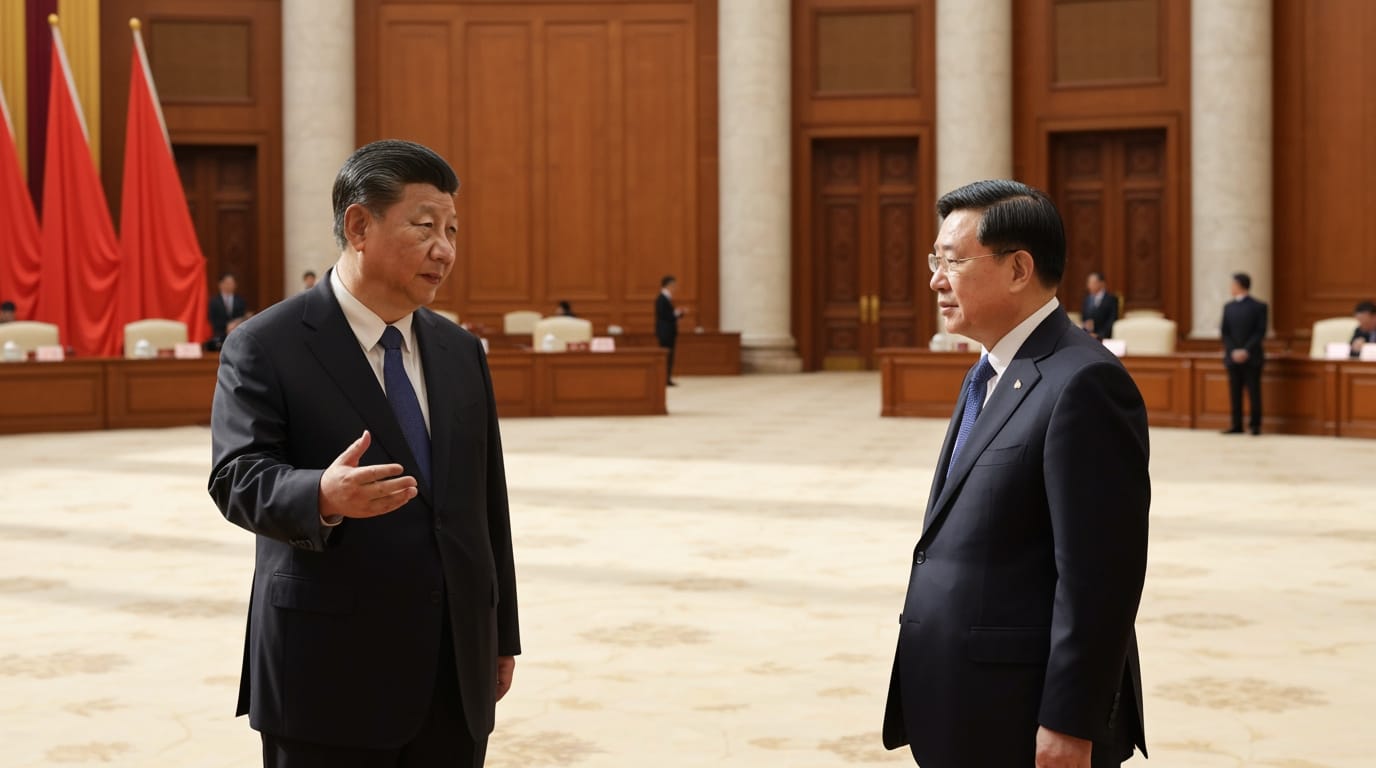
BEIJING – In a highly anticipated and symbolically charged meeting, Chinese President Xi Jinping welcomed Taiwan's opposition Kuomintang (KMT) Chairwoman Cheng Li-wun in Beijing on Friday, April 10, 2026. The encounter, the first of its kind between top leaders of the Communist Party of China (CPC) and the KMT in a decade, aimed to foster dialogue amidst escalating cross-strait tensions, though it immediately ignited fervent debate across the Taiwan Strait. Both leaders emphasized the importance of peace and cooperation, yet their underlying visions for Taiwan's future remain fundamentally divergent, casting a long shadow over the prospects of lasting reconciliation.
A Historic Handshake Amidst Enduring Differences
The meeting, held at a critical juncture for cross-strait relations, saw President Xi, in his capacity as General Secretary of the CPC Central Committee, underscore the shared identity of people on both sides of the Taiwan Strait. He asserted that "compatriots on both sides are both Chinese" and expressed confidence that Taiwan would ultimately "get together" with the mainland, citing a "historical trend" that he believes will not change. Xi reiterated Beijing's unwavering stance on "reunifying" China and Taiwan, a goal he views as a crucial part of his legacy, not ruling out the use of force to achieve it.
Cheng Li-wun, elected KMT chair last year, reciprocated calls for peace, stating that Taiwan should "no longer be a flashpoint for potential conflict" but instead become "a symbol of peace jointly safeguarded by Chinese people on both sides of the strait." She stressed the need to seek "systemic solutions to prevent and avoid war" and affirmed the KMT's commitment to the 1992 Consensus. This consensus, a cornerstone of previous cross-strait engagement, acknowledges "one China" but allows for differing interpretations by Taipei and Beijing. The KMT's visit, explicitly invited by the CPC Central Committee and Xi, represents a significant overture from Beijing to a political force in Taiwan that historically favors closer ties with the mainland.
Cheng's "Peace Tour" Sparks Domestic Firestorm
Chairwoman Cheng's trip to the mainland, dubbed a "peace tour," commenced on Tuesday, April 7, with stops in Nanjing and Shanghai before her arrival in Beijing. Before her departure, Cheng articulated her mission as demonstrating to the international community that the desire for peace extends beyond just Taiwan's ruling party. She voiced hope that the trip would prove "peace across the Taiwan Strait is not as difficult as they think" and prevent Taiwan from being "ravaged by war."
However, the visit has been met with considerable skepticism and outright condemnation within Taiwan, particularly from the ruling Democratic Progressive Party (DPP). Critics accuse Cheng of being overly accommodating to Beijing's agenda and potentially serving as a "pawn" for China's "One China" propaganda. Lawmakers from the DPP highlighted aspects of the trip, such as China's selection of accompanying journalists and the use of a Chinese aircraft, as evidence that the visit was framed within Beijing's "One China" framework from the outset. The DPP, a pro-sovereignty party detested by Beijing, has consistently advocated for Taiwan's independent identity. Taiwan's President Lai Ching-te, a DPP leader elected in 2024, underscored the enduring partnership between Taiwan and the United States, referencing the 47th anniversary of the Taiwan Relations Act as a cornerstone for bilateral relations.
Adding to the domestic controversy, the opposition-dominated Legislative Yuan has reportedly stalled a government plan for a $40 billion special defense budget, intended for arms purchases and the development of Taiwan's indigenous defense capabilities. This action, occurring concurrently with Cheng's visit, further fueled concerns among those who view the KMT as undermining Taiwan's defensive posture against potential Chinese aggression. KMT Vice Chairman Chang Rong-kung defended Cheng's efforts, suggesting her visit buys "time and space for Taiwan" by persuading Beijing that some in Taiwan favor closer ties, thereby reducing the immediate need for military action.
Geopolitical Chessboard: Taiwan's Role in US-China Relations
The high-profile meeting between Xi and Cheng carries significant geopolitical implications, especially in the broader context of US-China relations. The United States remains Taiwan's strongest informal backer and primary arms supplier, a relationship that deeply irks Beijing. Chinese President Xi previously cautioned US President Donald Trump in February to be "prudent" regarding arms sales to Taiwan, emphasizing that the "Taiwan question is the most important issue in China-U.S. relations."
Notably, Cheng's visit precedes an anticipated meeting between President Xi and US President Donald Trump in May. Analysts suggest that Beijing could leverage the KMT chairwoman's engagement to signal to Washington that segments of Taiwan's political landscape support closer alignment with the mainland. Such a perception, if successfully conveyed, could potentially give Xi greater leverage in his upcoming discussions with Trump on critical issues, including Taiwan. Meanwhile, the region also observed Japan's diplomatic maneuvers, with Tokyo reportedly downgrading its description of China in its 2026 Diplomatic Bluebook from "one of the most important bilateral relations" to merely an "important neighboring country." This shift underscores the complex and evolving geopolitical dynamics surrounding the Taiwan Strait.
The KMT's strategy of "deterrence through dialogue" aims to mitigate the risk of conflict, and Cheng has voiced her party's intention to resume broad cross-strait exchanges, including tourism and political engagement, should it regain power in 2028. However, Beijing's overarching objective of "reunification," explicitly including the option of force, continues to define the parameters of any cross-strait dialogue.
A Fragile Path Forward
The meeting between Xi Jinping and Cheng Li-wun has undeniably reopened a channel of high-level communication between Beijing and Taiwan's main opposition party after a decade of silence. While both sides articulated a desire for peace, the fundamental differences in their approaches to Taiwan's sovereignty and future remain stark. Beijing views the island as an inseparable part of "one China," while the DPP-led government in Taipei asserts Taiwan's self-ruled status since 1949. The KMT attempts to carve a middle path, advocating for dialogue and closer economic ties under the framework of the 1992 Consensus, yet this approach faces significant domestic challenges and international scrutiny.
The immediate aftermath of this historic meeting will likely see continued debate within Taiwan regarding the implications for its sovereignty and security. Globally, observers will be keenly watching how this development influences the delicate balance of power in the Indo-Pacific and shapes the upcoming US-China summit. While a direct conflict may have been averted for now, the underlying tensions persist, underscoring the fragile and complex nature of cross-strait relations and the enduring quest for a peaceful resolution that satisfies all parties involved.


