Beijing's Carefully Calibrated Narrative: China Shapes Perception of Middle East Conflicts
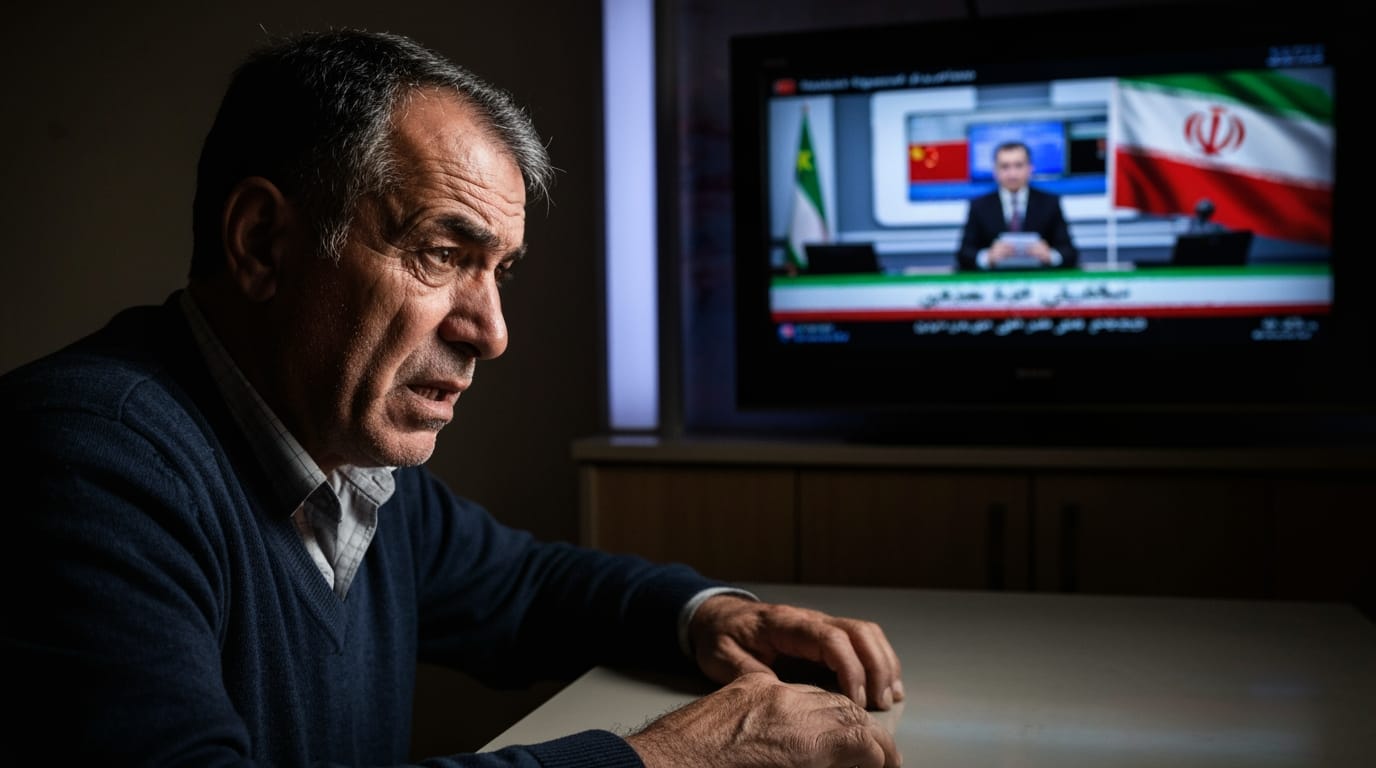
As the Middle East grapples with escalating tensions, including the ongoing U.S.-Israeli military strikes on Iran and the protracted Israel-Hamas conflict, China is meticulously crafting a propaganda narrative to advance its strategic interests on the global stage. Beijing's state-controlled media and diplomatic pronouncements portray China as a responsible advocate for peace and stability, while subtly but consistently criticizing Western, particularly U.S., foreign policy and its role in regional destabilization. This calculated approach seeks to undermine Western influence, enhance China's standing in the Global South, and safeguard its vital economic and energy interests in the volatile region.
Navigating the U.S.-Israel-Iran Conflict: Calls for Restraint, Implicit Condemnation
China has responded with deep concern to the recent U.S.-Israeli military offensive against Iran, which commenced on February 28, 2026, targeting cities like Tehran and resulting in significant casualties and damage to infrastructure, including nuclear facilities. Chinese Foreign Minister Wang Yi has characterized the situation as "a war that should never have happened". Official statements from Beijing consistently urge all parties to respect national sovereignty, refrain from the "abusive use of military force," and pursue political solutions through dialogue and negotiation.
While advocating for de-escalation, China's narrative implicitly criticizes the U.S. and Israel. Chinese officials have condemned strikes on Iran as violations of international law and sovereignty. The assassination of Iran's Supreme Leader Ayatollah Ali Khamenei and other officials in the initial attacks has also been condemned by Beijing. Despite its strong rhetorical support for Iranian sovereignty and its strategic partnership with Tehran, China has notably refrained from providing substantive military aid, limiting its assistance to diplomatic backing. This reflects a pragmatic balancing act, as China's broader economic and geopolitical objectives often take precedence over unreserved support for any single regional actor.
The Israel-Hamas War: A Pro-Palestinian Stance and Criticism of U.S. Policy
In its coverage of the Israel-Hamas war, China has largely adopted a pro-Palestinian stance, aligning its rhetoric with humanitarian concerns and the demands of many nations in the Global South. Chinese state media frequently frames Israel's actions as "beyond the scope of self-defense" and amounting to "collective punishment" against the people of Gaza. Beijing has consistently called for an immediate ceasefire, the protection of civilians, and the establishment of an independent Palestinian state based on a two-state solution, in line with United Nations resolutions.
This narrative often presents the United States as being on the "wrong side of history" and exacerbating regional tensions through its unwavering support for Israel. Chinese media outlets amplify reports on the humanitarian crisis in Gaza, restrictions on aid, and the closure of key crossings, implicitly criticizing Western inaction or perceived complicity. This positioning allows China to contrast its "responsible major power" image with what it portrays as a biased and destabilizing Western foreign policy.
Shaping Perceptions: Anti-U.S. Narratives and Challenging Western Hegemony
China's propaganda machinery extends beyond official government statements, utilizing a sophisticated network of state media outlets and tightly controlled social media platforms like WeChat, Weibo, and Douyin to shape domestic and international public opinion. A prominent feature of this strategy is the widespread dissemination of anti-U.S. messaging, which often portrays Washington as a "hegemonic" power responsible for instigating and prolonging conflicts in the Middle East.
Chinese social media platforms, while tightly managed, often feature sarcastic and mocking comments directed at U.S. official accounts, reflecting and amplifying the state-backed narrative that critiques American foreign policy. These narratives aim to cast doubt on the efficacy of U.S. leadership and promote the idea that American interventionism is a primary cause of global instability. This "cognitive warfare" also seeks to exploit perceptions of U.S. distraction by Middle East conflicts to advance China's own geopolitical agenda, particularly regarding Taiwan. By presenting itself as an alternative to the U.S.-led global order, China seeks to enhance its reputation and influence, especially among countries in the Global South that may share similar anti-Western sentiments.
China's Strategic Interests and Delicate Balancing Act
Underpinning China's propaganda efforts is a pragmatic calculation of its national interests. Iran is a crucial strategic partner, serving as a significant supplier of discounted oil and a key player in China's Belt and Road Initiative. China is Iran's largest trading partner, and Chinese purchases account for approximately 90 percent of Iran's exported oil. The two nations share a "comprehensive strategic partnership" solidified by a 25-year cooperation agreement signed in 2021. This relationship allows Iran to mitigate global sanctions through trade and financial networks, while providing China with energy resources and a partner in challenging the U.S.-led global order.
However, China also maintains significant economic ties and investments with other Gulf states, some of whom view Iran as a regional threat. This necessitates a delicate balancing act, as Beijing seeks to avoid becoming entangled in direct military conflicts that could jeopardize its broader economic and energy security interests. China's reluctance to provide direct military support to Iran, despite its rhetorical backing, underscores its primary objective: to protect its core interests and avoid direct confrontation with the United States, especially with issues like Taiwan remaining a priority for Beijing. This strategy positions China as a global player that seeks to influence regional dynamics without being overtly drawn into military conflicts, preferring to project soft power and economic influence.
In conclusion, China's propaganda surrounding the Middle East conflicts is a multifaceted and strategically deployed tool. By consistently portraying itself as a neutral peacemaker while casting blame on Western intervention, Beijing aims to bolster its international standing, foster closer ties with the Global South, and incrementally reshape the global order in its favor. This carefully crafted narrative allows China to protect its extensive economic interests in the region while simultaneously challenging the U.S.-led system, all without direct military entanglement.


