Beijing's Delicate Dance: Can Xi Pull North Korea Deeper Into China's Orbit?
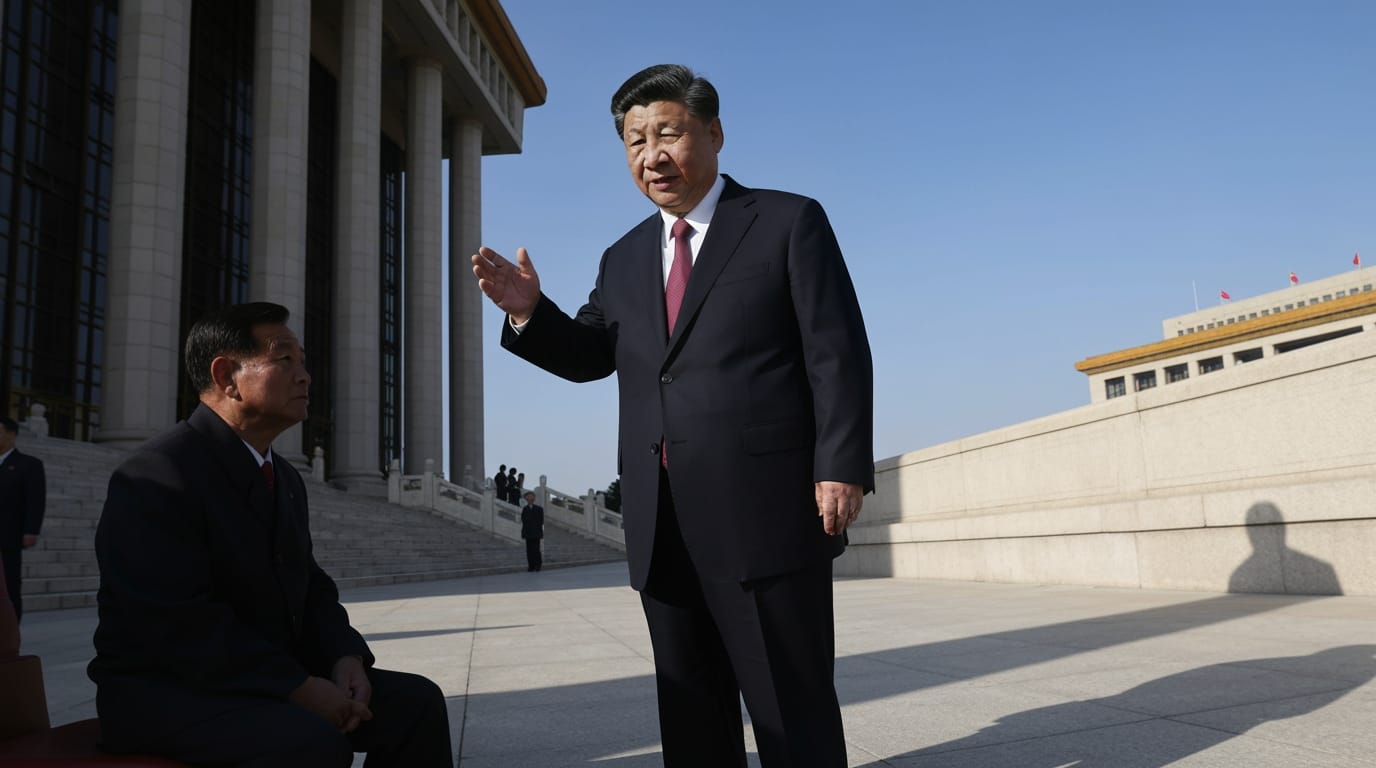
The complex and often opaque relationship between China and North Korea has once again taken center stage with Chinese President Xi Jinping's recent visit to Pyongyang, his first since 2019. This high-stakes diplomatic maneuver comes at a critical juncture, as North Korea strengthens its military ties with Russia and expands its nuclear capabilities, raising questions about the extent of Beijing's influence over its unpredictable neighbor. While China remains North Korea's indispensable economic lifeline and a crucial political ally, the dynamic is far from a simple patron-client relationship. Instead, it is a delicate balancing act, driven by historical bonds, strategic imperatives, and Pyongyang's fierce commitment to self-reliance, making a full absorption into Beijing's "orbit" a complex and perhaps elusive goal.
Historical Ties and Enduring Alliance
The relationship between the People's Republic of China (PRC) and the Democratic People's Republic of Korea (DPRK) is often described as being "as close as lips and teeth," a metaphor rooted in their shared history and ideological affinity. Formal diplomatic relations were established in 1949, and China's intervention in the Korean War (1950-53) with the People's Volunteer Army was pivotal in ensuring North Korea's survival against United Nations/United States forces, cementing a "blood-forged" alliance. This historical bond was further solidified by the 1961 Mutual Aid and Co-operation Treaty, China's sole defense pact with any nation, renewed periodically, most recently in 2021.
Despite this foundational alliance, the relationship has experienced periods of strain. North Korea, under the Kim dynasty, has consistently pursued its Juche (self-reliance) ideology, wary of becoming subservient to any great power, including China. Tensions emerged during China's Cultural Revolution and later when Beijing normalized relations with South Korea in 1992, which Pyongyang viewed as a betrayal of its "One Korea" policy. However, the dissolution of the Soviet Union significantly increased North Korea's dependence on China, especially in the face of international sanctions over its nuclear program. Since 2018, relations have reportedly become increasingly close, marked by multiple meetings between Kim Jong Un and Xi Jinping, including Xi's 2019 visit to Pyongyang.
Beijing's Strategic Imperatives and Economic Lifeline
China's approach to North Korea is dictated by a complex set of strategic interests. Foremost among these is the desire for stability on the Korean Peninsula, preventing a collapse of the Kim regime that could trigger a refugee crisis on its border and potentially lead to a unified Korea aligned with the United States. North Korea serves as a crucial geopolitical buffer against the presence of U.S. troops in South Korea and Japan. Beijing also seeks to counter Washington's influence in the region, using its relationship with Pyongyang as leverage in its broader competition with the U.S.
Economically, China is unequivocally North Korea's most vital partner. Beijing has been Pyongyang's top trading partner for over two decades, accounting for more than 90 percent of North Korea's imports and exports. This economic dependency provides China with significant leverage, as it supplies North Korea with food, fuel, raw materials, and a substantial portion of its consumer goods. In 2023, North Korea's trade with China reportedly recovered to $2.3 billion, with imports exceeding $2 billion, reaching levels not seen since before the COVID-19 pandemic, during which cross-border trade had nearly halted. China also provides direct aid, primarily food and energy assistance, helping to mitigate the impact of severe droughts and floods that threaten North Korea's food supply. Despite international sanctions, China often navigates these restrictions, highlighting its commitment to the regime's survival. Chinese leaders are keen to maintain North Korea's economic dependence, viewing it as a tool for influence.
Pyongyang's Balancing Act and Nuclear Ambitions
While heavily reliant on China, North Korea actively works to avoid becoming a pliant junior partner. Its Juche ideology underscores a deep-seated desire for self-reliance and national identity, resisting explicit subordination. Pyongyang's nuclear weapons program is a testament to this independent streak, seen as a critical shield against perceived external threats, particularly from the U.S. For years, China officially advocated for the denuclearization of the Korean Peninsula, even condemning North Korean nuclear tests and supporting some UN Security Council sanctions. However, China's stance has evolved, with official statements in the 2020s notably omitting mention of denuclearization. This shift suggests Beijing may be tacitly accepting North Korea's nuclear status, prioritizing stability over denuclearization.
North Korea's leaders, including Kim Jong Un, have perfected a strategic balancing act between China and other major powers like Russia. By cultivating ties with Moscow, especially amid the war in Ukraine, Pyongyang has sought to diversify its international support and reduce its singular dependence on Beijing. North Korea has provided Russia with projectiles, missiles, and potentially manpower, reportedly receiving economic assistance, fuel, and military technology in return. This deepening relationship with Russia has prompted concern within some Chinese official circles, as it marks the first time in decades that China is not North Korea's almost exclusive interlocutor.
The Shifting Geopolitical Landscape and Xi's Recent Visit
President Xi Jinping's recent visit to Pyongyang on June 8, 2026, his first in seven years, underscores China's intent to reassert its influence over North Korea. This visit follows Kim Jong Un's closer alignment with Moscow and comes amid intensified U.S.-China rivalry. For Xi, the trip is a clear signal that Beijing remains a key player for Pyongyang's economic and political survival. Experts suggest that China is looking to prevent North Korea from leaning too heavily towards Russia and to demonstrate its leadership role in Northeast Asia.
During the visit, Xi and Kim held talks on trade and cooperation, with Xi affirming China's unwavering support for North Korea "no matter how the international situation changes." He also called for expanding pragmatic cooperation in economy and trade. While Pyongyang has been signaling its nuclear status is non-negotiable, Xi's visit focused on bolstering the bilateral relationship, particularly on economic and trade aspects. This highlights China's ongoing dilemma: managing North Korea's nuclear ambitions while simultaneously ensuring the stability of its buffer state and containing external influences.
A Complex Orbit of Influence
Ultimately, Xi Jinping's efforts to bring North Korea closer into Beijing's orbit face inherent limitations. While China provides indispensable economic and diplomatic support, Pyongyang's strong emphasis on Juche ideology and its strategic pursuit of alternative partnerships, particularly with Russia, prevent complete subjugation. North Korea consistently seeks to leverage its position between powerful neighbors to its advantage. For China, maintaining a stable, albeit somewhat defiant, North Korea remains a primary strategic goal, essential for regional security and as a counterweight to U.S. influence. However, Beijing must continuously balance its own interests with Pyongyang's unpredictable actions and its nuclear ambitions. The relationship is less about China fully controlling North Korea and more about managing a complex, mutually dependent, and occasionally fractious alliance, ensuring that while Pyongyang orbits, it does so in a manner that largely aligns with Beijing's broader strategic objectives in a rapidly evolving geopolitical landscape.


