Beijing's Dual Diplomacy: Xi's 'Peace' Message to Taiwan Opposition Amidst Rising Tensions and Looming Trump Visit
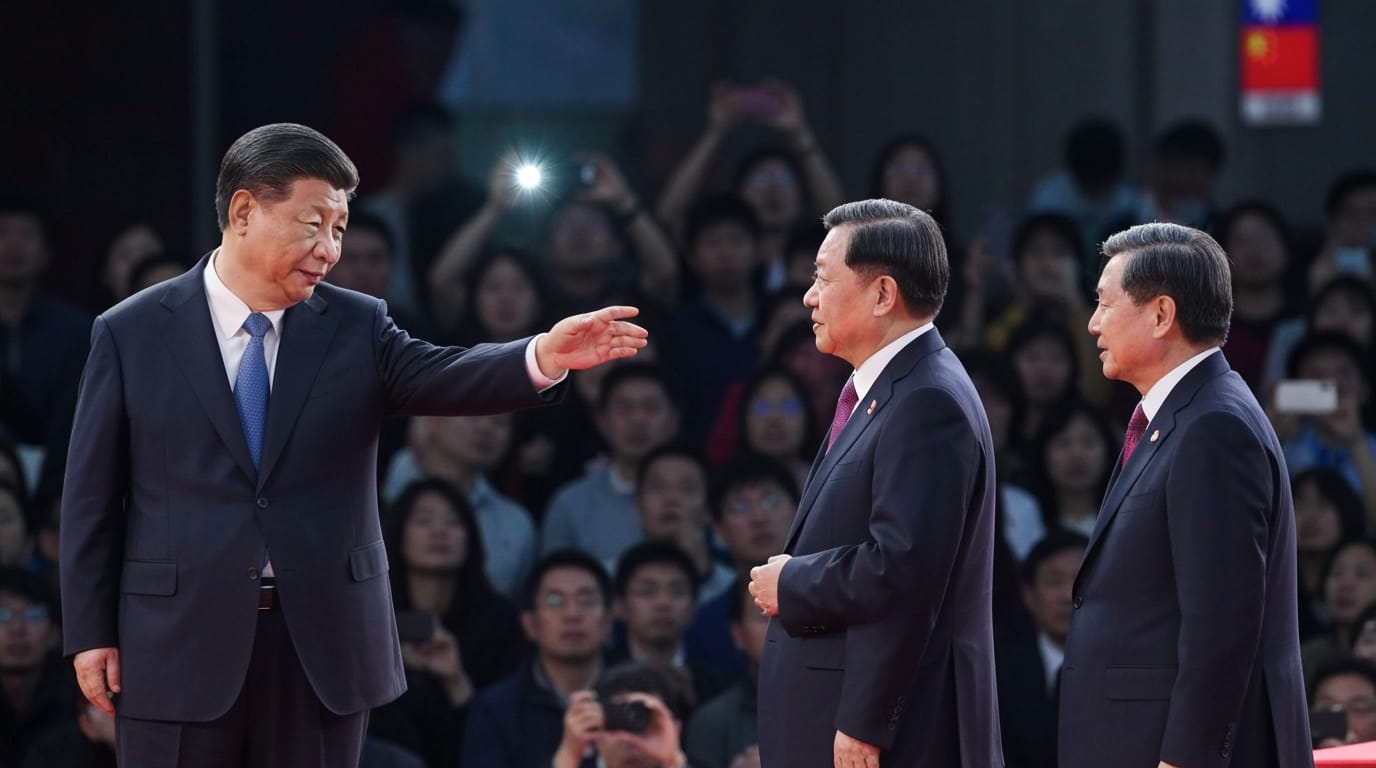
Beijing, China – In a highly anticipated meeting aimed at shaping the narrative around the self-governed island of Taiwan, Chinese President Xi Jinping recently hosted Cheng Li-wun, the chairwoman of Taiwan's largest opposition party, the Kuomintang (KMT). The rare dialogue, occurring just weeks before a potential summit between Xi and former U.S. President Donald Trump, saw Beijing extend a message of "peace" and shared identity to Taiwan's political opposition, even as military pressures in the Taiwan Strait continue to escalate. This carefully choreographed diplomatic overture underscores China's persistent strategy to promote "reunification" while navigating a complex geopolitical landscape increasingly influenced by Washington's shifting foreign policy.
Beijing's Overture: A Call for "Peace" with Underlying Demands
During their meeting in Beijing's Great Hall of the People, President Xi Jinping emphasized a vision of cross-strait peace, development, communication, and cooperation, stating that "compatriots on both sides are both Chinese" and part of "one family." Xi articulated his belief that Taiwan's future prosperity is intrinsically linked to a "strong motherland" and the "great rejuvenation of the Chinese nation." He reiterated China's unwavering commitment to the "One China" principle and vehemently opposed any form of Taiwanese independence, branding it as the primary threat to peace and stability in the Taiwan Strait. Beijing’s stance maintains that while it seeks peaceful reunification, it has not renounced the use of force to achieve its territorial claims over Taiwan.
This diplomatic outreach to the KMT, the first such high-level contact in a decade, is viewed by many as a strategic move by Beijing to leverage internal political divisions within Taiwan. While China publicly promotes dialogue and cooperation, Taiwanese security officials report a notable surge in Chinese military activity around the island, including the deployment of nearly 100 naval and coast guard vessels in the South and East China Seas, a significant increase from typical levels. This dual approach – diplomatic engagement with the opposition alongside intensified military posturing – creates a complex dynamic, raising questions in Taipei about the sincerity of Beijing's peaceful intentions.
Taiwan's Divided Response: Dialogue vs. Defense
The KMT, led by Chairwoman Cheng Li-wun, has embraced the dialogue with Beijing, framing her visit as a "peace mission" aimed at reducing cross-strait tensions. Cheng advocated for "institutional solutions" to prevent conflict and expressed a desire for the Taiwan Strait to become "a symbol of peace jointly safeguarded by Chinese people on both sides of the strait," rather than a "chessboard for outside forces to intervene in." She also affirmed the KMT's adherence to the "1992 Consensus," a tacit agreement acknowledging "one China" but with differing interpretations from Beijing. Notably, Cheng has also indicated a willingness to slow down Taiwan's military buildup and has faced criticism for her party's role in delaying legislative approval of a proposed $40 billion special defense budget, intended for arms acquisitions from the United States. She even expressed hope of inviting Xi Jinping to Taiwan should the KMT win the 2028 presidential election.
In stark contrast, Taiwan's ruling Democratic Progressive Party (DPP), under President Lai Ching-te, views Beijing's overtures with deep skepticism. The DPP maintains that China's refusal to engage with Taiwan's democratically elected government, while labeling its leaders as "separatists," undermines any genuine pursuit of peace. President Lai cautioned that "history tells us that compromising with authoritarian regimes only sacrifices sovereignty and democracy; it will not bring freedom, nor will it bring peace." The DPP has urged the KMT to support the proposed defense budget, emphasizing the need for robust self-defense capabilities in the face of China's escalating military threats.
The Shadow of Washington: A Looming Trump Visit
The timing of Xi's meeting with the KMT is particularly significant, preceding a planned summit in Beijing between the Chinese leader and former U.S. President Donald Trump in May. During this upcoming summit, Xi is widely expected to voice his opposition to U.S. arms sales to Taiwan.
Donald Trump's past and potential future approach to Taiwan is characterized by a transactional and unpredictable foreign policy, often emphasizing "strategic ambiguity." During his previous term, Trump approved significant arms sales to Taiwan but also made statements suggesting that Taiwan should bear more of the cost for its defense, even questioning the U.S. commitment to defending the island. Concerns persist that a second Trump administration might use Taiwan as a bargaining chip in broader trade negotiations with China, potentially even expressing formal opposition to Taiwan's independence in exchange for economic concessions from Beijing. Such a shift would mark a dramatic departure from decades of U.S. policy and could profoundly alter the delicate cross-strait balance, further intensifying anxieties in Taipei.
A Region on Edge: Implications for Indo-Pacific Stability
The interplay between Beijing's "peace" offensive, Taiwan's internal political dynamics, and the looming influence of a potential Trump administration creates a highly volatile situation in the Indo-Pacific. China's consistent pursuit of "reunification," coupled with its military modernization and assertive actions in the Taiwan Strait, poses a direct challenge to regional stability.
Taiwan, a vibrant democracy with a critical role in the global technology supply chain, finds itself at the center of this geopolitical contest. The divergent views between Taiwan's ruling and opposition parties on how to manage relations with Beijing highlight the deep complexities and internal debates facing the island. While the KMT seeks to foster dialogue and economic ties, the DPP prioritizes strengthening defense capabilities and securing international support to safeguard Taiwan's sovereignty. The upcoming high-level diplomatic engagements involving China, Taiwan, and the United States will be closely watched, as they hold significant implications for the future of cross-strait relations and the broader security architecture of East Asia.
Conclusion: Navigating a Precarious Future
The recent "peace" message from President Xi Jinping to Taiwan's opposition, delivered amidst heightened military activity and ahead of a critical meeting with Donald Trump, encapsulates the multi-faceted and often contradictory nature of cross-strait relations. While Beijing speaks of shared heritage and peaceful reunification, its actions underscore an unwavering resolve to assert its claims over Taiwan. The island, in turn, remains deeply divided on the most effective path forward – whether through engagement and "peace missions" or through robust defense and international partnerships. With the specter of a transactional U.S. foreign policy potentially reshaping the strategic landscape, the future of Taiwan and the stability of the Indo-Pacific region remain precariously balanced, subject to the complex interplay of diplomacy, deterrence, and geopolitical ambition.