Lebanon Caught in the Crosscurrents as Iran-US Ceasefire Faces Existential Threat
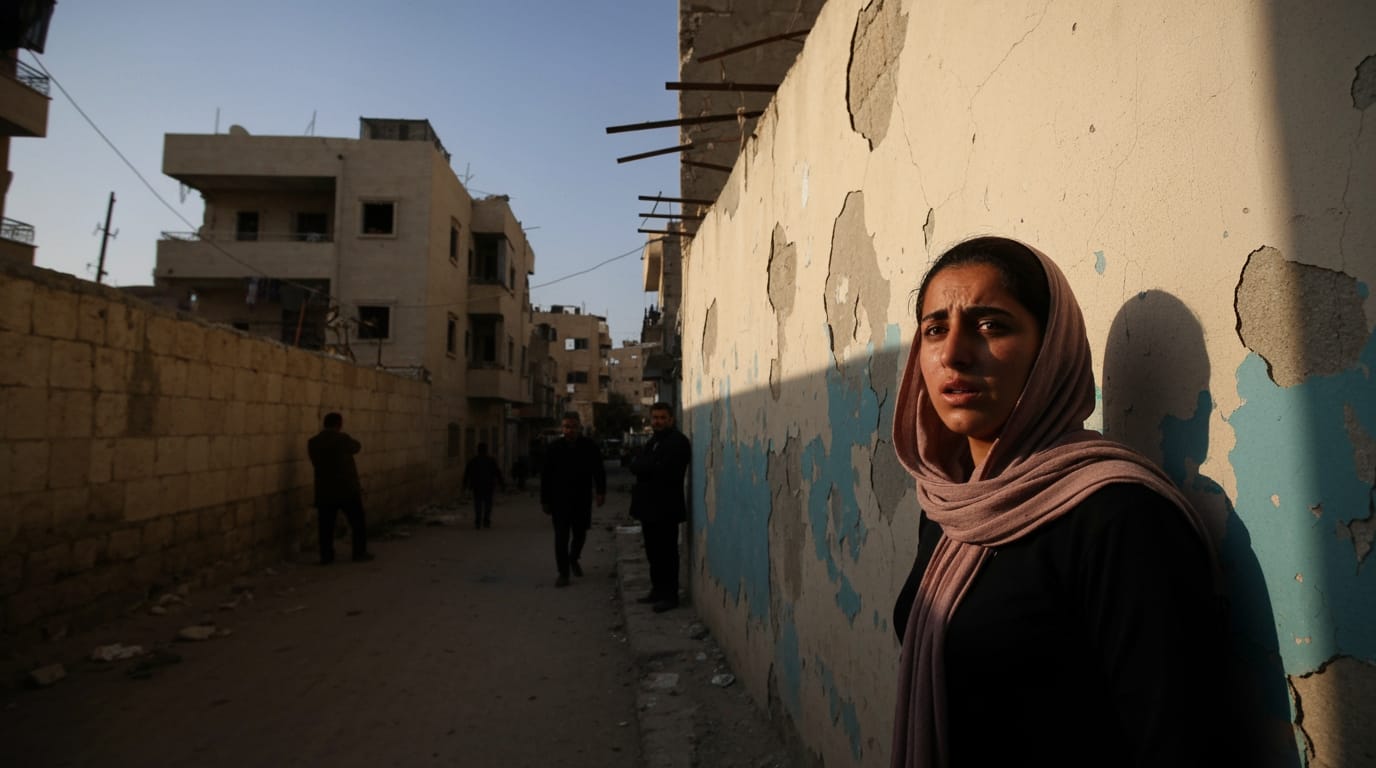
Beirut, Lebanon – A tenuous ceasefire agreement between the United States and Iran, lauded as a critical step toward regional de-escalation, has plunged Lebanon into a renewed state of intense uncertainty and violence. Just hours after the April 8 announcement of a two-week truce, Israeli airstrikes pounded Lebanese territory, resulting in a significant death toll and widespread destruction, underscoring fundamental disagreements over the ceasefire's scope and jeopardizing broader diplomatic efforts.
The fragile US-Iran agreement, brokered by Pakistan, intended to halt direct hostilities between Washington and Tehran. However, immediate and starkly contrasting interpretations of the deal's reach have left Lebanon in a perilous position. While Iran and its allies, including Pakistani mediators, asserted the truce would extend to proxy conflicts, notably the ongoing clashes between Israel and Hezbollah in Lebanon, both the US and Israel unequivocally rejected this notion. This divergence has resulted in a deadly continuation of conflict on Lebanese soil, exposing the severe limitations of narrowly defined de-escalation efforts in a deeply interconnected region.
A Ceasefire Disputed, a Nation Devastated
The ceasefire, intended to stabilize a volatile Middle East, quickly unraveled in Lebanon. On April 8, within a day of the truce taking effect, Israel launched a massive wave of airstrikes across Lebanon, including the capital Beirut, its outskirts, southern Lebanon, and the Bekaa Valley. These attacks, described by Israel as its "most powerful" in the country and targeting Hezbollah positions, resulted in at least 303 fatalities and over 1,000 injuries, with many more feared to be trapped under rubble. Lebanon's Health Ministry reported 182 deaths and 890 wounded in a single day, marking one of the highest single-day death tolls in the ongoing Israel-Hezbollah conflict. Lebanese authorities condemned the attacks as a "massacre," and the World Health Organization (WHO) representative in the country reported "total chaos," with hospitals overwhelmed by mass casualties and concerns over attacks on ambulances.
In response to the continued Israeli assaults, Hezbollah reportedly resumed rocket fire into northern Israel, warning that attacks would continue if Israel did not abide by the truce. This immediate escalation, despite diplomatic efforts, highlights the profound challenge of achieving comprehensive peace when key regional actors are not directly part of the negotiating table or hold conflicting views on the terms. US President Donald Trump publicly stated that Lebanon was not part of the ceasefire due to Hezbollah's presence, dismissing the continued fighting as a "separate skirmish." This position directly contradicted Iran's insistence that the truce should encompass all fronts involving its allies.
Lebanon's Deep-Seated Instability Amplified
The renewed conflict exacerbates an already dire situation in Lebanon, a nation grappling with multiple, interlocking crises. Since 2019, the country has been mired in one of the world's worst economic collapses, marked by triple-digit inflation and a currency that has lost over 90% of its value. This has plunged approximately 80% of the population into poverty and devastated the banking system.
Compounding the economic woes is a persistent political vacuum. Lebanon has been without a fully functioning government and a president since 2022, with its parliament repeatedly failing to elect a new head of state. This political paralysis, often influenced by external forces and sectarian divisions, has hindered crucial reforms and left the state ill-equipped to address its citizens' needs or assert full sovereignty. The Lebanese political system, structured along sectarian lines since the 1943 Taif Agreement, has fostered fragmentation and vulnerability to foreign intervention, making the country a battleground for regional power struggles.
Hezbollah: A Critical Nexus of Power and Conflict
At the heart of Lebanon's geopolitical entanglement is Hezbollah, a powerful Shiite political party and militant group strongly backed by Iran. Founded in the early 1980s, Hezbollah has evolved into a formidable military entity, often described as a "state within a state," boasting an estimated 20,000 to 25,000 full-time fighters and a vast arsenal of over 150,000 rockets and missiles. Its elite Radwan Unit is particularly noted for its combat proficiency.
Beyond its military prowess, Hezbollah operates an extensive social services network, including hospitals, schools, and charities, primarily in Shiite-majority areas. This "shadow governance" provides popular support and has allowed the group to gain political legitimacy while simultaneously undermining the state's authority. Hezbollah's parliamentary representation and ministerial positions further entrench its influence, making it a critical, albeit controversial, component of the Lebanese political landscape. Its close ties with Tehran mean its actions often align with Iranian regional objectives, positioning Lebanon directly within the broader Iran-US confrontation.
The Broader Geopolitical Chessboard
The continued fighting in Lebanon highlights the precarious nature of the US-Iran ceasefire and the complex regional dynamics at play. While indirect talks between Washington and Tehran are ongoing, mediated by Oman and Pakistan, they primarily focus on Iran's nuclear program. Iran's proposed 10-point plan for a peace agreement includes demands such as ending attacks on Iran and its allies and the withdrawal of US forces from the Middle East. However, the US and Israel have consistently drawn a distinction between direct US-Iran hostilities and Israel's ongoing campaign against Hezbollah.
This fundamental disagreement on the scope of the ceasefire could easily derail the nascent diplomatic process. Iran has explicitly stated that an end to Israeli attacks on Lebanon is an "essential condition" for the broader ceasefire to hold, warning that continued assaults could render negotiations "meaningless." The UN Secretary-General has also cautioned that Israeli military activity in Lebanon poses a "grave risk" to the fragile US-Iran truce. The situation exposes the limits of bilateral agreements in a region where multiple state and non-state actors are deeply intertwined, each with their own interests and perceived security needs.
An Uncertain Future for the Land of the Cedars
As indirect talks between the US and Iran continue, Lebanon remains caught in a dangerous limbo, bearing the brunt of a regional power struggle that it is ill-equipped to withstand. The discrepancy between the announced ceasefire and the reality on the ground has fueled widespread concern, both domestically and internationally, about the prospects for lasting peace. The human cost of this continued conflict is immense, with civilian lives lost and infrastructure devastated, further destabilizing a nation already on the brink. Until a clearer, more comprehensive agreement can be reached that addresses the interwoven conflicts of the Middle East, Lebanon faces an uncertain and perilous future, perpetually vulnerable to the shifting tides of regional geopolitics.


