Hungary Faces Momentous Election: A Choice Between East and West
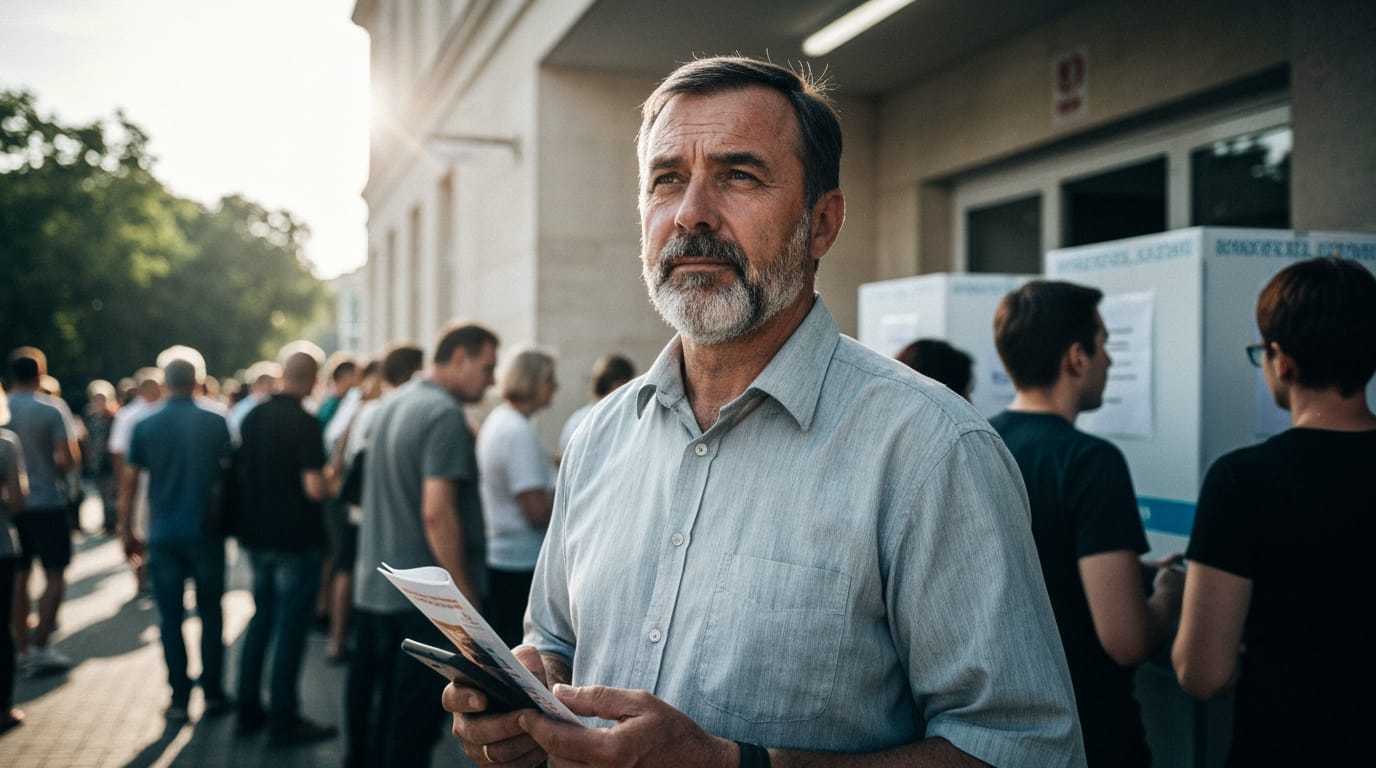
As Hungarians prepare to cast their ballots on April 12th, the nation finds itself at a profound political crossroads, poised to decide its future trajectory: closer integration with the European Union and liberal democratic values, or a continued path toward an authoritarian model that increasingly aligns with Russia. This pivotal election pits long-serving Prime Minister Viktor Orbán against the surging opposition leader Péter Magyar, whose TISZA party has rapidly reshaped the political landscape. The outcome will not only determine Hungary's domestic policy for years to come but also its standing on the international stage, with significant implications for both Brussels and Moscow.
A Decisive Shift or Entrenched Power?
For 16 years, Viktor Orbán and his Fidesz party have dominated Hungarian politics, evolving from a center-right force to a radical right-wing populist movement. His tenure has seen deepening ties with authoritarian regimes, particularly Russia under Vladimir Putin, and a growing distance from Western alliances. Orbán has openly signaled his intention to curtail Western support for Ukraine and further detach Hungary from the European Union, a stance that has drawn criticism from Brussels and other member states. This election, however, presents a formidable challenge to Orbán's established power. Péter Magyar, leading the TISZA party, has emerged as a significant counter-force, pledging to combat pervasive corruption and steer Hungary back towards a decidedly European path. The choice before voters is stark: a continuation of Orbán's nationalistic and eastward-leaning policies or a new direction emphasizing EU alignment and internal reform.
The Weight of Corruption and Economic Grievances
Underpinning the electoral debate are deep-seated concerns over corruption and the nation's economic health. Transparency International, a global watchdog, ranks Hungary alongside Bulgaria as one of the most corrupt nations within the European Union. In response to these concerns and ongoing rule of law issues, the EU has frozen approximately 18 billion euros in funds, contingent upon Hungary enacting meaningful anti-corruption and legal reforms. This financial leverage highlights a key tension between Budapest and Brussels, directly impacting the lives of ordinary Hungarians. The struggling education system, for instance, is a major concern, particularly among young voters. Many citizens grapple with low salaries and high prices, leading to a sense of economic stagnation. First-year teachers, earning roughly €1,000 per month, often live with their parents to manage costs, illustrating the difficult economic realities for many professionals. Péter Magyar's campaign has heavily capitalized on these grievances, presenting his anti-corruption agenda as a critical step toward economic recovery and a more equitable society.
The Ukraine War: A Divisive Campaign Tactic
The ongoing conflict in neighboring Ukraine has become a central, often weaponized, theme in the Hungarian election. Prime Minister Orbán has adopted a strategy of presenting himself as the protector of Hungarian national interests, advocating for non-involvement in the war and maintaining artificially low gas and oil prices. His government's campaign tactics include filling Hungary with billboards that portray EU officials and Ukraine's President Volodymyr Zelensky as "warmongers," suggesting they, along with the opposition, seek to drag Hungary into the conflict. This fear-mongering aims to convince Fidesz supporters that the opposition would send young Hungarians to war, despite the opposition clearly condemning Russian aggression and advocating for closer cooperation with the EU and NATO. This narrative strategically avoids acknowledging the geopolitical complexities while focusing on domestic welfare and a "peace" rhetoric, even as Hungary's position within both the EU and NATO has been weakened. The opposition, in contrast, consistently calls for a clear condemnation of Russian aggression and stronger alignment with the EU.
Shifting Sands: Public Opinion and the Youth Factor
While Fidesz has historically enjoyed robust support, particularly in rural areas where families and older people form a key part of Orbán's base, recent polls indicate a significant shift in public sentiment. For the first time in over a decade, Orbán's Fidesz party is reportedly trailing Péter Magyar's TISZA party in many polls. A considerable segment of the electorate, estimated at up to 29%, remains undecided, suggesting a volatile and unpredictable outcome. This undecided bloc could prove crucial in determining the election's winner, and both campaigns are intensely focused on swaying these voters. A particularly notable dynamic is the strong skepticism towards Orbán among Hungary's younger generation, many of whom have known no other prime minister. Young people in Budapest, in particular, are vocal about their desire for a country that supports individual freedom, increases acceptance, and tackles systemic issues like healthcare and public transport, rather than being "robbed" by corruption. Their desire for change and a future oriented towards European values represents a powerful, emerging force in Hungarian politics.
A Nation on the Brink of Decision
The upcoming parliamentary elections on April 12th are shaping up to be among Hungary's most consequential in decades. The vote transcends typical political contests, fundamentally addressing the nation's identity and its place in a rapidly changing world. With an incumbent leader advocating for a distinct, often isolated, national path and a rising opposition figure championing European integration and internal reform, Hungarians are faced with a choice that will reverberate far beyond their borders. The deep divisions over corruption, economic hardship, and the approach to the war in Ukraine underscore the high stakes of this democratic exercise, promising a defining moment for Hungary's future.


