Belarusian Opposition Leader Maria Kolesnikova Receives Charlemagne Prize After Years of Imprisonment
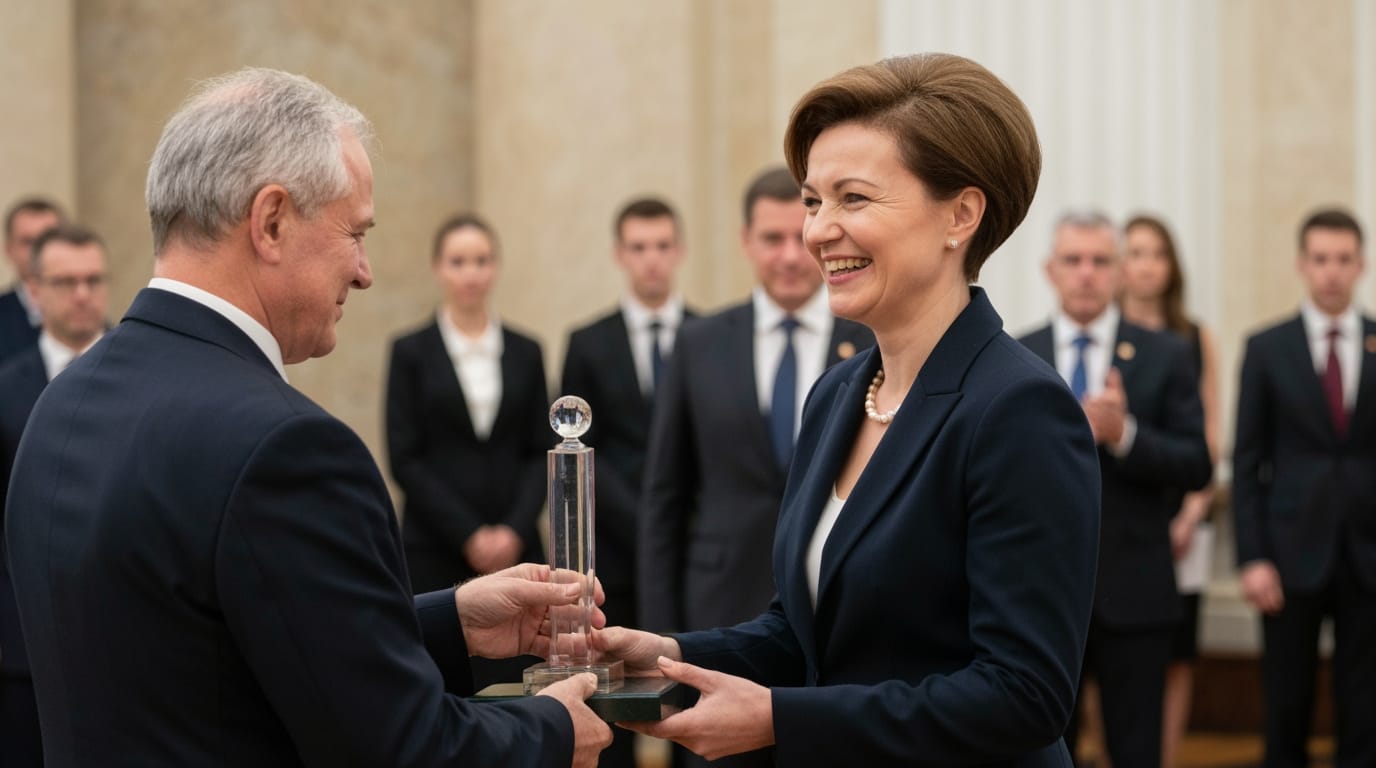
Aachen, Germany – Maria Kolesnikova, the prominent Belarusian opposition figure, today personally accepted the prestigious Charlemagne Prize in Aachen, Germany, a poignant moment four years after the award was first bestowed upon her and two other Belarusian democracy leaders. Her appearance marks a powerful symbol of resilience, coming just months after her release from an 11-year prison sentence in Belarus, where she was held for her unwavering commitment to democratic principles. The ceremony served as both a celebration of her courage and a stark reminder of the ongoing struggle for freedom in her homeland.
The International Charlemagne Prize, one of Europe’s most esteemed accolades, recognizes exceptional contributions to European unification and the promotion of its core values. Kolesnikova, alongside exiled opposition leader Sviatlana Tsikhanouskaya and Veronika Tsepkalo, was named a recipient in 2022 for their "courageous and encouraging efforts to fight against brutal state despotism, torture, oppression and the violation of basic human rights by an authoritarian regime – and to campaign for democracy, freedom and the rule of law". While Tsikhanouskaya and Tsepkalo were able to receive their awards in person, Kolesnikova remained incarcerated, with her sister, Tatsiana Khomich, accepting the prize on her behalf at the time. Her presence now in Aachen underscores the international community's continued support for the Belarusian democratic movement.
A Symbol of Defiance Against Authoritarianism
Kolesnikova’s journey to becoming a global icon of resistance began in the run-up to Belarus's disputed August 2020 presidential election. A professional flutist, she joined the campaign of opposition candidate Viktar Babaryka, quickly emerging as a dynamic and charismatic figure. When Babaryka was arrested, Kolesnikova formed a potent trio with Sviatlana Tsikhanouskaya and Veronika Tsepkalo, galvanizing unprecedented mass protests across Belarus against the long-standing rule of Alexander Lukashenko. The protests, ignited by widespread allegations of election fraud, drew hundreds of thousands to the streets, demanding an end to what many perceived as an authoritarian regime.
Her most defiant act came in September 2020 when Belarusian security forces attempted to forcibly deport her to Ukraine. In a move that captured international attention and cemented her status as a symbol of unyielding resistance, Kolesnikova tore up her passport at the border, effectively preventing her expulsion and ensuring her return to Belarus, where she was immediately arrested. This act of defiance epitomized the spirit of a population yearning for change in the face of brutal repression.
Imprisonment and International Condemnation
Following her dramatic refusal to be exiled, Kolesnikova was detained and subsequently faced a closed-door trial on politically motivated charges. On September 6, 2021, she was sentenced to 11 years in a penal colony, found guilty of "threatening the national security" of Belarus, founding an extremist group, and conspiring to "seize power in an unconstitutional way". Her lawyer, Maxim Znak, received a 10-year sentence in the same trial. International human rights organizations, including Amnesty International, swiftly condemned her conviction, recognizing her as a prisoner of conscience and demanding her immediate release.
While imprisoned, Kolesnikova received numerous international accolades, including the International Women of Courage Award in 2021, the Lew-Kopelew-Preis, the Stuttgarter Friedenspreis, and the Vaclav Havel Human Rights Award. These awards, accepted by proxies, consistently highlighted the global recognition of her sacrifice and the injustice of her incarceration. Reports from her time in prison indicated deteriorating health, including a serious illness and surgery for a perforated ulcer in November 2022, further raising international concern for her well-being.
Release and the Path Forward for Belarus
Maria Kolesnikova was released from prison in December 2025 and deported from Belarus. Her release, along with that of other political prisoners, was reportedly part of a deal with Washington aimed at improving ties and lifting sanctions on Belarusian exports. This development, while welcomed, occurs within a broader context of ongoing severe repression by the Lukashenko regime. Human rights groups estimate that over 1,300 political prisoners remain behind bars in Belarus, with new arrests continuing. Reports detail ill-treatment, torture, limited access to legal counsel and family, and inadequate healthcare for those incarcerated.
The Belarusian authorities have systematically cracked down on civil society, independent media, and any form of political opposition since 2020, leading to thousands of detentions, forced exiles, and the misuse of "anti-extremism" and "anti-terrorism" laws. Despite the release of some prisoners, international observers remain deeply concerned by the continued persecution and the dire human rights situation.
A Message of Hope and Continued Solidarity
Kolesnikova's ability to personally accept the Charlemagne Prize today sends a potent message of hope and defiance to Belarusians both within and outside the country. Her journey from the confines of a penal colony to the European stage in Aachen underscores the enduring power of democratic ideals and the international community's commitment to those who champion them. The Charlemagne Prize itself, established to honor those who foster European unity, gains added significance when awarded to individuals fighting for the foundational European values of democracy and human rights in countries bordering the European Union.
While her physical freedom is a victory, the challenges facing Belarus remain immense. The event in Aachen serves not only to recognize Kolesnikova's past sacrifices but also to renew calls for the release of all political prisoners in Belarus and for sustained international pressure on the Lukashenko regime to respect fundamental human rights. Her presence is a vivid reminder that the struggle for a free and democratic Belarus, though arduous, continues to inspire solidarity and hope across Europe and beyond.