U.S. Flag Flies Over Caracas Embassy After Seven-Year Hiatus, Signaling Monumental Diplomatic Shift
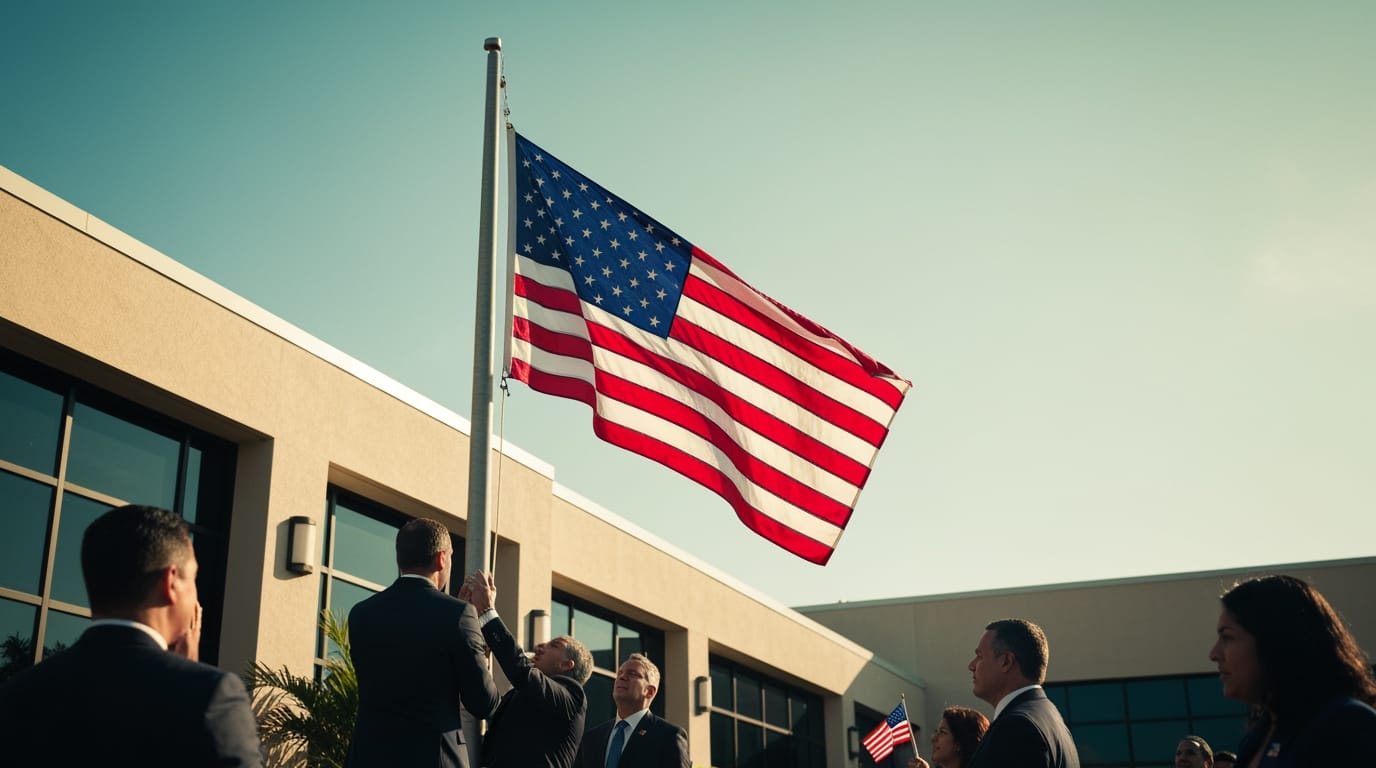
CARACAS, VENEZUELA – The American flag was raised over the United States Embassy in Caracas on Saturday, March 14, 2026, for the first time in seven years, marking a dramatic turning point in the long-strained relations between the two nations. The symbolic gesture follows a rapid and unexpected diplomatic thaw initiated by the U.S. government after the recent capture of former Venezuelan President Nicolás Maduro and signals a new, complex era for the oil-rich South American country. The return of the Stars and Stripes to the diplomatic compound, precisely seven years after its removal, underscores a significant re-engagement by Washington in Venezuelan affairs and has been met with a mix of optimism and apprehension both domestically and internationally.
A Symbol Returns: The Flag Raising and Local Reaction
On a poignant Saturday morning, the U.S. Charge d'Affaires Laura Dogu, the most senior U.S. diplomat in Venezuela, led a small team in raising the American flag over the embassy in Caracas. "A new era has begun. We're staying with Venezuela," Dogu declared in a post on X, accompanied by a photograph of the flag unfurling against the Caracas skyline. The moment was charged with symbolism, echoing the flag's removal on March 14, 2019, amidst a complete breakdown in diplomatic ties.
The reopening of the embassy drew immediate attention from local residents, with many expressing cautious optimism for the future. Caracas resident Luz Verónica López articulated a common sentiment, stating, "It's a good thing, really, what a joy. Other countries must come back too because that's what we need; progress, to move forward with good relations with the rest of the world, as it should be." Another resident, Alessandro Di Benedetto, observed a positive atmosphere among those witnessing the event, noting, "I found several people here surprised and happy because today they raised the U.S. flag at the embassy. This is positive; this is another step." These reactions highlight a deep-seated hope among some Venezuelans for renewed stability and international re-integration after years of isolation and economic hardship.
Seven Years in the Diplomatic Wilderness: The Context of Closure
The journey to this weekend's flag-raising has been protracted and turbulent, marked by nearly two decades of escalating tensions and a seven-year diplomatic void. U.S.-Venezuela relations began a significant downturn with the rise of Hugo Chávez in 1999, who campaigned on an anti-establishment and anti-U.S. platform. Tensions intensified through the 2000s, with accusations of U.S. interference and Venezuelan claims of authoritarian rule.
The diplomatic crisis reached its nadir in 2019, under the administration of Nicolás Maduro, who succeeded Chávez in 2013. After Maduro's controversial re-election in 2018, which was widely deemed flawed, the U.S. refused to recognize his legitimacy. In January 2019, U.S. President Donald Trump publicly supported opposition leader Juan Guaidó, who declared himself interim president. In response, Maduro announced on January 23, 2019, that Venezuela was severing "diplomatic and political" ties with the U.S. and gave American diplomats 72 hours to leave the country.
Subsequently, on March 11, 2019, the U.S. Department of State announced the temporary suspension of operations at its embassy in Caracas and the withdrawal of all diplomatic personnel, citing the deteriorating situation. The U.S. then established a "Venezuela Affairs Unit" within its embassy in Bogotá, Colombia, to handle consular services and maintain a semblance of diplomatic engagement from afar. This period was characterized by a U.S. travel advisory recommending against all travel to Venezuela due to high risks including wrongful detention, crime, and civil unrest, further cementing the diplomatic freeze.
A Dramatic Thaw: Maduro's Capture Paves the Way
The landscape of U.S.-Venezuela relations underwent a seismic shift in January 2026. A U.S. special forces raid resulted in the capture of former President Nicolás Maduro and his wife, who were subsequently flown to New York to face drug trafficking charges. This audacious operation marked an abrupt end to Maduro's contentious rule and cleared the path for a rapid re-evaluation of diplomatic strategy by the Trump administration.
Following Maduro's capture, the U.S. government recognized Delcy Rodríguez, formerly Maduro's deputy, as the interim leader of Venezuela. President Trump's administration quickly moved to restore diplomatic ties, with U.S. Interior Secretary Doug Burgum visiting Caracas in early March 2026. These talks culminated in an announcement on March 5, 2026, that the United States and Venezuela had agreed to re-establish diplomatic and consular relations. The U.S. State Department articulated that this step was intended to "facilitate our joint efforts to promote stability, support economic recovery, and advance political reconciliation in Venezuela."
The reopening of the embassy and the restoration of diplomatic ties are intrinsically linked to renewed U.S. economic interests in Venezuela's vast natural resources. President Trump's administration has openly stated its intention to effectively run Venezuela and control its resources after Maduro's toppling. Trump and interim leader Delcy Rodríguez have signed energy and mining agreements, opening the door for private investment and U.S. access to what are globally recognized as the world's largest oil reserves. In recent months, the U.S. has eased a seven-year-old oil embargo on Venezuela and issued licenses allowing certain multinational companies to operate within the country under specific conditions.
A Complex Path Forward: Implications and Challenges
The reopening of the U.S. Embassy and the restoration of full diplomatic relations represent a significant, albeit complex, stride toward a potential new chapter for Venezuela. The U.S. State Department has stated that its engagement is "focused on helping the Venezuelan people move forward through a phased process that creates the conditions for a peaceful transition to a democratically elected government." This suggests that while diplomatic channels are re-established, the long-term goal of fostering democratic institutions remains paramount for Washington.
However, the initiative has not been without its critics. Significant portions of Venezuelan society and the political establishment remain wary of increased American influence, particularly in the critical oil industry. Some criticize President Trump's direct intervention leading to Maduro's forceful removal and detention, highlighting concerns about sovereignty and international law. Yet, the re-establishment of diplomatic engagement also brings hope for improved consular services and potential avenues for Venezuelan citizens seeking visas or assistance, which have been unavailable since 2019.
The road ahead is expected to be challenging. While the U.S. and Venezuela have agreed to a new phase of "constructive dialogue, based on mutual respect, the sovereign equality of states and cooperation," the deeply entrenched political and economic issues in Venezuela will require sustained effort. The prospect of future elections and the potential return of opposition figures like Nobel Peace Prize laureate María Corina Machado are critical elements of the ongoing political reconciliation.
The raising of the American flag in Caracas is more than a ceremonial act; it symbolizes a profound recalibration of international relations, born from years of estrangement and culminating in a dramatic shift of power. While the immediate future of Venezuela remains intricately linked to these new diplomatic dynamics, the international community watches closely as the U.S. and its new Venezuelan counterparts navigate a path toward stability, economic recovery, and potentially, a more democratic future.