Benin's Failed Coup Exposes Fragile Stability Amidst Democratic Erosion
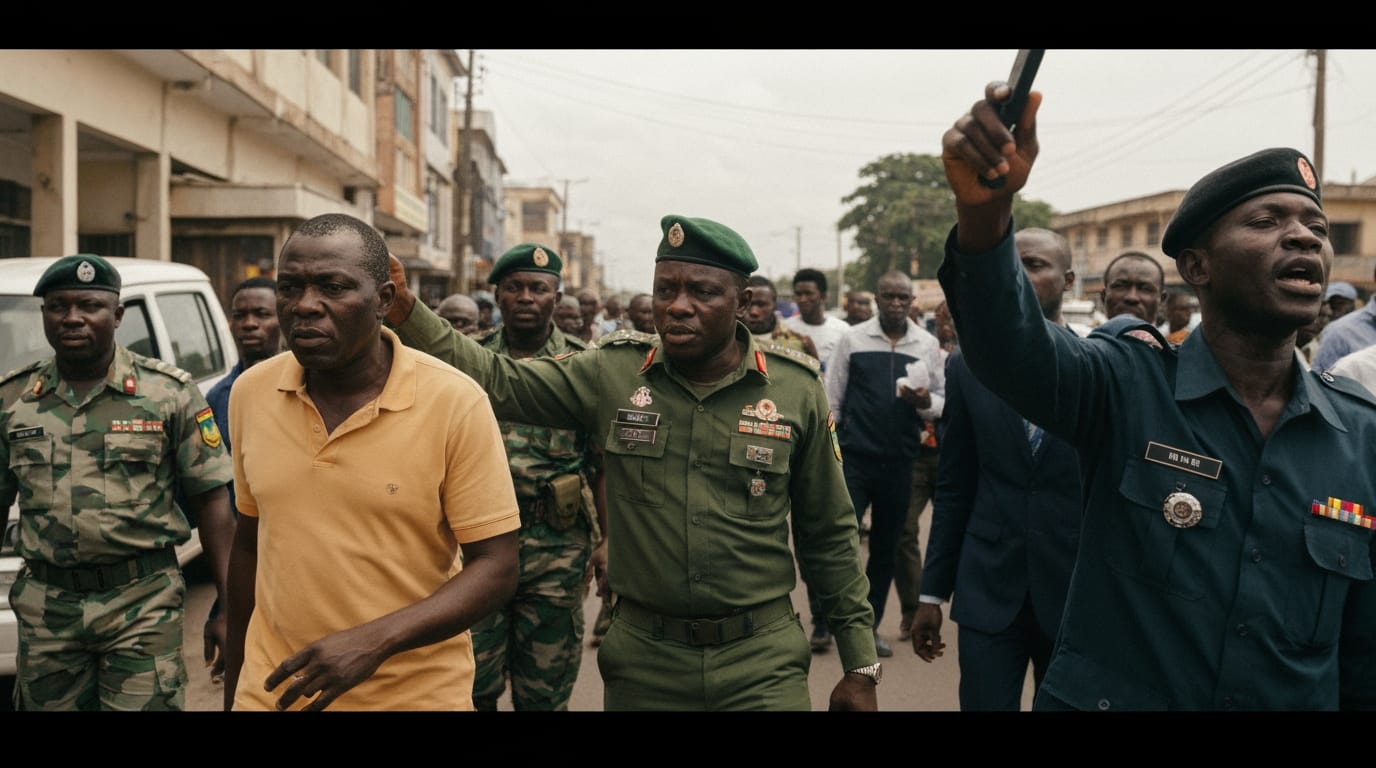
COTONOU, Benin – A swift but dramatic military coup attempt on Sunday, December 7, 2025, shook Benin, a nation long considered a bastion of democratic stability in a volatile West African region. While government forces, backed by regional allies, quickly thwarted the plot, the incident has laid bare deep-seated anxieties about the country's political trajectory and its vulnerability to the rising tide of military takeovers sweeping the continent. The brief seizure of state media and subsequent clashes revealed a nation grappling with the complex interplay of democratic backsliding, economic discontent, and mounting security threats.
The morning of December 7 saw a group of soldiers, identifying themselves as the "Military Committee for Refoundation," appear on Benin's state television. They announced the dissolution of the government, the removal of President Patrice Talon, the suspension of state institutions, and the closure of the country's borders. Gunfire was reported near the presidential palace in Cotonou, the economic hub, and strategic installations were seized. Lieutenant Colonel Pascal Tigri was named as the leader of the mutiny. However, the attempt was short-lived. By midday, Interior Minister Alassane Seidou confirmed the plot had been "foiled" by loyal government forces, praising their commitment to the republic. President Talon later appeared on state television, assuring citizens that the situation was "totally under control" and vowing that the "treachery will not go unpunished". At least 14 individuals have been arrested in connection with the coup attempt, though Lt. Col. Tigri's whereabouts remain unknown. Tragically, the incident resulted in casualties on both sides, including the wife of President Talon's military chief-of-staff, General Bertin Bada, who was also fatally wounded.
A Region on Edge, Benin's Unexpected Jolt
The swift suppression of the coup was aided by prompt regional intervention. The Economic Community of West African States (ECOWAS) condemned the unconstitutional move and ordered the immediate deployment of its standby force, including troops from Nigeria, Sierra Leone, Ivory Coast, and Ghana, to help preserve constitutional order in Benin. Nigeria's President Bola Tinubu, responding to requests from Benin, further deployed air force fighter jets to secure the country's airspace. This rapid response underscores the growing alarm within ECOWAS over the recent surge in military takeovers across West Africa. Benin's failed coup attempt follows a "grim pattern" of instability in a region that has witnessed nine successful power grabs since 2020, affecting nations like Mali, Burkina Faso, Niger, Guinea, Chad, and Gabon. For decades, Benin had largely stood apart, enjoying a reputation as a stable democracy since its last successful coup in 1972. The recent events serve as a stark reminder that even seemingly stable nations can be vulnerable when political grievances and regional insecurity converge.
Undercurrents of Discontent: Beyond the Immediate Spark
While the mutineers cited a range of grievances to justify their actions, including deteriorating security in northern Benin, neglect of fallen military personnel and their families, cuts in healthcare, rising taxes, and the government's alleged indifference, these claims resonate with broader concerns that have been simmering beneath the surface of Beninese politics. The northern regions of Benin have indeed faced escalating security threats from jihadist groups spilling over from neighboring Burkina Faso and Niger, leading to significant military casualties and an increase in violence against civilians. The deadliest attack on Benin's armed forces occurred in April 2025, claiming the lives of 54 soldiers.
However, the coup attempt also casts a harsh light on growing concerns regarding democratic backsliding under President Patrice Talon's administration. Since taking office in 2016, Benin, once hailed as a "beacon of democracy," has experienced a "growing concentration of power" and a "decline in democratic credentials". Critics point to reforms that have severely constrained political competition, such as changes to electoral laws that make it difficult for opposition candidates to run for office. Voter turnout plummeted in the 2019 legislative elections and the 2021 presidential election, which saw limited challengers and reports of irregularities. Opposition figures have also faced politically motivated charges and prolonged prison sentences, further narrowing the political space. Although the January 2023 legislative elections allowed some opposition representation, the ruling coalition still maintains a strong majority. The recent extension of the presidential term from five to seven years, despite retaining a two-term limit, has also raised eyebrows across the region.
Economic Progress Amidst Political Erosion
Paradoxically, President Talon's tenure has been marked by significant economic reforms and an improved fiscal landscape. His administration has focused on fiscal discipline, diversifying growth drivers, and attracting investment, leading to an increase in government revenue and improvements in infrastructure and public services. The country has seen progress in anti-corruption efforts and its sovereign ratings have improved. However, this economic progress has often been juxtaposed with a tightening grip on political freedoms, leading to a complex narrative of development at the cost of democratic vibrancy. The failed coup, however, has already had economic repercussions, with Benin's dollar bonds experiencing a sharp drop, signaling investor nervousness about the nation's political future. The stability of Benin is also crucial for regional trade, particularly for Nigeria, as Cotonou Port serves as a vital transit hub for goods, and any prolonged instability could disrupt supply chains and affect markets in neighboring countries.
Looking Ahead: The Path to Renewed Stability
The failed coup attempt in Benin serves as a critical juncture for the nation. While the immediate threat has been neutralized, the underlying issues that fueled the mutiny and contributed to the erosion of democratic norms demand urgent attention. The incident underscores the fragility of stability in a region prone to political upheavals and highlights the delicate balance between economic development and political inclusiveness. As Benin navigates the aftermath, the effectiveness of President Talon's government in addressing the grievances cited by the mutineers, along with a renewed commitment to open democratic practices, will be paramount. The international community, particularly ECOWAS, will likely maintain close scrutiny, emphasizing the imperative of upholding constitutional order and fostering genuine democratic governance to prevent further descent into instability in a region already stretched thin by ongoing crises. The coming months, particularly with presidential elections slated for April 2026, will be crucial in determining whether Benin can reclaim its reputation as a stable democracy or if this failed coup marks a deeper turn towards uncertainty.


