Serbia Leads Western Balkans in Escalating Arms Imports, Raising Regional Stability Concerns
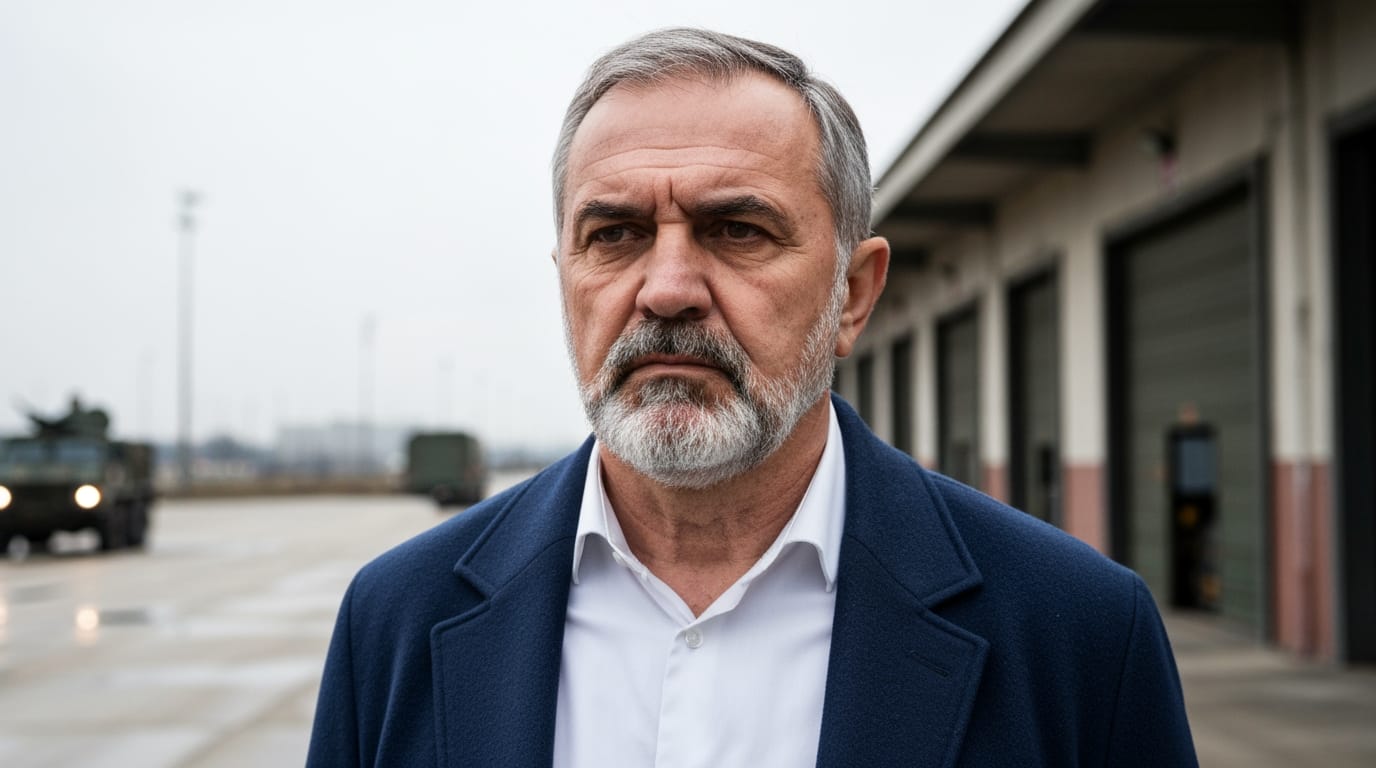
BELGRADE — Serbia has emerged as the dominant force in military acquisitions within the Western Balkans, significantly outpacing its neighbors in arms imports and defense spending, according to recent analyses. This intensified militarization, driven by a complex interplay of modernization ambitions, geopolitical maneuvering, and heightened regional tensions, has ignited discussions about a potential arms race and the delicate balance of power in a historically volatile region.
For the past five years, Serbia has recorded the largest military expenditures across the Western Balkans, allocating 2.6 percent of its Gross Domestic Product (GDP) to its armed forces, according to data from the Stockholm International Peace Research Institute (SIPRI). This figure stands markedly higher than other states in the region, such as North Macedonia (2.1%), Albania (2.0%), Montenegro (1.8%), Kosovo (1.5%), and Bosnia and Herzegovina (0.7%). The sheer scale of Serbia's military investment is further underscored by its 2024 military budget of $2.2 billion, nearly five times that of NATO member Albania. On a per capita basis in 2024, Serbia's spending reached $343.7, dwarfing figures like Bosnia and Herzegovina's $67 per capita.
A Steep Ascent in Military Might
Serbia's surge in arms imports is not a recent phenomenon but rather a trend that has accelerated significantly over the past decade. The country's share in global arms imports increased by a staggering 195 percent between the 2016-2020 and 2021-2025 periods. This places Serbia 37th globally in imports of complex weapons systems, notably ahead of some European Union members like Croatia and Bulgaria. In contrast, other Western Balkan nations lag considerably, with Albania ranking 103rd, Kosovo 118th, North Macedonia 138th, Bosnia and Herzegovina 144th, and Montenegro 152nd among global arms importers. The real value of Serbia's military budget from 2020 to 2024 was approximately six times greater than Albania's, the region's second-largest spender.
The country's military modernization efforts aim to replace legacy weaponry inherited from the former Yugoslav People's Army (JNA), with leaders also acknowledging the political and symbolic value attached to a stronger military. Serbia's approach to military development has been characterized by selective modernization and procurement diversification, positioning it as an early mover in the region's military build-up. This strategy involves acquiring weaponry from a diverse array of international suppliers, including China, France, and Russia, a balancing act that contrasts with its neighbors who predominantly rely on NATO member states for cooperation and arms supplies. China has been Serbia's main supplier of complex weapons systems over the past five years, accounting for 61% of imports, followed by France at 12% and Russia at 7%.
Geopolitical Drivers and Regional Ripple Effects
Several factors underpin Serbia's robust arms acquisition strategy. Tensions with Kosovo are frequently cited as a significant driver, with a stronger arsenal viewed as a strategic advantage in negotiations with international actors. Serbian President Aleksandar Vučić has explicitly stated that military build-up is a response to perceived threats, including the United States' plans to sell Javelin anti-tank missiles to Kosovo and a defense cooperation agreement signed between Albania, Croatia, and Kosovo. Official narratives from Belgrade often frame this modernization as a necessary response to a deteriorating regional security landscape, including NATO's expansion in Southeast Europe and Kosovo's alignment with Western security structures.
While officially militarily neutral, Serbia participates in NATO's "Partnership for Peace" program, navigating a complex geopolitical landscape that involves maintaining ties with both Eastern and Western powers. This balancing act, however, contributes to a broader regional security dilemma where defensive measures by one state can inadvertently heighten insecurity for others.
The increased military spending by Serbia has not gone unnoticed by its neighbors. Other Western Balkan states, particularly NATO members like Albania, Montenegro, and North Macedonia, are also ramping up their military capabilities. Their modernization efforts, however, are largely geared towards meeting alliance capability and interoperability benchmarks. For example, Albania has accelerated efforts to meet NATO's target of investing 2% of GDP annually in defense, prioritizing air defense, artillery modernization, and mechanized units, partly influenced by Serbia's growing air and missile capacity. Croatia, also a NATO member, has seen its defense budget grow, including significant acquisitions like Dassault Rafale fighter jets.
Broader Implications for Stability
The cumulative effect of these developments is a region experiencing a noticeable military build-up. While experts suggest this does not necessarily portend an imminent war, it does create a complex environment characterized by uneven capabilities and competing political narratives. The "arms race" narrative, often fueled by leaders in both Serbia and Croatia, serves to advance broader foreign policy goals and improve domestic political standing, even if the prospect of conflict is not realistic.
Serbia's robust domestic defense industry also plays a significant role in its military posture. The country is not only a major importer but also a considerable exporter of arms and ammunition, leveraging this capacity for economic growth and diplomatic influence. There are over 200 defense companies in Serbia, most of which are state-owned, producing a wide variety of weaponry. This export activity has, at times, led to diplomatic complexities, such as reports of Serbian-manufactured munitions appearing in Ukraine through intermediaries, causing tension with traditional ally Russia.
In conclusion, Serbia's leading position in arms imports and military spending within the Western Balkans is a defining characteristic of the region's current security landscape. Driven by a combination of strategic modernization, responses to perceived threats, and a desire to assert regional influence, this trend contributes to a shifting balance of power. While neighboring countries are also modernizing their forces, particularly those aligned with NATO, the disparity in the scale and nature of Serbia's acquisitions raises legitimate questions about regional stability and the potential for a new security dynamic in a corner of Europe acutely sensitive to military shifts. Maintaining dialogue and diplomacy remains crucial to ensure that the strengthening of defense capacities contributes to a more stable and secure environment rather than escalating tensions.


