EU Navigates Treacherous Waters in Budget Negotiations Amid Competing Demands
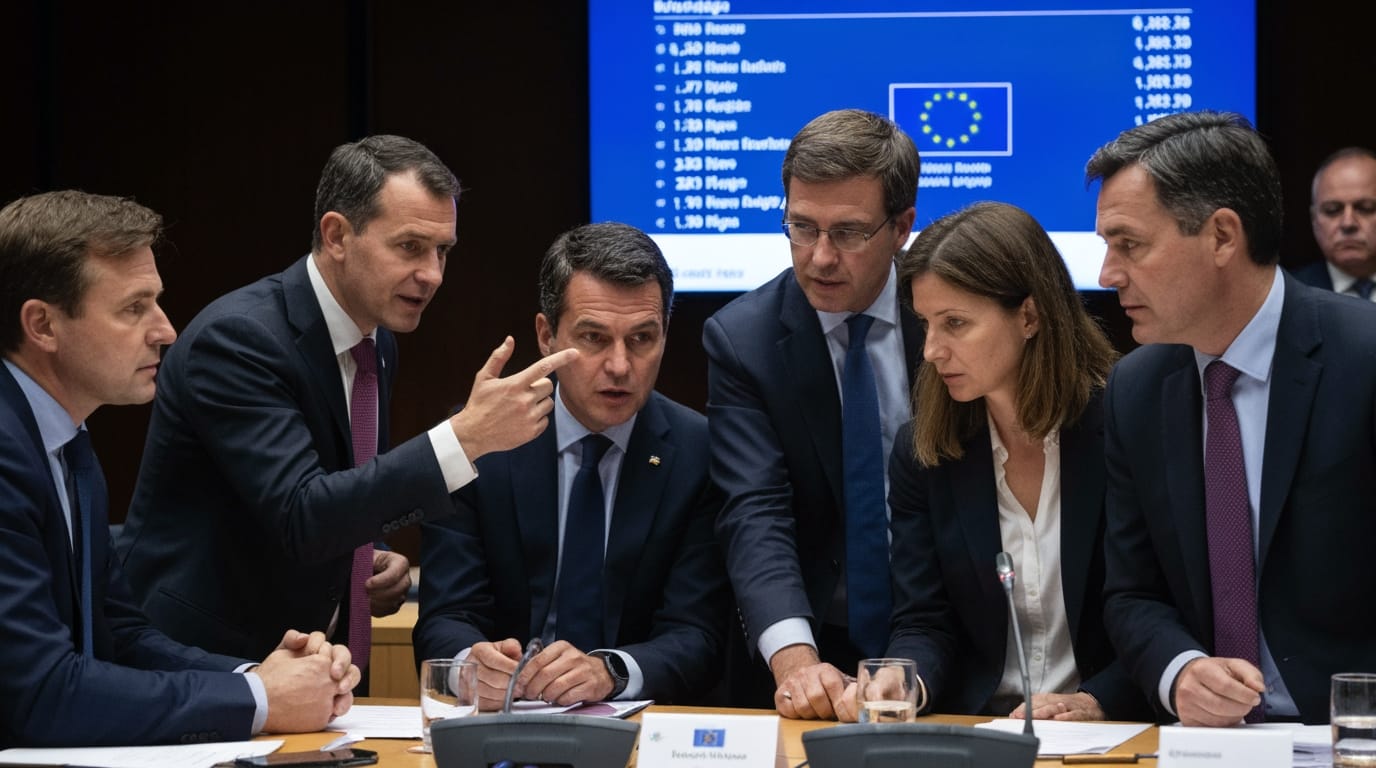
Brussels is bracing for what promises to be one of its most challenging fiscal debates in recent memory as the European Union grapples with deep divisions over its next long-term budget, the Multiannual Financial Framework (MFF) for 2028-2034. With a proposed figure nearing €2 trillion, the negotiations are far from a mere accounting exercise; they represent a fundamental struggle over the bloc's strategic direction, economic future, and its ability to respond to an increasingly complex global landscape. From the overall size of the financial envelope to the delicate balance between entrenched spending priorities and emerging crises, member states and institutions are locked in a high-stakes standoff that will define the EU for the next decade.
The Looming Fiscal Battle: Size and Sources of the Next EU Budget
At the heart of the budget impasse lies the fundamental question of its overall size and how it will be financed. The European Commission has put forth a proposal for the 2028-2034 MFF amounting to nearly €2 trillion, which translates to approximately 1.26% of the EU's Gross National Income (GNI) on average. However, this figure has immediately met with resistance from different quarters. The European Parliament, seeking a more ambitious budget commensurate with the EU's growing responsibilities, has advocated for a higher threshold of around 1.27% of GNI, notably urging that the significant costs associated with repaying the NextGenerationEU (NGEU) recovery fund debt be excluded from these ceilings.
Conversely, a coalition of fiscally conservative member states, often dubbed the "frugal camp"—including the Netherlands, Denmark, Sweden, Finland, Ireland, Austria, and Germany—views the proposed €2 trillion as excessive. These nations traditionally advocate for a leaner budget, wary of increased national contributions. Their concerns are amplified by warnings from the European Court of Auditors, which has highlighted the potential for a "significant budget shortfall" in the absence of new revenue streams, a scenario that could force member states to increase their payments by as much as 81%. This underscores a critical dilemma: the EU is debating what to spend on without a clear, universally accepted plan for how to pay for it. The repayment of the NGEU debt alone is projected to consume roughly €30 billion annually, potentially absorbing 20% of the future budget, leading MEPs to stress that this burden should not compromise funding for other vital EU priorities.
Clash of Priorities: Old Loyalties vs. New Imperatives
Beyond the sheer volume of money, intense disagreements persist over where the funds should be allocated. A perennial tension exists between maintaining robust funding for established policies like the Common Agricultural Policy (CAP) and cohesion funds—which aim to reduce economic disparities across regions—and channeling resources towards emerging strategic imperatives. Many members of the European Parliament and several member states have unequivocally stated that funding for agriculture, fisheries, and regional development should remain protected and not be diminished to finance new objectives. Some member states are actively campaigning for increased investment in regional development, advocating for a distinct and robust budget with a region-based allocation methodology.
However, the geopolitical shifts and new challenges facing Europe necessitate substantial investments in areas such as defense, industrial competitiveness, the green and digital transitions, and migration management. There is a consensus on the need to bolster Europe's strategic autonomy and competitiveness, especially in critical technologies and defense, following the guidelines set out in the Draghi report. The challenge lies in how to fund these new ambitions without undermining the bedrock of EU solidarity policies. The European Commission's proposal to increase the use of performance-based financing and to shift towards more direct management of funds by EU institutions, thereby reducing pre-allocated funds for cohesion and agriculture, has been met with considerable skepticism. Critics express concerns that such centralization could weaken financial oversight, reduce transparency, and potentially sideline regional priorities, with fourteen member states explicitly opposing these plans and advocating for a region-based allocation approach.
The Quest for Adaptability: Flexibility and Oversight
The current Multiannual Financial Framework (2021-2027) demonstrated a significant vulnerability: its inherent inflexibility in responding to unforeseen crises. Events like the COVID-19 pandemic, the war in Ukraine, and the subsequent energy crisis exposed the budget's struggle to adapt quickly to new, pressing demands. This has spurred calls for greater flexibility in the next MFF, allowing the EU to act and react more swiftly when circumstances change or new policy priorities emerge.
Nevertheless, this push for flexibility is intertwined with concerns about financial oversight and accountability. The European Court of Auditors has cautioned that sweeping changes to the EU's long-term budget risk weakening financial oversight, emphasizing that many proposed changes offer no guarantee of improved spending outcomes. The shift towards performance-based budgeting, while theoretically appealing for its focus on results, presents its own set of implementation challenges and potential for hindering proper auditing. Ensuring that a more adaptable budget does not come at the expense of transparency and robust democratic scrutiny remains a critical balancing act for negotiators.
Political Minefield: Unanimity, Rule of Law, and Enlargement
Negotiating the EU budget is notoriously a "long and tough" political battle, often characterized by member states prioritizing domestic audiences and national interests. The requirement for unanimity among all member states in the Council, coupled with the European Parliament's right to consent to the MFF, makes securing an agreement an intricate and often protracted political process. This dynamic allows individual nations to wield significant influence, sometimes leading to prolonged stalemates.
Adding further layers of complexity are contentious issues such as the "rule of law" conditionality, which links access to EU funds with adherence to fundamental European values. This mechanism, designed to safeguard democratic principles, remains a point of contention, particularly with some member states. Looking ahead, the prospect of EU enlargement to include new countries like Ukraine, Moldova, and those in the Western Balkans presents a monumental challenge. Integrating these nations will necessitate a fundamental reshaping of the budget's structure and priorities, potentially requiring even greater financial resources and a re-evaluation of existing allocation mechanisms. These future enlargements, while representing a strategic imperative for the EU, will undoubtedly intensify the political pressure and financial strain on the bloc's budget.
The ongoing budget negotiations underscore the European Union's perpetual quest to reconcile diverse national interests with shared European ambitions. The upcoming Multiannual Financial Framework is not merely a financial plan but a political declaration of intent, signaling the EU's capacity for unity and its ability to address the multifaceted challenges of the 21st century. Reaching a consensus will demand significant political will and a spirit of compromise from all parties, as the decisions made today will profoundly shape the lives of European citizens and the Union's standing on the global stage for years to come.


