Berlin Airport Grounded: Warning Strike Halts All Passenger Flights, Stranding 57,000 Travelers
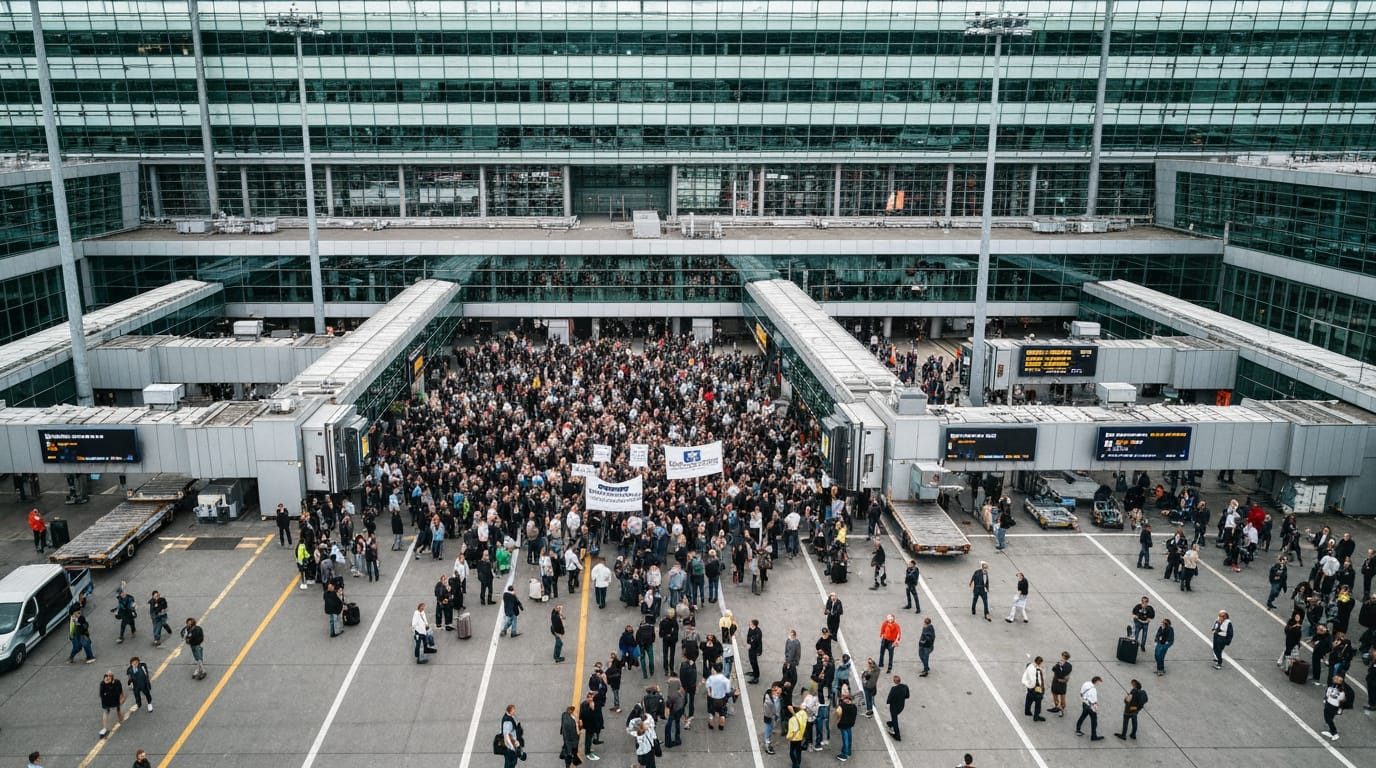
BERLIN – Berlin Brandenburg Airport (BER) came to a complete standstill on Wednesday as a widespread warning strike called by the powerful Ver.di trade union forced the cancellation of all scheduled passenger flights, disrupting the travel plans of an estimated 57,000 passengers. The industrial action, stemming from an unresolved pay dispute, plunged one of Germany's key aviation hubs into chaos, highlighting escalating labor tensions within the nation's transport sector.
The comprehensive shutdown, which began early Wednesday morning, saw 445 departures and arrivals grounded throughout the day. Airport operator Flughafen Berlin Brandenburg GmbH (FBB) confirmed the suspension of all regular passenger flight operations after the union called upon its employees to participate in the walkout. The strike involves approximately 2,000 airport staff members, including critical personnel from the airport fire department, air traffic control, and terminal management – roles deemed essential for the safe and efficient functioning of any major airport. Without these vital services, passenger flights cannot operate, leading to the unprecedented halt in air travel from the German capital.
The Deep Roots of Discontent: A Standoff Over Wages
At the heart of Wednesday's widespread disruption lies an acrimonious pay dispute between the Ver.di union and the airport operator. The union has characterized the strike as a "direct consequence of the employers' refusal to present a negotiable offer" during ongoing collective bargaining negotiations. Ver.di is advocating for significant wage increases for BER employees under a proposed 12-month agreement, specifically seeking a 6 percent pay rise. Conversely, the employer's initial offer, presented during the second round of negotiations last week, reportedly amounted to a wage increase of approximately 1 percent per year, with a proposed contract extending until the end of 2028. The substantial gap between these proposals has led to a deadlock, culminating in the current industrial action. This strike marks the first such action in the current round of negotiations at Berlin airport, signaling a hardening of positions on both sides.
A Cascade of Disruptions: Beyond the Terminal Walls
The impact of the BER strike extends far beyond the immediate inconvenience for stranded travelers, sending ripple effects across various sectors. As a major aviation hub serving over 25 million annual passengers, the airport's paralysis has significant economic and logistical ramifications. Airlines operating out of BER are grappling with substantial operational backlogs, challenges in repositioning aircraft, and a likely surge in compensation claims from affected passengers.
Beyond the aviation industry itself, the strike is inflicting collateral damage on Berlin's tourism and hospitality sectors, which rely heavily on air connectivity. Businesses dependent on air freight are also facing disruptions to their supply chains, particularly for time-sensitive shipments. Even surface transportation networks within the wider Berlin metropolitan area, including the S-Bahn and bus services, are reportedly operating under increased strain as travelers seek alternative routes or attempt to navigate the altered urban landscape. Risk analysts have assessed the severity of the disruption as "moderate-to-high," driven by the complete operational shutdown, the substantial passenger backlog, and the strain placed on alternative transport systems. While the primary disruption is expected to last between 12 to 36 hours, residual impacts on flights and schedules could persist for up to 72 hours, as airlines work to restore normal operations.
Passenger Plight Amidst Broader Labor Unrest
For the tens of thousands of passengers affected, the strike represents a day of frustration, uncertainty, and rearranged plans. Many arrived at the airport only to find their flights canceled, while others received last-minute notifications from airlines. The airport operator has advised passengers to directly contact their respective airlines or tour operators for information on rebooking and alternative travel options. The situation at BER is not an isolated incident within Germany's transport landscape. Just last week, passengers of Lufthansa, Germany's flagship carrier, experienced significant delays and cancellations due to a 48-hour pilot strike. That action, called by the Vereinigung Cockpit (VC) union, stemmed from a separate dispute over pension arrangements and remuneration issues, affecting flights across German airports. This pattern of industrial action underscores a period of heightened labor disputes across Germany's critical infrastructure, as unions push for better terms amid economic pressures.
An Unresolved Future for Berlin's Air Traffic
As Wednesday draws to a close, Berlin Brandenburg Airport anticipates resuming normal operations on Thursday, though German news agency dpa reported that some disruption is likely to continue. However, the fundamental pay dispute remains unresolved, with no immediate indication of a breakthrough in negotiations between Ver.di and Flughafen Berlin Brandenburg GmbH. This warning strike, while limited to a single day, serves as a potent reminder of the fragility of modern air travel in the face of labor disputes. The ability of essential airport staff to bring an entire aviation hub to a standstill underscores their critical role and bargaining power. Travelers and businesses alike will now closely watch for further developments, hoping for a swift resolution to prevent future disruptions and restore stability to Berlin's vital air gateway. The lingering question remains whether the employer's next offer will meet the union's demands, or if Berlin will face further episodes of grounded flights in the weeks and months to come.