Pakistan and Afghan Taliban Agree to Temporary Ceasefire for Eid, Seeking De-escalation Amid Rising Tensions
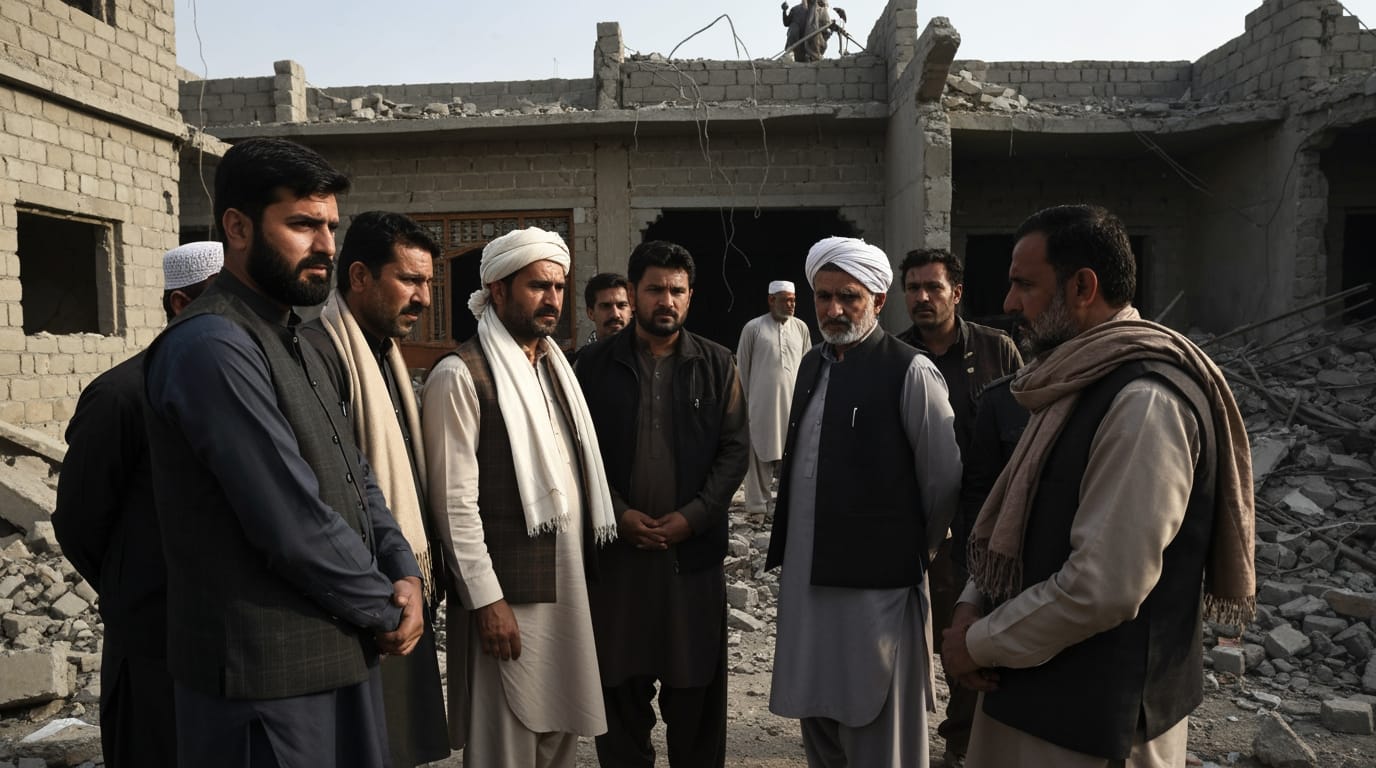
Islamabad/Kabul – In a significant but fragile move towards de-escalation, Pakistan and Afghanistan have announced a temporary pause in hostilities, effective through the Muslim holiday of Eid al-Fitr, which marks the end of Ramadan. This agreement, brokered by diplomatic efforts from Saudi Arabia, Qatar, and Turkey, comes after weeks of intensifying cross-border clashes and rising rhetoric that had threatened to plunge the region into a broader conflict. The truce offers a momentary reprieve amidst a volatile security landscape, but underlying grievances and accusations persist, underscoring the precarious nature of peace in the borderlands.
A Fragile Respite for Eid
The announcements, made separately by officials in Islamabad and Kabul, confirmed the cessation of military strikes and operations. Pakistan’s Information Minister, Attaullah Tarar, stated that the pause in operations would begin at midnight on Wednesday and extend until midnight on Monday, emphasizing that the gesture was made "in good faith and in keeping with the Islamic norms." However, Tarar stressed the conditional nature of the agreement, warning that operations would "immediately resume with renewed intensity" if any cross-border attack, drone strike, or terrorist incident occurred within Pakistan. Similarly, Afghan Taliban government spokesman Zabiullah Mujahid confirmed the halt, though without specifying an exact timeframe for the Afghan side, asserting that defending Afghanistan was a "national and religious obligation" and that they would respond to any aggression. The three mediating nations—Saudi Arabia, Qatar, and Turkey—have actively sought to calm tensions, having also played a role in brokering a previous, albeit short-lived, ceasefire in October of the preceding year.
Escalating Tensions and Cross-Border Accusations
The agreement follows a particularly deadly period of confrontation that began in late February and included airstrikes, artillery fire, and cross-border skirmishes. Just two days prior to the ceasefire announcement, a Pakistani airstrike on Kabul reportedly hit a drug rehabilitation center, leading to claims by Afghan authorities of hundreds of casualties. Afghan officials reported at least 400 people killed and over 200 wounded in the strike, with mass funerals held for some of the victims. Pakistan, while not directly commenting on the specific rehabilitation center claim, has maintained that its counter-terrorism operations are "carefully selected and based on accurate intelligence," targeting "military and terrorist infrastructure." Islamabad dismissed the high casualty figures reported by Afghanistan as propaganda.
At the heart of the escalating conflict is Pakistan's persistent accusation that the Afghan Taliban provides safe haven for the Tehrik-i-Taliban Pakistan (TTP), also known as the Pakistani Taliban. Pakistan asserts that the TTP operates from within Afghanistan to orchestrate attacks on Pakistani soil, a claim consistently denied by the Afghan Taliban. The TTP, a Deobandi jihadist militant organization, formed in 2007 as an alliance of various militant groups primarily operating along the Afghanistan-Pakistan border. Designated a terrorist organization by both the United Nations and Pakistan, the TTP's stated objective is to overthrow the elected Pakistani government and establish an emirate based on its interpretation of Islamic law. The group has been responsible for numerous high-profile attacks, including suicide bombings, targeting Pakistani security forces, law enforcement, and government facilities. While the TTP has publicly pledged allegiance to and fought alongside the Afghan Taliban, it operates independently and does not share the Afghan Taliban's command structure. Since the Afghan Taliban's return to power in 2021, Pakistan has experienced a significant increase in militant attacks, predominantly claimed by the TTP, particularly in its Khyber Pakhtunkhwa and Balochistan provinces.
The Complex Web of Pakistan-Taliban Relations
The relationship between Pakistan and the Afghan Taliban is historically intricate and has undergone significant shifts. Pakistan's intelligence services were instrumental in supporting the Afghan Taliban since its inception in the mid-1990s, providing critical safe haven, advice, and assistance during its rise to power and subsequent insurgency against the U.S.-backed Afghan government. This strategic alignment was partly driven by Pakistan's desire for a friendly government in Kabul to secure its western border.
However, the dynamic has changed dramatically since the Afghan Taliban seized control of Afghanistan in August 2021. What was once seen as an ally has increasingly become a source of frustration for Pakistan. Despite initial hopes, the Afghan Taliban has not curtailed the TTP's activities, instead mediating talks between Pakistan and the TTP in late 2021, which resulted in a temporary ceasefire that ultimately failed. Islamabad now views the Afghan Taliban's perceived inaction against the TTP as a betrayal, leading to what some analysts describe as an "open war" between the two sides. Pakistan has deployed over seventy thousand troops along the Afghan border and conducted major counter-terrorism operations against groups like the TTP, incurring over 80,000 casualties and more than $150 billion in economic losses in its fight against terrorism. The current escalation reflects Pakistan's strategy to impose a steep cost on the Taliban administration to compel them to act against militants launching attacks from Afghan soil.
Regional Stability and Humanitarian Concerns
The renewed conflict poses significant risks to regional stability, a concern highlighted by the international community. Beyond the direct clashes, the border region is also a known operating ground for other militant organizations, including Al-Qaeda and the Islamic State group, which could exploit the instability to resurface. Civilian populations bear the brunt of the violence, with reports from the UN Assistance Mission in Afghanistan (UNAMA) indicating civilian casualties, including women and children, from the recent Pakistani airstrikes. The humanitarian situation remains fragile, and any prolonged conflict would exacerbate the challenges faced by an already vulnerable population. Pakistan's recent measures, such as closing the border for trade to landlocked Afghanistan and expelling hundreds of thousands of Afghan refugees, further underscore the depth of the crisis and its wide-ranging humanitarian and economic impacts.
A Precarious Path Forward
The temporary strike pause for Eid al-Fitr, facilitated by international mediation, offers a desperately needed moment of calm. It reflects a shared recognition, at least for the holiday period, that direct confrontation carries severe consequences for both nations and the broader region. However, this truce is unlikely to resolve the deep-seated issues that fuel the conflict. The fundamental disagreement over the TTP's presence in Afghanistan and its cross-border attacks remains a core point of contention. Pakistan's conditional agreement suggests its willingness to resume military actions if threats persist, indicating that the current pause is a tactical cessation rather than a comprehensive peace initiative. The path forward remains precarious, demanding sustained diplomatic engagement and a genuine commitment from both sides to address the root causes of their friction to prevent future escalations and move towards a more lasting, albeit challenging, stability.


