Ancient Bones in Magdeburg Cathedral Positively Identified as Emperor Otto I
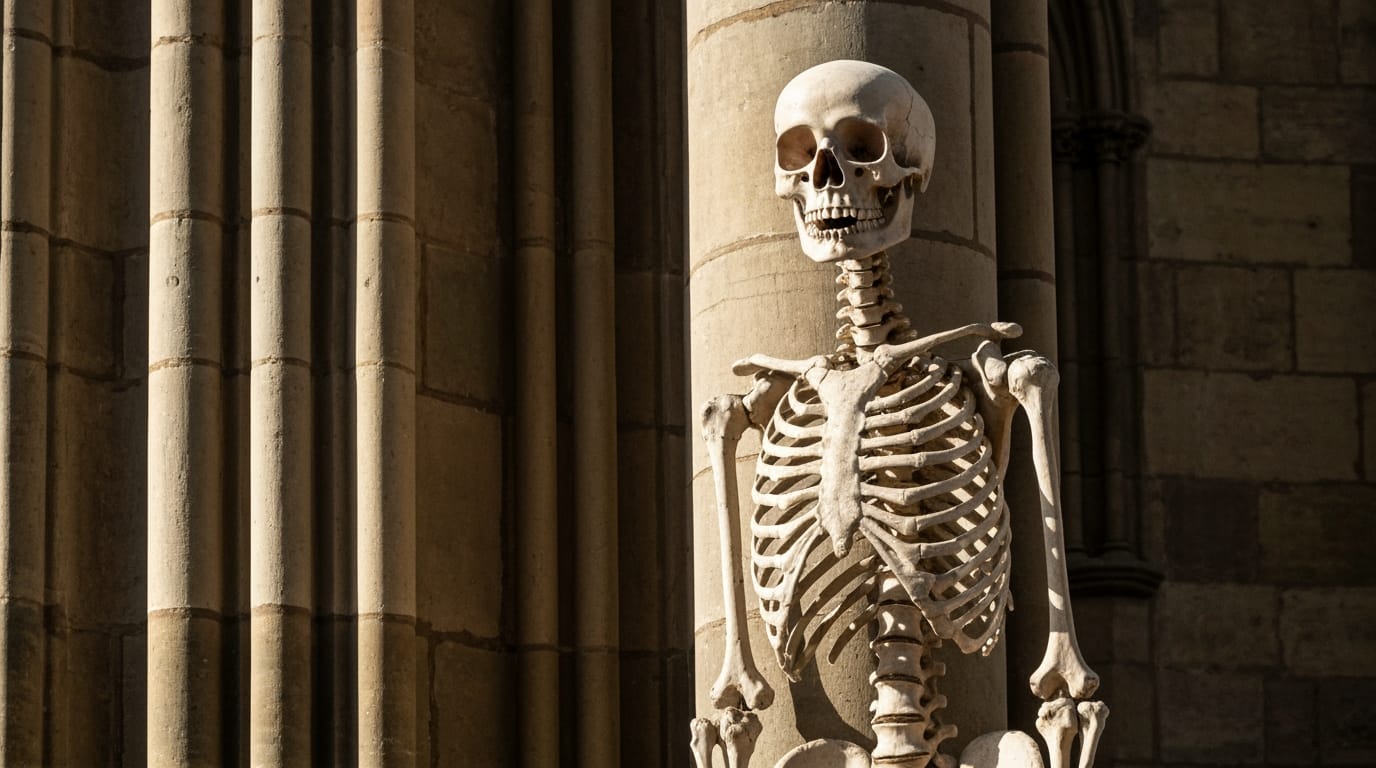
Magdeburg, Germany – Centuries of speculation surrounding the remains interred within a sarcophagus in Magdeburg Cathedral appear to be drawing to a close. Extensive scientific analyses undertaken during urgent conservation work have led researchers to conclude with strong certainty that the skeleton belongs to Otto I, widely known as Otto the Great, a foundational figure of the Holy Roman Empire. This breakthrough provides a tangible link to one of medieval Europe's most influential rulers, whose legacy shaped the continent's political and cultural landscape.
The confirmation comes after a series of interdisciplinary investigations initiated in early 2025, prompted by significant structural damage to the emperor's sarcophagus. This deterioration necessitated its opening, offering an unprecedented opportunity for archaeologists, anthropologists, and conservators to examine its contents with modern scientific techniques. The findings have allowed experts to align historical records with forensic evidence, pointing overwhelmingly to the identity of the esteemed emperor.
A Historic Discovery Emerges from Crisis
The catalyst for this landmark identification was the critical state of Otto I's tomb. Recent inspections revealed severe damage to the exterior limestone sarcophagus and its antique marble cover, primarily caused by the corrosion and expansion of iron clamps installed during an earlier restoration in 1844. These issues threatened the structural integrity of the monument, necessitating an urgent conservation program that began in January 2025.
In early March 2025, under stringent security and conservation protocols, the monumental 300-kilogram marble lid was carefully removed. Inside, researchers discovered a simple wooden coffin, likely constructed during a reburial of the emperor's remains following the devastating city fire of 1207, which destroyed the original cathedral. The coffin yielded a fragile assortment of human bones, medieval textiles, and symbolic grave goods, including eggshells, a traditional representation of resurrection in Christian burials.
The preliminary anthropological examination of the skeletal remains provided crucial evidence. The bones belonged to an elderly male of above-average height for the period, a physical characteristic consistent with historical accounts of Otto I. Furthermore, the skull was found to be exceptionally well preserved, offering potential avenues for further facial reconstruction or detailed osteological study. State archaeologist Harald Meller reportedly expressed high confidence in the identification, stating that the bones are "probably those of Otto I." This scientific corroboration marks a significant moment, transforming a long-held belief into a near certainty.
Otto the Great: Architect of an Empire
Otto I, born in 912, ascended as King of Germany in 936 and was crowned Holy Roman Emperor in 962, reigning until his death in 973. Often referred to as Otto the Great, he is widely regarded as the founder of the Holy Roman Empire, a pivotal entity that succeeded the fragmented Carolingian Empire and laid the groundwork for central European political structures for centuries.
His reign was characterized by decisive leadership and military prowess. Otto I famously secured the eastern borders of his realm and solidified his authority with a resounding victory over the Magyar invaders at the Battle of Lechfeld in 955. This triumph earned him the reputation as a defender of Christendom and significantly curtailed further incursions into Europe. Beyond military success, Otto fostered strong monarchical authority and initiated significant church reforms, actively integrating the church into his governance structure. His political strategies, including strategic marriages and the establishment of powerful bishoprics, expanded his influence and solidified his control over a diverse and expansive empire.
Magdeburg held particular significance for the emperor. In 968, he personally selected the city as the seat of an archbishopric, a move that greatly contributed to its economic and cultural prominence. Historical traditions suggest Otto I visited Magdeburg more frequently than any other city, underscoring its central role in his imperial vision. His decision to be buried there alongside his first wife, Eadgyth, was itself a powerful political statement, cementing Magdeburg's importance as a spiritual and dynastic center.
A Cathedral's Enduring Legacy
Magdeburg Cathedral, officially known as the Cathedral of Saints Maurice and Catherine, is a landmark steeped in history. Its origins trace back to an abbey dedicated to St. Maurice, founded by Otto I himself in 937. Following his death in Memleben in 973, Otto I's embalmed body was transported to Magdeburg and interred within this church next to his first wife, Queen Eadgyth. Eadgyth, granddaughter of Alfred the Great, died in 946 and her remains were also identified in the cathedral through isotopic analysis conducted between 2008 and 2010, confirming her early life in Wessex. This prior success in identifying royal remains within the cathedral established a precedent for the scientific rigor applied to Otto's tomb.
The original Ottonian basilica, where Otto and Eadgyth were first laid to rest, was tragically consumed by a city-wide fire on Good Friday in 1207. The magnificent Gothic cathedral seen today was constructed on its foundations, a project that spanned over three centuries. It is believed that during this reconstruction, the remains of Otto I were carefully transferred and reinterred into the limestone sarcophagus now being studied. This sarcophagus, notable for its monolithic structure and a reused antique marble slab as its cover, reflects the medieval practice of incorporating ancient materials to lend prestige and historical weight to significant burials.
The tomb has faced challenges over the centuries, not least during the Thirty Years' War, when grave goods were presumably stolen. The 1844 opening of the tomb, documented to have revealed a wooden coffin and human remains, was primarily for repairs. However, the interventions from that period inadvertently contributed to the recent structural issues, making the current conservation effort all the more vital.
Unveiling History Through Interdisciplinary Science
The current investigation is a testament to the power of interdisciplinary collaboration, weaving together historical documentation, archaeological excavation, anthropological analysis, and advanced conservation techniques. Beyond the confirmation of the skeletal remains, researchers have meticulously documented the coffin's construction, noting that it was crafted from different woods, suggesting its creation in the High Middle Ages. Lever marks on the coffin lid and sarcophagus walls indicate previous disturbances, underscoring a complex burial history.
The delicate task of preserving the textiles and other organic materials found within the coffin is ongoing. Fragments of red and blue fabrics with diamond patterns were among the discoveries, offering insights into medieval burial practices and textile arts. This comprehensive approach not only ensures the physical preservation of a historically invaluable site but also enhances understanding of life and death in the 10th century.
The compelling evidence gleaned from these intensive studies places the identity of the skeleton in Magdeburg Cathedral beyond reasonable doubt. The robust scientific findings, aligning with historical accounts and the context of the burial site, affirm that the remains within the sarcophagus are almost certainly those of Emperor Otto I. This extraordinary identification promises to deepen historical understanding of a pivotal ruler and his era, offering a profound connection to the origins of the Holy Roman Empire and the enduring legacy of a man who profoundly shaped medieval Europe. The ongoing conservation and research efforts ensure that this crucial piece of German and European heritage will be preserved and studied for generations to come.


